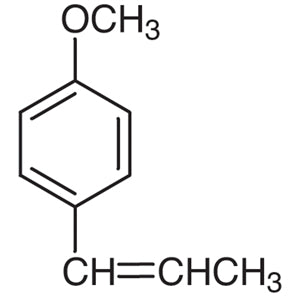
4-Allylanisole is a chemical compound widely used as a foundational building block in organic synthesis. Its molecular structure enables participation in various chemical reactions, including substitution, addition, and cross-coupling. In the laboratory, it serves as a versatile reagent for the preparation of complex organic molecules, heterocyclic compounds, pharmaceuticals, and industrial chemicals. Due to its reactivity, it is a preferred choice for researchers seeking a compound that can engage in multiple synthetic pathways.
The compound’s reactivity is complemented by its ability to interact with a wide range of functional groups, making it highly adaptable in different synthetic strategies. It exhibits chemical stability under controlled conditions but remains sensitive to environmental factors such as high temperature and humidity. Its distinct aroma also aids in visual identification, which is particularly useful in laboratory settings where precise handling is essential. These properties collectively make it a valuable asset in chemical research.
In Indonesian laboratories, 4-Allylanisole is extensively used in organic chemistry research, especially in academic and research institutions. Its role in the synthesis of complex compounds and its adaptability to various reaction conditions make it a sought-after material among scientists and researchers. Its application spans multiple fields, including pharmaceutical development and industrial chemical production, reinforcing its importance in the scientific community.
TCI brochures (PDF)
- Polyphenols 2024-12-05 · p. 2
- Phytochemicals 2025-12-17 · p. 8
- Organic synthesis is a primary application where 4-Allylanisole is used due to its reactivity and ability to participate in various chemical reactions.
- Pharmaceutical research benefits from this compound as it is a key building block for the synthesis of heterocyclic compounds and drug molecules.
- Industrial chemical production utilizes 4-Allylanisole for the creation of a wide range of chemical products, leveraging its functional group compatibility.
- Academic research in chemistry relies on this compound for its versatility in synthetic pathways and its role in teaching advanced chemical techniques.
- Analytical chemistry applications use 4-Allylanisole as a reference standard for identifying and quantifying compounds in complex mixtures.
| Brand | TCI |
|---|---|
| CAS number | 140-67-0 |
| Molecular formula | — |
| Purity | — |
| Category | Chemistry > Building Blocks > Non-Heterocyclic Building Blocks |
| Pack sizes | Available in various quantities as per supplier specifications |
| Physical form | Liquid |
| Storage | Store in a cool, dry place away from light and heat sources |
4-Allylanisole should be stored in a cool, dry place, away from direct light and heat sources to maintain its chemical stability. It is recommended to use airtight containers made of glass or high-density polyethylene to prevent contamination and evaporation. Due to its reactivity, it should be handled in a well-ventilated area, and appropriate personal protective equipment, such as gloves and safety goggles, should be worn. Avoid exposure to high temperatures and humidity to prevent degradation. In laboratory settings, it should be stored separately from strong oxidizing agents to ensure safety and maintain its chemical integrity.
—
Produk Terkait
-
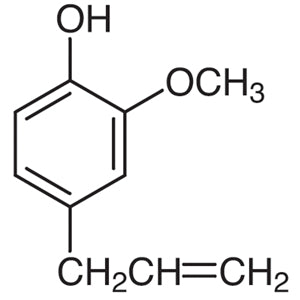
Eugenol TCI A0232
Regular price From Rp 557.550,00Regular priceRp 405.300,00Sale price From Rp 557.550,00 -
trans-Anethole TCI P0494
Regular price From Rp 769.650,00Regular priceRp 537.600,00Sale price From Rp 769.650,00 -
Isoeugenol(cis-andtrans-mixture) TCI I0132
Regular price From Rp 557.550,00Regular priceRp 405.300,00Sale price From Rp 557.550,00 -
(E)-CinnamylAlcohol TCI C0362
Regular price From Rp 505.050,00Regular priceRp 352.800,00Sale price From Rp 505.050,00 -
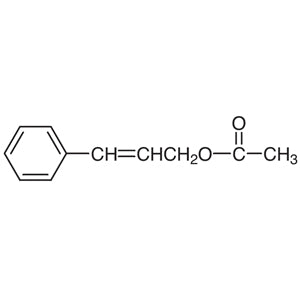
CinnamylAcetate TCI A0901
Regular price From Rp 505.050,00Regular priceRp 352.800,00Sale price From Rp 505.050,00 -
MethylCaffeate TCI M2519
Regular price From Rp 2.491.650,00Regular priceRp 1.757.700,00Sale price From Rp 2.491.650,00 -
trans-FerulicAcid TCI H0267
Regular price From Rp 1.934.100,00Regular priceRp 1.368.150,00Sale price From Rp 1.934.100,00 -
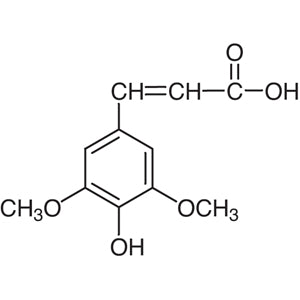
3,5-Dimethoxy-4-hydroxycinnamicAcid TCI D1765
Regular price From Rp 2.147.250,00Regular priceRp 1.517.250,00Sale price From Rp 2.147.250,00