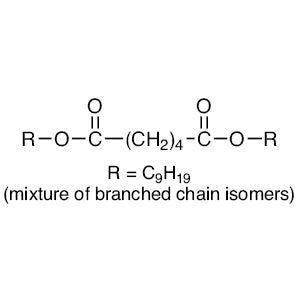
Diisobutyl Adipate is a chemical compound widely used in laboratory settings related to materials science and polymer research. As a polymer additive, it plays a crucial role in enhancing the mechanical properties, flexibility, and thermal stability of polymer materials. Its versatility makes it an essential component in various experimental processes, supporting both academic and industrial research. This compound is particularly valuable in applications that require controlled chemical behavior and stability under different experimental conditions.
The chemical properties of Diisobutyl Adipate make it a preferred choice for laboratory use. It exhibits high chemical stability and resistance to oxidation, ensuring consistent performance in long-term experiments. Its well-defined boiling and melting points allow for precise control during thermal processes such as dissolution, heating, or cooling. Additionally, its non-reactive nature with many chemical substances enhances safety and reliability in laboratory environments. These characteristics contribute to its widespread adoption in both research and educational settings.
In Indonesian laboratories, Diisobutyl Adipate is commonly used in industrial and academic research focused on polymer synthesis, material modification, and composite development. It is also integral to educational programs at research institutions and universities, where it supports the teaching of materials science and polymer chemistry. Its reliability and chemical stability make it a trusted reagent for both practical and theoretical studies in the field.
TCI brochures (PDF)
- Polymer Additives 2026-04-16 · p. 3
- Polymer synthesis research where Diisobutyl Adipate enhances the mechanical properties of synthetic polymers through its role as a plasticizer and modifier.
- Material modification experiments that require a stable and non-reactive additive to improve flexibility and thermal resistance of polymer composites.
- Composite development projects where the compound contributes to the overall durability and performance of multi-component materials.
- Thermal processing applications that benefit from the compound’s defined melting and boiling points for controlled heating and cooling cycles.
- Educational programs in materials science that use Diisobutyl Adipate to demonstrate polymer behavior and additive functionality in a controlled environment.
| Brand | TCI |
|---|---|
| CAS number | 141-04-8 |
| Molecular formula | — |
| Purity | — |
| Category | Materials Science > Polymer/Macromolecule Reagents > Polymer Additives |
| Pack sizes | As available from supplier |
| Physical form | Liquid |
| Storage | Store in a cool, dry place away from direct sunlight |
Diisobutyl Adipate should be stored in a cool, dry environment, away from direct sunlight and sources of heat. It is recommended to use sealed containers made of materials compatible with its chemical properties, such as glass or high-density polyethylene. Due to its chemical stability, it does not require refrigeration but should be protected from moisture and contaminants. In laboratory settings, proper ventilation is advised when handling the compound to ensure safe working conditions. Always follow standard chemical safety protocols, including the use of personal protective equipment, to minimize exposure risks.
—
Produk Terkait
-
DiisobutylPhthalate TCI P0298
Regular price From Rp 505.050,00Regular priceRp 352.800,00Sale price From Rp 505.050,00 -
DimethylAdipate TCI A0166
Regular price From Rp 505.050,00Regular priceRp 352.800,00Sale price From Rp 505.050,00 -
DiisodecylAdipate TCI A0164
Regular price From Rp 903.000,00Regular priceRp 631.050,00Sale price From Rp 903.000,00 -
Bis(2-ethylhexyl)Adipate TCI A0163
Regular price Rp 452.550,00Regular priceRp 316.050,00Sale price Rp 452.550,00 -
DiethylAdipate TCI A0162
Regular price From Rp 452.550,00Regular priceRp 316.050,00Sale price From Rp 452.550,00 -
Bis(2-butoxyethyl)Adipate TCI B2716
Regular price From Rp 717.150,00Regular priceRp 500.850,00Sale price From Rp 717.150,00 -
DiisononylAdipate(mixtureofbranchedchainisomers) TCI A1387
Regular price From Rp 584.850,00Regular priceRp 408.450,00Sale price From Rp 584.850,00 -
DipropylAdipate TCI A0931
Regular price Rp 1.008.000,00Regular priceRp 704.550,00Sale price Rp 1.008.000,00