N-(3-Aminopropyl)cyclohexylamine is a chemical compound widely used as a building block in the synthesis of complex molecules. This compound plays a crucial role in organic chemistry laboratories, where it serves as a versatile reagent for various chemical reactions. Its molecular structure allows for multiple types of chemical interactions, including substitution reactions and the formation of new bonds. Due to its functional group versatility, it is particularly valuable in the development of new compounds with specific chemical properties.
The compound is known for its chemical stability under controlled conditions, yet it exhibits high reactivity towards environmental factors such as moisture and oxidizing agents. Its ability to form amine bonds makes it an ideal choice for reactions requiring nitrogen incorporation or functional group replacement. This reactivity and structural adaptability make it a preferred material in both academic and industrial research settings.
In Indonesian laboratories, N-(3-Aminopropyl)cyclohexylamine is commonly used in research and development projects, especially in the fields of pharmaceuticals and materials science. It is a key component in experiments that require high reactivity and the ability to construct complex molecular structures. Its widespread use across various research institutions highlights its importance in advancing chemical innovation in the region.
Related TCI products
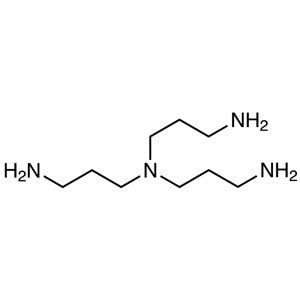
- TCI T1540 4963-47-7 Tris(3-aminopropyl)amine
- TCI B1952 10563-26-5 N,N'-Bis(3-aminopropyl)ethylenediamine
- TCI B1268 2157-24-6 Bis(3-aminopropyl) Ether
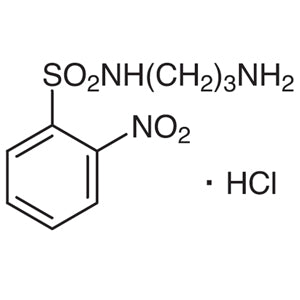
- TCI A2268 863983-46-4 N-(3-Aminopropyl)-2-nitrobenzenesulfonamide Hydrochloride
- TCI A1295 53485-07-7 N-(3-Aminopropyl)-N-methylaniline
- TCI M2949 2523-56-0 cis-4-Methylcyclohexylamine
- Organic synthesis applications benefit from this compound's ability to form amine bonds, enabling the creation of complex molecular structures.
- Pharmaceutical research utilizes its reactivity to develop new drug compounds with specific functional groups.
- Material science experiments leverage its chemical versatility for the synthesis of advanced polymer materials.
- Analytical chemistry uses it as a reagent in the preparation of standard solutions for chemical analysis.
- Industrial chemical processes incorporate it for the production of specialty chemicals requiring nitrogen-based functional groups.
| Brand | TCI |
|---|---|
| CAS number | 3312-60-5 |
| Molecular formula | — |
| Purity | — |
| Category | Chemistry > Building Blocks > Non-Heterocyclic Building Blocks |
| Pack sizes | Available in various quantities as per standard laboratory supply |
| Physical form | Liquid |
| Storage | Store in a cool, dry place away from moisture and oxidizing agents |
This compound should be stored in a cool, dry environment to maintain its chemical stability. It is recommended to use airtight containers to prevent exposure to moisture and air, which can affect its reactivity. Due to its potential for chemical interaction with environmental factors, it should be kept away from oxidizing agents and direct sunlight. Laboratory personnel should handle it with appropriate personal protective equipment to ensure safety. Proper labeling and storage conditions are essential to maintain its effectiveness and safety in research settings.
—
Produk Terkait
-
Tris(3-aminopropyl)amine TCI T1540
Regular price From Rp 6.599.250,00Regular priceRp 4.614.750,00Sale price From Rp 6.599.250,00 -
N,N'-Bis(3-aminopropyl)ethylenediamine TCI B1952
Regular price From Rp 610.050,00Regular priceRp 426.300,00Sale price From Rp 610.050,00 -
Bis(3-aminopropyl)Ether TCI B1268
Regular price Rp 21.835.800,00Regular priceRp 15.269.100,00Sale price Rp 21.835.800,00 -
N-(3-Aminopropyl)-2-nitrobenzenesulfonamideHydrochloride TCI A2268
Regular price From Rp 3.312.750,00Regular priceRp 2.332.050,00Sale price From Rp 3.312.750,00 -
N-(3-Aminopropyl)-N-methylaniline TCI A1295
Regular price Rp 2.279.550,00Regular priceRp 1.609.650,00Sale price Rp 2.279.550,00 -
cis-4-Methylcyclohexylamine TCI M2949
Regular price Rp 4.161.150,00Regular priceRp 2.925.300,00Sale price Rp 4.161.150,00 -
3-Methylcyclohexylamine(cis-andtrans-mixture) TCI M2105
Regular price From Rp 7.182.000,00Regular priceRp 5.037.900,00Sale price From Rp 7.182.000,00 -
trans-4-Methylcyclohexylamine TCI M1780
Regular price From Rp 2.279.550,00Regular priceRp 1.609.650,00Sale price From Rp 2.279.550,00