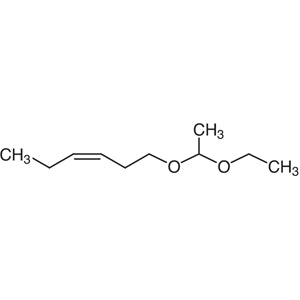
Acetaldehyde Ethyl cis-3-Hexenyl Acetal is a chemical compound widely used as a building block in the synthesis of complex organic compounds. It plays a crucial role in laboratory settings where the formation of carbon-carbon bonds is required, particularly in reactions involving alkenyl structures. This compound is part of the broader category of non-heterocyclic building blocks, making it a versatile tool for chemists seeking to construct molecules with specific structural features. Its presence in various chemical reactions highlights its importance in both academic and industrial research environments.
The compound's reactivity and chemical stability make it a preferred choice for laboratory applications. It is capable of participating in a range of chemical reactions, including addition, substitution, and covalent bond formation. Its ability to interact effectively with various reagents ensures its utility in diverse synthetic pathways. The compound's predictable behavior under controlled conditions enhances its reliability in experimental setups, making it a trusted material for researchers aiming to achieve precise chemical outcomes.
In Indonesian laboratories, this compound is commonly used in organic chemistry research, especially in the synthesis of alkenyl-containing compounds. Its availability through suppliers like AMI Scientific ensures that researchers have access to high-quality materials necessary for their work. The compound's relevance extends to fields such as pharmaceuticals and material science, where the development of new compounds is essential. Its role in these areas underscores its importance in advancing scientific research in Indonesia.
Related TCI products
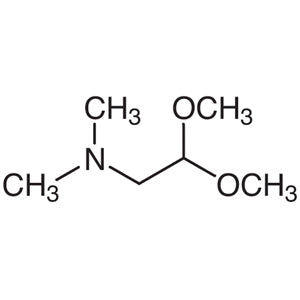
- TCI D1704 38711-20-5 (Dimethylamino)acetaldehyde Dimethyl Acetal
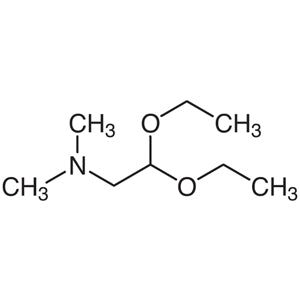
- TCI D1703 3616-56-6 (Dimethylamino)acetaldehyde Diethyl Acetal
- TCI B1097 7252-83-7 Bromoacetaldehyde Dimethyl Acetal (stabilized with K2CO3)
- TCI B0957 2032-35-1 Bromoacetaldehyde Diethyl Acetal
- TCI A0801 22483-09-6 Aminoacetaldehyde Dimethyl Acetal
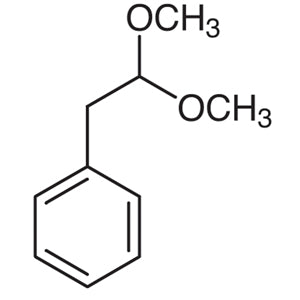
- TCI P1161 101-48-4 Phenylacetaldehyde Dimethyl Acetal
- Organic synthesis of alkenyl compounds due to its ability to form carbon-carbon bonds in controlled environments.
- Development of pharmaceutical intermediates where precise structural features are required for drug molecule design.
- Creation of new materials with specific chemical properties by modifying alkenyl structures through synthetic pathways.
- Research in polymer chemistry for the synthesis of polymers with tailored functional groups and chain architectures.
- Investigation of reaction mechanisms involving alkenyl compounds in both academic and industrial settings.
| Brand | TCI |
|---|---|
| CAS number | 28069-74-1 |
| Molecular formula | — |
| Purity | — |
| Category | Chemistry > Building Blocks > Non-Heterocyclic Building Blocks |
| Pack sizes | Available in various quantities as per supplier specifications |
| Physical form | Liquid |
| Storage | Store in a cool, dry place away from direct sunlight |
This compound should be stored in a cool, dry environment, away from direct sunlight and sources of heat. It is recommended to use airtight containers made of glass or high-density polyethylene to prevent contamination and evaporation. Due to its chemical reactivity, it should be handled in a well-ventilated area, preferably under a fume hood, to minimize exposure. Avoid contact with incompatible substances such as strong oxidizing agents. Keep the container sealed when not in use to maintain its chemical integrity. Always follow standard laboratory safety protocols when working with this material to ensure a safe and controlled experimental environment.
—
Produk Terkait
-
(Dimethylamino)acetaldehydeDimethylAcetal TCI D1704
Regular price Rp 2.597.700,00Regular priceRp 1.832.250,00Sale price Rp 2.597.700,00 -
(Dimethylamino)acetaldehydeDiethylAcetal TCI D1703
Regular price Rp 1.881.600,00Regular priceRp 1.331.400,00Sale price Rp 1.881.600,00 -
BromoacetaldehydeDimethylAcetal(stabilizedwithK2CO3) TCI B1097
Regular price Rp 1.298.850,00Regular priceRp 908.250,00Sale price Rp 1.298.850,00 -
BromoacetaldehydeDiethylAcetal TCI B0957
Regular price Rp 848.400,00Regular priceRp 593.250,00Sale price Rp 848.400,00 -
AminoacetaldehydeDimethylAcetal TCI A0801
Regular price Rp 1.590.750,00Regular priceRp 1.127.700,00Sale price Rp 1.590.750,00 -
PhenylacetaldehydeDimethylAcetal TCI P1161
Regular price Rp 505.050,00Regular priceRp 352.800,00Sale price Rp 505.050,00 -
MethylaminoacetaldehydeDimethylAcetal TCI M0884
Regular price Rp 928.200,00Regular priceRp 664.650,00Sale price Rp 928.200,00 -
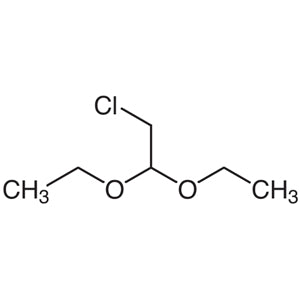
ChloroacetaldehydeDiethylAcetal TCI C0084
Regular price Rp 1.167.600,00Regular priceRp 815.850,00Sale price Rp 1.167.600,00