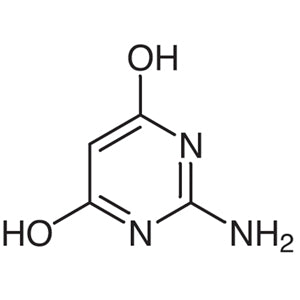
2-Amino-4,6-dihydroxypyrimidine is a chemical compound widely used in organic synthesis reactions. It serves as a fundamental building block in the development of heterocyclic compounds and their derivatives, playing a critical role in both organic chemistry and pharmacology. This compound is essential for researchers aiming to create new molecules with specific biological activities. Its complex molecular structure, featuring two hydroxyl groups and one amino group, contributes to its high reactivity and versatility in various chemical transformations.
The compound’s chemical properties and reactivity make it a preferred choice in laboratory settings. Its ability to participate in substitution, reduction, and oxidation reactions allows it to be a valuable reagent in synthetic pathways. The presence of multiple functional groups enhances its compatibility with a wide range of chemical environments, making it suitable for diverse experimental applications. Its reliability and consistent performance ensure that it remains a key component in chemical research and drug development.
In Indonesian laboratories, 2-Amino-4,6-dihydroxypyrimidine is commonly used in organic chemistry, pharmacology, and material science research. Researchers from academic institutions and research organizations rely on this compound for experiments requiring a reactive and chemically stable building block. Its application spans from basic research to the development of new therapeutic agents, highlighting its importance in the scientific community.
Related TCI products
- TCI D2634 56830-58-1 2,5-Diamino-4,6-dihydroxypyrimidine Hydrochloride
- TCI D1821 1193-24-4 4,6-Dihydroxypyrimidine
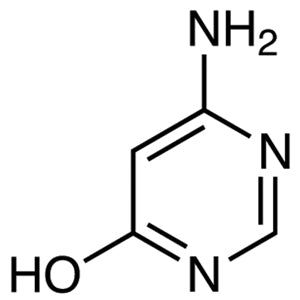
- TCI A2439 1193-22-2 4-Amino-6-hydroxypyrimidine
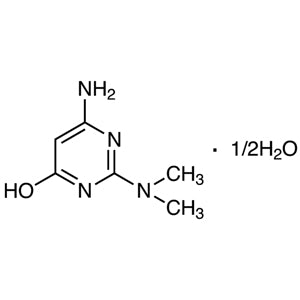
- TCI A1469 76750-84-0 4-Amino-2-dimethylamino-6-hydroxypyrimidine Hemihydrate
- TCI T0335 35011-47-3 2,4,5-Triamino-6-hydroxypyrimidine Sulfate
- TCI H0480 38353-09-2 2-Hydroxypyrimidine Hydrochloride
- Organic synthesis of heterocyclic compounds due to its reactive functional groups and structural versatility.
- Pharmaceutical research for the development of bioactive molecules with specific therapeutic properties.
- Material science applications where functional group reactivity is essential for polymer and composite formation.
- Analytical chemistry experiments requiring a stable and reactive reference compound for reaction studies.
- Educational purposes in teaching synthetic organic chemistry and heterocyclic compound formation.
| Brand | TCI |
|---|---|
| CAS number | 56-09-7 |
| Molecular formula | — |
| Purity | — |
| Category | Chemistry > Building Blocks > Heterocyclic Building Blocks |
| Pack sizes | Available in standard laboratory quantities as per supplier specifications |
| Physical form | Solid, crystalline powder |
| Storage | Store in a cool, dry place away from moisture and light |
This compound should be stored in a cool, dry environment to maintain its chemical integrity. It is recommended to keep it in airtight containers to prevent exposure to moisture and air. Due to its reactive nature, it should be handled in a well-ventilated area to minimize inhalation risks. Laboratory personnel should wear appropriate personal protective equipment, such as gloves and safety goggles, when handling this material. It is important to avoid contact with incompatible substances to ensure safe storage and use. Proper labeling and storage conditions help maintain the compound’s effectiveness and safety in laboratory settings.
—
Produk Terkait
-
2,5-Diamino-4,6-dihydroxypyrimidineHydrochloride TCI D2634
Regular price Rp 1.035.300,00Regular price -
4,6-Dihydroxypyrimidine TCI D1821
Regular price From Rp 1.618.050,00Regular price -
4-Amino-6-hydroxypyrimidine TCI A2439
Regular price From Rp 769.650,00Regular price -
4-Amino-2-dimethylamino-6-hydroxypyrimidineHemihydrate TCI A1469
Regular price Rp 2.518.950,00Regular price -
2,4,5-Triamino-6-hydroxypyrimidineSulfate TCI T0335
Regular price Rp 1.563.450,00Regular priceRp 1.108.800,00Sale price Rp 1.563.450,00 -
2-HydroxypyrimidineHydrochloride TCI H0480
Regular price From Rp 477.750,00Regular price -
Ethyl2-Amino-4-hydroxypyrimidine-5-carboxylate TCI E1247
Regular price From Rp 1.035.300,00Regular price -
4,5-Diamino-6-hydroxypyrimidine TCI D4488
Regular price From Rp 664.650,00Regular price