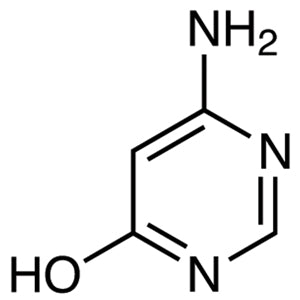
4-Amino-6-hydroxypyrimidine is a chemical compound widely used as a building block in the synthesis of heterocyclic compounds. It plays a crucial role in laboratory settings where the creation of complex molecular structures is required. This compound is particularly valuable in organic chemistry research due to its ability to participate in various chemical reactions that lead to the formation of pyrimidine-based molecules. These molecules are essential components of biological systems, including nucleotides and DNA, making this compound a key player in biochemical and pharmaceutical studies.
The compound’s chemical structure is stable, and it exhibits moderate reactivity, which allows for efficient chemical reactions under controlled laboratory conditions. These properties make it a preferred choice for researchers working on synthetic pathways that require reliable and predictable chemical behavior. Its stability ensures that it remains effective throughout the synthesis process, while its reactivity supports the formation of a wide range of derivatives. These characteristics contribute to its popularity among scientists in both academic and industrial research environments.
In Indonesian laboratories, 4-Amino-6-hydroxypyrimidine is commonly used in scientific research conducted by universities and research institutions. Its availability in solid form and ease of handling make it a practical choice for experimental work. Researchers often select this compound for experiments requiring heterocyclic building blocks due to its well-documented properties and the extensive body of knowledge surrounding its applications. Its role in supporting diverse research areas makes it a valuable resource for scientific innovation.
Related TCI products
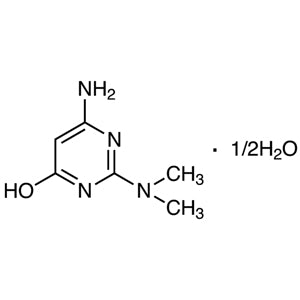
- TCI A1469 76750-84-0 4-Amino-2-dimethylamino-6-hydroxypyrimidine Hemihydrate
- TCI E1247 15400-53-0 Ethyl 2-Amino-4-hydroxypyrimidine-5-carboxylate
- TCI A1099 56-09-7 2-Amino-4,6-dihydroxypyrimidine
- TCI T0335 35011-47-3 2,4,5-Triamino-6-hydroxypyrimidine Sulfate
- TCI H0480 38353-09-2 2-Hydroxypyrimidine Hydrochloride
- TCI D4488 1672-50-0 4,5-Diamino-6-hydroxypyrimidine
- Organic synthesis applications benefit from this compound's role in creating pyrimidine-based structures, essential in pharmaceutical development.
- Biochemical research utilizes it to study nucleotide and DNA-related compounds, supporting molecular biology investigations.
- Pharmaceutical research leverages its ability to form complex derivatives, aiding in drug discovery and development processes.
- Academic laboratories use it as a standard building block for teaching and research in heterocyclic chemistry.
- Industrial research applications rely on its stability and reactivity for the production of specialized chemical intermediates.
| Brand | TCI |
|---|---|
| CAS number | 1193-22-2 |
| Molecular formula | — |
| Purity | — |
| Category | Chemistry > Building Blocks > Heterocyclic Building Blocks |
| Pack sizes | Available in various quantities as per standard laboratory supply |
| Physical form | Solid |
| Storage | Store in a cool, dry place away from direct sunlight |
This compound should be stored in a cool, dry environment to maintain its chemical stability. It is recommended to keep it in a tightly sealed container to prevent moisture absorption and contamination. Due to its chemical nature, it is advisable to handle it in a well-ventilated area to minimize exposure. Proper personal protective equipment, such as gloves and safety goggles, should be worn during handling. Avoid direct contact with skin or inhalation of vapors. Ensure that storage conditions are consistent to preserve its reactivity and effectiveness in laboratory applications.
—
Produk Terkait
-
4-Amino-2-dimethylamino-6-hydroxypyrimidineHemihydrate TCI A1469
Regular price Rp 2.518.950,00Regular price -
Ethyl2-Amino-4-hydroxypyrimidine-5-carboxylate TCI E1247
Regular price From Rp 1.035.300,00Regular price -
2-Amino-4,6-dihydroxypyrimidine TCI A1099
Regular price Rp 1.035.300,00Regular price -
2,4,5-Triamino-6-hydroxypyrimidineSulfate TCI T0335
Regular price Rp 1.510.950,00Regular price -
2-HydroxypyrimidineHydrochloride TCI H0480
Regular price From Rp 477.750,00Regular price -
4,5-Diamino-6-hydroxypyrimidine TCI D4488
Regular price From Rp 664.650,00Regular price -
2,5-Diamino-4,6-dihydroxypyrimidineHydrochloride TCI D2634
Regular price Rp 1.035.300,00Regular price -
2,4-Dimethyl-6-hydroxypyrimidine TCI D2579
Regular price From Rp 689.850,00Regular price