L-Alanyl-L-tyrosine is a peptide compound widely used in biochemical and scientific research applications. It plays a crucial role in laboratory experiments involving protein metabolism, molecular interactions, and enzyme activity studies. As a key component of peptides, it contributes to the formation of protein structures and the regulation of specific biological functions. This compound is essential for laboratories requiring active ingredients for chemical reactions or biological experiments. Its stable chemical structure and favorable physical properties make it suitable for use in various experimental conditions.
L-Alanyl-L-tyrosine is preferred due to its high solubility in organic solvents such as water and ethanol, which simplifies its application in diverse laboratory settings. Its chemical stability ensures minimal degradation during reactions, making it reliable for consistent results. The compound’s ability to dissolve well in different mediums enhances its versatility in experimental protocols. These properties make it a valuable reagent for researchers working in biochemistry, pharmacology, and biotechnology.
In Indonesian laboratories, L-Alanyl-L-tyrosine is commonly used in biochemical research, pharmacological studies, and biotechnological applications. It serves as a key reagent in experiments that require peptide-based compounds as building blocks or active components. Its relevance in scientific research makes it an important material for academic and industrial laboratories in Indonesia.
TCI brochures (PDF)
- Amino Acids and Peptide Synthesis Reagents 2025-08-14 · p. 33
- Reagents for Biological Research 2025-03-11 · p. 58
- Biochemical Research: L-Alanyl-L-tyrosine is used to study protein metabolism and molecular interactions due to its structural similarity to natural peptides.
- Enzyme Activity Studies: It serves as a substrate or inhibitor in experiments evaluating enzyme function and catalytic activity.
- Pharmacological Testing: The compound is employed in drug development to assess the effects of peptide-based compounds on biological systems.
- Biotechnological Applications: It is used in the synthesis of peptides and as a component in the development of bioactive materials.
- Structural Biology Studies: Its role in protein structure formation makes it useful for understanding protein folding and conformational changes.
| Brand | TCI |
|---|---|
| CAS number | 3061-88-9 |
| Molecular formula | — |
| Purity | — |
| Category | Life Science > Biochemicals and Reagents > Peptides |
| Pack sizes | Available in various quantities as per supplier specifications |
| Physical form | Solid powder |
| Storage | Store in a cool, dry place away from moisture and light |
L-Alanyl-L-tyrosine should be stored in a cool, dry place, away from direct sunlight and moisture. It is recommended to keep the compound in a sealed container to prevent exposure to air and humidity. For optimal stability, it should be stored at room temperature, ideally between 15°C and 25°C. When handling, use appropriate personal protective equipment such as gloves and safety goggles to avoid skin contact or inhalation. Ensure that the container is properly labeled and stored in a secure location to prevent accidental exposure. Proper storage conditions help maintain the compound's integrity and ensure its effectiveness in laboratory applications.
—
Produk Terkait
-
DL-Alanyl-DL-phenylalanine TCI A0223
Regular price Rp 3.472.350,00Regular priceRp 2.443.350,00Sale price Rp 3.472.350,00 -
beta-Alanyl-L-histidine TCI A0222
Regular price From Rp 795.900,00Regular priceRp 572.250,00Sale price From Rp 795.900,00 -
L-Alanyl-L-proline TCI A1495
Regular price Rp 6.067.950,00Regular priceRp 4.258.800,00Sale price Rp 6.067.950,00 -
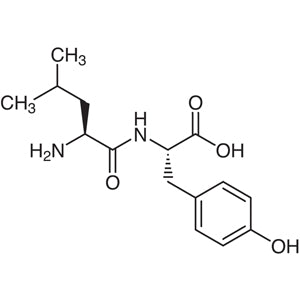
L-Leucyl-L-tyrosine TCI L0040
Regular price From Rp 1.749.300,00Regular priceRp 1.239.000,00Sale price From Rp 1.749.300,00 -
Glycyl-L-tyrosineHydrate TCI G0145
Regular price From Rp 1.643.250,00Regular priceRp 1.164.450,00Sale price From Rp 1.643.250,00 -
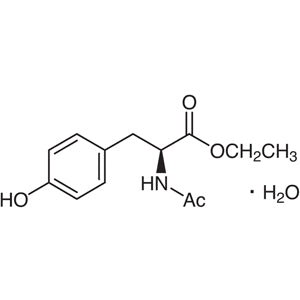
N-Acetyl-L-tyrosineEthylEsterMonohydrate TCI A0118
Regular price From Rp 662.550,00Regular priceRp 478.800,00Sale price From Rp 662.550,00 -
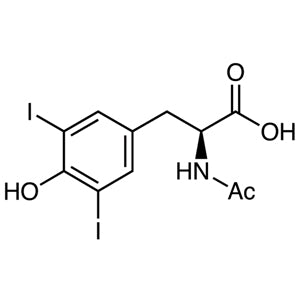
N-Acetyl-3,5-diiodo-L-tyrosine TCI A0087
Regular price Rp 1.060.500,00Regular priceRp 757.050,00Sale price Rp 1.060.500,00 -
L-m-Tyrosine TCI T4053
Regular price Rp 3.603.600,00Regular priceRp 2.535.750,00Sale price Rp 3.603.600,00