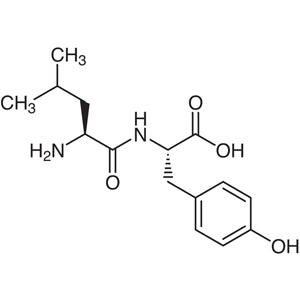
L-Leucyl-L-tyrosine is a peptide compound widely used in biochemical experiments and scientific research. As a key component in the study of protein structure and molecular interactions, it plays a crucial role in various laboratory applications. This compound is commonly utilized as a building block for peptide synthesis, enabling researchers to create complex molecules for further analysis. Its versatility makes it an essential tool in molecular biology and pharmacology laboratories, supporting a wide range of experimental protocols.
The stability and ease of handling under controlled laboratory conditions make L-Leucyl-L-tyrosine a preferred choice for researchers. Its specific chemical structure and physical properties facilitate its use in diverse experimental setups. The compound is non-toxic and maintains good stability under certain conditions, ensuring reliable results in repeated experiments. These characteristics contribute to its popularity among scientists working on enzyme activity tests, drug development, and other precision-driven applications.
In Indonesian laboratories, L-Leucyl-L-tyrosine is frequently used in biochemical, pharmacological, and biotechnological research. Its relevance extends to studies involving protein interactions, peptide synthesis, and metabolic processes. Due to its high purity and consistency, it is well-suited for applications requiring accuracy and reproducibility, making it a valuable resource for both academic and industrial research settings.
- Biochemical Research: L-Leucyl-L-tyrosine is essential for studying molecular interactions and protein structure, supporting fundamental biochemical investigations.
- Peptide Synthesis: It serves as a building block in the synthesis of complex peptides, enabling the creation of custom molecules for various research purposes.
- Enzyme Activity Testing: The compound is used to assess the activity of enzymes, providing insights into catalytic mechanisms and biochemical pathways.
- Drug Development: It plays a role in the development of pharmaceutical compounds by aiding in the design and testing of potential therapeutic agents.
- Molecular Biology Studies: Its application supports research into gene expression, protein function, and cellular processes, contributing to broader scientific understanding.
| Brand | TCI |
|---|---|
| CAS number | 968-21-8 |
| Molecular formula | — |
| Purity | — |
| Category | Life Science > Biochemicals and Reagents > Peptides |
| Pack sizes | Available in various quantities as per standard laboratory requirements |
| Physical form | Solid powder |
| Storage | Store in a cool, dry place away from direct sunlight |
L-Leucyl-L-tyrosine should be stored in a cool, dry environment to maintain its stability and prevent degradation. It is recommended to keep the compound in airtight containers to minimize exposure to moisture and contaminants. Proper labeling of storage containers is essential to ensure safe handling and prevent mix-ups. Due to its non-toxic nature, general laboratory safety protocols should be followed, including the use of personal protective equipment when handling. The compound should not be exposed to extreme temperatures or direct sunlight, as this may affect its chemical integrity. Regular monitoring of storage conditions ensures that the material remains suitable for use in research applications.
—
Produk Terkait
-
DL-Leucyl-DL-phenylalanine TCI L0038
Regular price From Rp 928.200,00Regular price -
L-Alanyl-L-tyrosine TCI A1263
Regular price Rp 4.001.550,00Regular price -
Glycyl-L-tyrosineHydrate TCI G0145
Regular price From Rp 1.590.750,00Regular price -
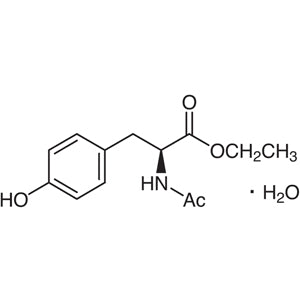
N-Acetyl-L-tyrosineEthylEsterMonohydrate TCI A0118
Regular price From Rp 610.050,00Regular price -
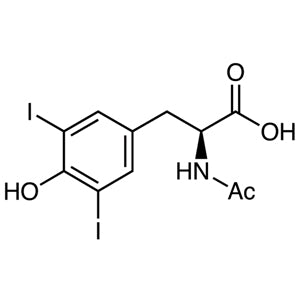
N-Acetyl-3,5-diiodo-L-tyrosine TCI A0087
Regular price Rp 1.008.000,00Regular price -
L-m-Tyrosine TCI T4053
Regular price Rp 3.551.100,00Regular price -
L-TyrosineMethylEster TCI T2736
Regular price From Rp 1.115.100,00Regular price -
L-Tyrosinetert-ButylEster TCI T2446
Regular price From Rp 1.749.300,00Regular price