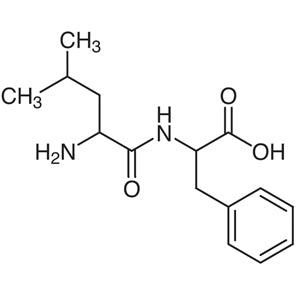
DL-Leucyl-DL-phenylalanine is a biochemical compound widely used in laboratory settings for its versatility in biochemical and biotechnological research. This peptide plays a crucial role in studies involving protein synthesis, enzyme activity, and molecular interactions. Its structured molecular composition makes it an essential reagent for various experimental protocols. As a building block for more complex molecules, it supports the development of new compounds and the analysis of biological systems. Its presence in both academic and industrial research environments highlights its significance in advancing scientific understanding.
DL-Leucyl-DL-phenylalanine is favored for its chemical stability and ease of handling, which are critical in maintaining the integrity of experimental results. It exhibits resistance to degradation under standard laboratory conditions, ensuring consistent performance over time. Its solubility in organic solvents further enhances its usability, simplifying preparation and application processes. These properties make it a reliable choice for researchers requiring precision and reproducibility in their experiments. The compound’s ability to retain its activity during storage also reduces the need for frequent reordering, improving laboratory efficiency.
In Indonesian laboratories, DL-Leucyl-DL-phenylalanine is commonly used in research focused on protein metabolism, organic compound synthesis, and pharmaceutical development. Its application extends to studies involving enzyme kinetics and molecular modeling. Due to its stability and compatibility with various experimental techniques, it is a preferred material in both academic and industrial research settings. Its role in supporting advanced scientific investigations underscores its importance in the Indonesian scientific community.
- Protein metabolism studies benefit from DL-Leucyl-DL-phenylalanine as it is involved in amino acid metabolism and peptide synthesis, offering insights into biological processes.
- Organic compound synthesis relies on this peptide as a building block for creating more complex molecules, supporting drug development and chemical innovation.
- Enzyme activity research utilizes this compound as a substrate to study catalytic mechanisms and reaction pathways in biochemical systems.
- Molecular modeling and structural analysis use DL-Leucyl-DL-phenylalanine to simulate interactions between amino acids and proteins, aiding in understanding molecular behavior.
- Pharmaceutical development incorporates this peptide in the design of novel therapeutics, leveraging its structural properties for drug molecule creation.
| Brand | TCI |
|---|---|
| CAS number | 56217-82-4 |
| Molecular formula | — |
| Purity | — |
| Category | Life Science > Biochemicals and Reagents > Peptides |
| Pack sizes | Available in various quantities as per standard laboratory requirements |
| Physical form | Solid powder |
| Storage | Store in a cool, dry place away from direct sunlight |
DL-Leucyl-DL-phenylalanine should be stored in a cool, dry environment to maintain its chemical stability and prevent degradation. It is recommended to keep the compound in airtight containers to minimize exposure to moisture and contaminants. Laboratory personnel should handle the material with care, using appropriate personal protective equipment when necessary. Due to its organic solubility, it is important to ensure that the compound is stored separately from incompatible substances. Regular inspection of storage conditions ensures that the material remains in optimal condition for use in research applications. Proper labeling and organization of storage areas contribute to safe and efficient laboratory practices.
—
Produk Terkait
-
L-Leucyl-L-tyrosine TCI L0040
Regular price From Rp 1.696.800,00Regular price -
DL-Alanyl-DL-phenylalanine TCI A0223
Regular price Rp 3.419.850,00Regular price -
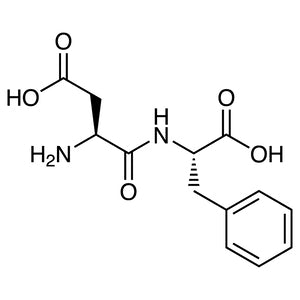
L-alpha-Aspartyl-L-phenylalanine TCI A3489
Regular price From Rp 1.353.450,00Regular price -
L-Phenylalanyl-L-phenylalanine TCI P2580
Regular price From Rp 2.332.050,00Regular price -
Glycyl-L-phenylalanine TCI G0136
Regular price From Rp 477.750,00Regular price -
Glycyl-DL-phenylalanine TCI G0135
Regular price Rp 2.094.750,00Regular price -
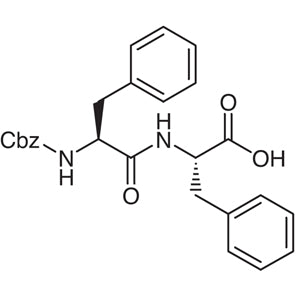
N-Carbobenzoxy-L-phenylalanyl-L-phenylalanine TCI C1170
Regular price Rp 4.293.450,00Regular price -
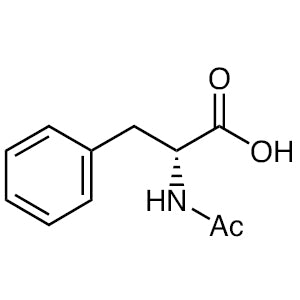
N-Acetyl-D-phenylalanine TCI A0105
Regular price From Rp 1.087.800,00Regular price