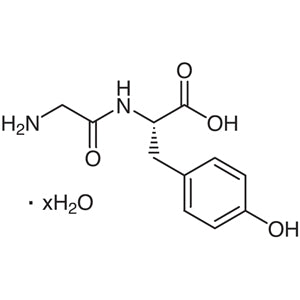
Glycyl-L-tyrosine Hydrate is a dipeptide composed of glycine and L-tyrosine supplied in its hydrated form, offered by TCI under catalogue number G0145. The compound is well established in biochemical laboratories as a classical substrate for the enzyme carboxypeptidase, and equally as a form of tyrosine that dissolves far more readily than the free amino acid. Because free tyrosine is notoriously difficult to dissolve in water, providing tyrosine within a dipeptide bond has become a practical solution in parenteral nutrition research and in cell culture media that require a stable supply of tyrosine in aqueous solution.
The property that makes this material a preferred choice is the phenolic group on the tyrosine side chain. This group gives a characteristic ultraviolet absorbance, so concentration and reaction progress can be monitored directly with a spectrophotometer, while the same group serves as a reactive site for chemical labelling such as iodination or diazo coupling in protein research. Its markedly better water solubility compared with free tyrosine makes it straightforward to prepare solutions of adequate concentration without heating or extreme pH adjustment. The hydrate form is stable under correct storage and is easy to weigh out for milligram-scale experiments.
In Indonesian laboratories, this dipeptide is typically encountered in university biochemistry and enzymology work, in research institutes studying protease activity, and in cell culture and nutrition laboratories that need a soluble tyrosine source. The combination of small working quantities and direct spectrophotometric monitoring suits facilities where instrumentation is shared across research groups, and its solution behaviour reduces the sample preparation difficulties that free tyrosine commonly causes in routine laboratory practice.
- Carboxypeptidase assay substrate — the peptide bond is cleaved by the enzyme, and the reaction can be followed directly because the released tyrosine changes the ultraviolet absorbance of the mixture.
- Enzymology teaching and method development — as a classical, well-documented substrate it gives students and method developers a reliable reference reaction for studying peptidase activity and kinetics.
- Soluble tyrosine source for cell culture media — supplies tyrosine in an aqueous solution that remains stable, avoiding the poor solubility that limits the use of free tyrosine in media preparation.
- Parenteral nutrition research — the dipeptide form allows tyrosine to be delivered in stable aqueous solution, which is the practical basis for its use in nutritional research formulations.
- Chemical labelling studies in protein research — the phenolic side chain provides a defined reactive point for iodination or diazo coupling work, serving as a small model compound for tyrosine modification.
| Brand | TCI, catalogue number G0145 |
|---|---|
| CAS number | 207300-83-2 |
| Molecular formula | — |
| Purity | — |
| Category | Life Science > Biochemicals and Reagents > Peptides |
| Pack sizes | available in laboratory research pack sizes suitable for milligram-scale work; please enquire for currently listed sizes |
| Physical form | — |
| Storage | store under the conditions stated on the manufacturer's label to maintain the stability of the hydrate form |
- Chemical class: dipeptide of glycine and L-tyrosine, supplied as the hydrate
Store the container in a cool, dry place, tightly closed and protected from moisture, following the storage conditions given on the manufacturer's label. Keep the material in its original container or in a well-sealed glass or chemically compatible plastic vessel, clearly labelled with the compound name, catalogue number and date opened. Allow the container to reach room temperature before opening if it has been refrigerated, so that condensation does not affect the hydrate. Weigh the material in a clean, dry area and close the container promptly after use. Handle with standard laboratory precautions: wear gloves, a laboratory coat and eye protection, avoid the generation of dust, and work in a well-ventilated area or fume hood. Prepare aqueous solutions with purified water and store prepared solutions according to the requirements of the assay concerned.
—
Produk Terkait
-
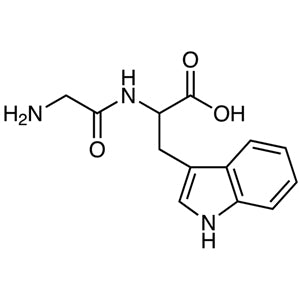
Glycyl-DL-tryptophan TCI G0190
Regular price Rp 2.809.800,00Regular price -
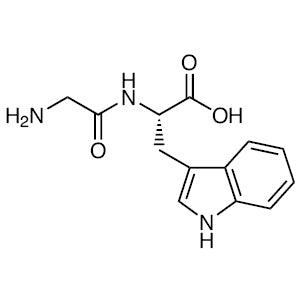
Glycyl-L-tryptophan TCI G0144
Regular price From Rp 1.008.000,00Regular price -
Glycyl-L-proline TCI G0137
Regular price Rp 3.021.900,00Regular price -
Glycyl-L-phenylalanine TCI G0136
Regular price From Rp 477.750,00Regular price -
Glycyl-DL-phenylalanine TCI G0135
Regular price Rp 2.094.750,00Regular price -
L-Alanyl-L-tyrosine TCI A1263
Regular price Rp 4.001.550,00Regular price -
L-Leucyl-L-tyrosine TCI L0040
Regular price From Rp 1.696.800,00Regular price -
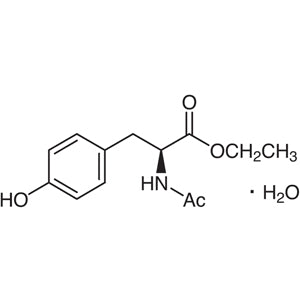
N-Acetyl-L-tyrosineEthylEsterMonohydrate TCI A0118
Regular price From Rp 610.050,00Regular price