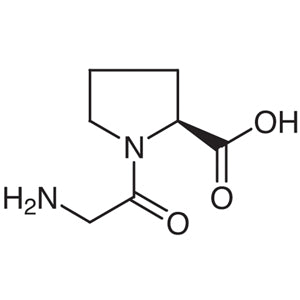
Glycyl-L-proline is a chemical compound belonging to the peptide category, widely used in biochemical and life science research. It is composed of two amino acids—glycine and L-proline—linked by a peptide bond. This compound plays a crucial role in laboratory settings as a building block for the synthesis of more complex molecules such as peptides and proteins. Its presence in various biochemical reactions makes it an essential reagent for researchers aiming to explore molecular interactions and biological processes.
The chemical properties of Glycyl-L-proline make it a preferred choice for laboratory use. It exhibits stability under certain conditions, which simplifies storage and handling. Additionally, it dissolves well in organic solvents like acetone and ethyl acetate, enhancing its versatility in experimental applications. Its non-toxic and relatively safe nature further supports its use in scientific research, making it a reliable and environmentally friendly option for laboratories.
In Indonesian laboratories, Glycyl-L-proline is a key component in biomedical, pharmacological, and biotechnological research. It is commonly used in experiments related to protein synthesis, enzyme activity, and drug development. Its availability and reliability make it a staple in academic and industrial research settings across Indonesia, supporting advancements in life sciences and related fields.
TCI brochures (PDF)
- Amino Acids and Peptide Synthesis Reagents 2025-08-14 · p. 33
- Biochemical Synthesis: Glycyl-L-proline is ideal for synthesizing complex peptides and proteins due to its stable structure and reactivity.
- Enzymatic Reaction Studies: It serves as a substrate for enzyme assays, helping researchers understand catalytic mechanisms and substrate specificity.
- Drug Development: Its role in peptide-based drug design makes it valuable for pharmaceutical research and compound screening.
- Protein Modification Experiments: It is used in studies involving protein conjugation and modification, aiding in the development of therapeutic agents.
- Analytical Chemistry Applications: Glycyl-L-proline is useful in chromatographic and spectroscopic analyses for identifying and quantifying peptide compounds.
| Brand | TCI |
|---|---|
| CAS number | 704-15-4 |
| Molecular formula | — |
| Purity | — |
| Category | Life Science > Biochemicals and Reagents > Peptides |
| Pack sizes | Available in various quantities as per standard laboratory requirements |
| Physical form | Solid powder |
| Storage | Store in a cool, dry place away from direct sunlight |
Glycyl-L-proline should be stored in a cool, dry environment to maintain its chemical stability. It is recommended to keep it in airtight containers to prevent moisture absorption. Due to its solubility in organic solvents, it should be handled in a well-ventilated area to avoid inhalation of vapors. Proper personal protective equipment, such as gloves and safety goggles, should be worn during handling. Avoid exposure to high temperatures or direct sunlight, as these conditions may affect its integrity. Regular inspection of storage conditions ensures the compound remains suitable for use in laboratory experiments.
—
Produk Terkait
-
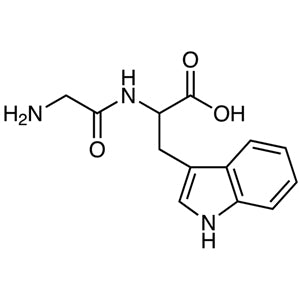
Glycyl-DL-tryptophan TCI G0190
Regular price Rp 2.809.800,00Regular price -
Glycyl-L-tyrosineHydrate TCI G0145
Regular price From Rp 1.590.750,00Regular price -
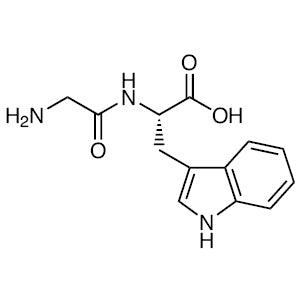
Glycyl-L-tryptophan TCI G0144
Regular price From Rp 1.008.000,00Regular price -
Glycyl-L-phenylalanine TCI G0136
Regular price From Rp 477.750,00Regular price -
Glycyl-DL-phenylalanine TCI G0135
Regular price Rp 2.094.750,00Regular price -
L-Alanyl-L-proline TCI A1495
Regular price Rp 6.015.450,00Regular price -
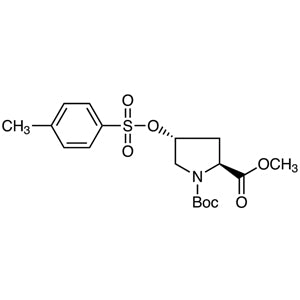
N-(tert-Butoxycarbonyl)-trans-4-(p-toluenesulfonyloxy)-L-prolineMethylEster TCI B5247
Regular price From Rp 557.550,00Regular price -
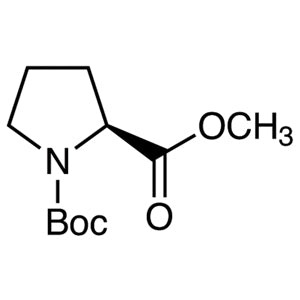
N-(tert-Butoxycarbonyl)-L-prolineMethylEster TCI B5228
Regular price From Rp 637.350,00Regular price