2-Acetyl-7-methoxybenzofuran is a chemical compound widely used in organic reactions for the synthesis of complex molecules. This compound is a heterocyclic building block with a benzofuran core substituted with an acetyl and methoxy group. In the laboratory, it serves as a foundational material for the development of new compounds, including pharmaceuticals, industrial chemicals, and organic intermediates. Its unique structure enables it to participate in various synthetic pathways, making it a versatile tool for chemists.
The compound's complex structure and high reactivity make it a preferred choice in both academic and industrial research settings. It exhibits stability under certain conditions but is highly reactive in substitution and electrophilic reactions. Its aromatic nature and polar substituents allow it to interact effectively with a range of reagents such as acids, bases, and catalysts. These properties make it ideal for precise synthetic reactions requiring controlled reactivity and selectivity.
In Indonesian laboratories, 2-Acetyl-7-methoxybenzofuran is commonly used in organic chemistry research, particularly in the fields of pharmacology, materials science, and chemical synthesis. Its role is critical in the development of new drugs and functional materials. Researchers in Indonesia rely on this compound for its reliability and effectiveness in various synthetic processes, contributing to advancements in both basic and applied chemistry.
Related TCI products
- TCI D2154 1563-38-8 2,3-Dihydro-2,2-dimethyl-7-hydroxybenzofuran
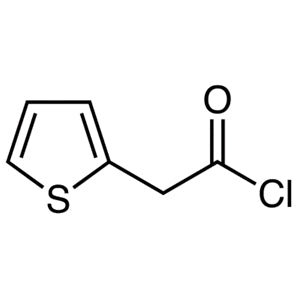
- TCI T1751 39098-97-0 Thiophene-2-acetyl Chloride
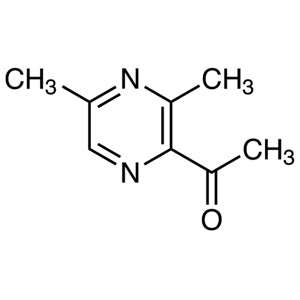
- TCI A3326 54300-08-2 2-Acetyl-3,5-dimethylpyrazine (contains 2-Acetyl-3,6-dimethylpyrazine)
- TCI A3264 29926-41-8 2-Acetyl-2-thiazoline
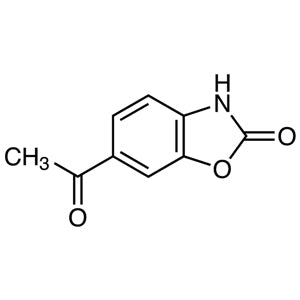
- TCI A2907 54903-09-2 6-Acetyl-2-benzoxazolinone
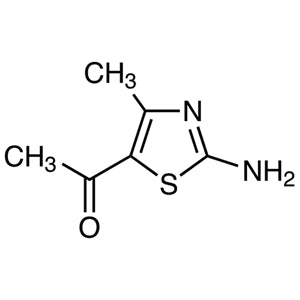
- TCI A2887 30748-47-1 5-Acetyl-2-amino-4-methylthiazole
- Organic synthesis applications benefit from this compound's reactivity and structural versatility, enabling the creation of complex molecules with high precision.
- Pharmaceutical research utilizes it as a building block for the development of new drug candidates, leveraging its aromatic and substituent properties.
- Material science applications take advantage of its chemical stability and reactivity to design advanced functional materials with tailored properties.
- Academic research in chemistry relies on its role as a heterocyclic building block for exploring new synthetic methods and reaction mechanisms.
- Industrial chemical synthesis benefits from its ability to participate in multiple reaction pathways, supporting the production of a wide range of chemical products.
| Brand | TCI |
|---|---|
| CAS number | 43071-52-9 |
| Molecular formula | — |
| Purity | — |
| Category | Chemistry > Building Blocks > Heterocyclic Building Blocks |
| Pack sizes | Available in various quantities as per standard laboratory requirements |
| Physical form | Solid |
| Storage | Store in a cool, dry place away from light and moisture |
This compound should be stored in a cool, dry environment, away from direct light and moisture to maintain its chemical integrity. It is recommended to use airtight containers made of glass or polyethylene to prevent contamination and degradation. Due to its reactivity, it should be handled with care, using appropriate personal protective equipment such as gloves and safety goggles. In laboratory settings, it is important to ensure proper ventilation and to avoid exposure to incompatible substances like strong acids or bases. Regular monitoring of storage conditions is advised to ensure the compound remains stable and suitable for use in chemical reactions.
—
Produk Terkait
-
2,3-Dihydro-2,2-dimethyl-7-hydroxybenzofuran TCI D2154
Regular price From Rp 637.350,00Regular priceRp 460.950,00Sale price From Rp 637.350,00 -
Thiophene-2-acetylChloride TCI T1751
Regular price Rp 1.829.100,00Regular priceRp 1.294.650,00Sale price Rp 1.829.100,00 -
2-Acetyl-3,5-dimethylpyrazine(contains2-Acetyl-3,6-dimethylpyrazine) TCI A3326
Regular price From Rp 1.378.650,00Regular priceRp 979.650,00Sale price From Rp 1.378.650,00 -
2-Acetyl-2-thiazoline TCI A3264
Regular price From Rp 1.881.600,00Regular priceRp 1.331.400,00Sale price From Rp 1.881.600,00 -
6-Acetyl-2-benzoxazolinone TCI A2907
Regular price From Rp 1.272.600,00Regular priceRp 905.100,00Sale price From Rp 1.272.600,00 -
5-Acetyl-2-amino-4-methylthiazole TCI A2887
Regular price From Rp 822.150,00Regular priceRp 590.100,00Sale price From Rp 822.150,00 -
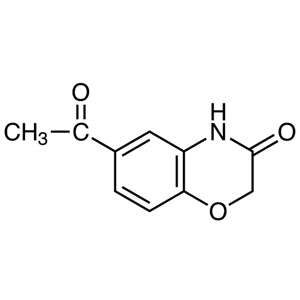
6-Acetyl-2H-1,4-benzoxazin-3(4H)-one TCI A2755
Regular price From Rp 1.298.850,00Regular priceRp 924.000,00Sale price From Rp 1.298.850,00 -
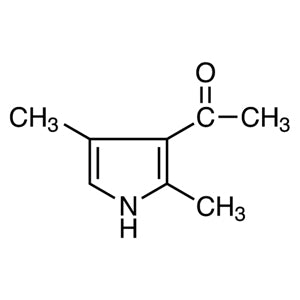
3-Acetyl-2,4-dimethylpyrrole TCI A2734
Regular price From Rp 1.776.600,00Regular priceRp 1.257.900,00Sale price From Rp 1.776.600,00