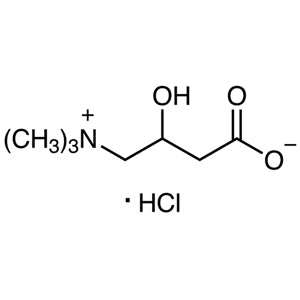
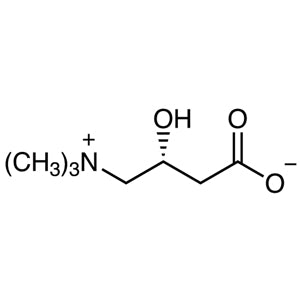
Acetyl-L-carnitine Hydrochloride is a chemical compound widely used in laboratory settings, particularly in the fields of chemical biology and peptide chemistry. It serves as a key reagent in various experimental processes, including the study of metabolic pathways, neurological functions, and pharmacological effects. This compound is derived from carnitine and plays a crucial role in the transport of fatty acids into mitochondria, which is essential for cellular energy production. Its presence in research allows scientists to explore the biochemical mechanisms underlying energy metabolism and related physiological processes.
The compound is valued for its solubility in water and its chemical stability, making it a reliable choice for laboratory applications. Its non-toxic nature at appropriate dosages ensures safety during experimentation, reducing potential risks for researchers. Additionally, the presence of a carbonyl group enables a wide range of chemical reactions, making it suitable for organic synthesis and molecular interaction studies. These properties collectively contribute to its popularity among researchers working in diverse scientific disciplines.
In Indonesian laboratories, Acetyl-L-carnitine Hydrochloride is commonly used in health, pharmaceutical, and biotechnology research. Scientists leverage its properties to develop new drugs, understand disease mechanisms, and test therapeutic effects. Its versatility and reliability make it an essential tool for advancing scientific knowledge and innovation in these fields.
TCI brochures (PDF)
- Vitamins for Research and Experimental Use 2025-06-27 · p. 6
- Amino Acids and Peptide Synthesis Reagents 2025-08-14 · p. 6
- Energy metabolism research utilizes this compound to study fatty acid transport and mitochondrial function, aiding in the understanding of cellular energy production.
- Neurological studies benefit from its role in investigating the impact of acetyl-L-carnitine on brain function and neurodegenerative diseases.
- Pharmacological experiments use it to evaluate its potential as a therapeutic agent for various conditions, including metabolic disorders and neurological impairments.
- Organic synthesis applications take advantage of its reactivity and solubility to create complex molecules and study molecular interactions.
- Biotechnology research incorporates it to explore its effects on cellular processes and its potential in developing novel therapeutic strategies.
| Brand | TCI |
|---|---|
| CAS number | 5080-50-2 |
| Molecular formula | — |
| Purity | — |
| Category | Chemistry > Chemical Biology > Peptide Chemistry |
| Pack sizes | Available in various quantities as per standard laboratory supply |
| Physical form | White crystalline powder |
| Storage | Store in a cool, dry place away from direct sunlight |
Acetyl-L-carnitine Hydrochloride should be stored in a cool, dry environment to maintain its chemical stability and prevent degradation. It is recommended to keep the compound in a tightly sealed container to avoid moisture absorption, which could affect its solubility and purity. Due to its non-toxic nature at appropriate dosages, it is generally safe to handle, but standard laboratory safety protocols should still be followed. Researchers should ensure proper ventilation when working with this compound to minimize exposure. It is advisable to store it away from incompatible substances to prevent any potential chemical interactions. Regular inspection of storage conditions is recommended to ensure the compound remains in optimal condition for use in experiments.
—
Product Categories
- Biochemicals and ReagentsAmino Acidsnon-Proteinogenic Amino Acids
- Biochemicals and ReagentsVitamins and Related CompoundsVitamin Related Compounds
- Cell BiologyMetabolomicsMetabolic Libraries
- Cell BiologyMetabolomicsMetabolic Pathways
- Cell BiologyNutrition ResearchVitamins [Nutrition Research]
- Pharmaceutical Development and Drug Discovery ResearchPeptide ChemistryUnnatural Amino Acid Derivatives
Produk Terkait
-
Propionyl-L-carnitineHydrochloride TCI P2569
Regular price From Rp 530.250,00Regular priceRp 386.400,00Sale price From Rp 530.250,00 -
L-CarnitineL-Tartrate TCI C2625
Regular price From Rp 610.050,00Regular priceRp 442.050,00Sale price From Rp 610.050,00 -
DL-CarnitineHydrochloride TCI C0050
Regular price From Rp 1.087.800,00Regular priceRp 775.950,00Sale price From Rp 1.087.800,00 -
L-Carnitine TCI C0049
Regular price From Rp 1.192.800,00Regular priceRp 849.450,00Sale price From Rp 1.192.800,00 -
D-Carnitine TCI C3972
Regular price Rp 4.266.150,00Regular priceRp 2.998.800,00Sale price Rp 4.266.150,00 -
L-CarnitineHydrochloride TCI C3058
Regular price From Rp 822.150,00Regular priceRp 590.100,00Sale price From Rp 822.150,00 -
beta-NicotinamideAdenineDinucleotidePhosphateTetrasodiumSaltreducedform[forBiochemicalResearch] TCI T0521
Regular price Rp 4.636.800,00Regular priceRp 3.258.150,00Sale price Rp 4.636.800,00 -
beta-NicotinamideAdenineDinucleotidePhosphate[forBiochemicalResearch] TCI N0943
Regular price Rp 3.683.400,00Regular priceRp 2.591.400,00Sale price Rp 3.683.400,00