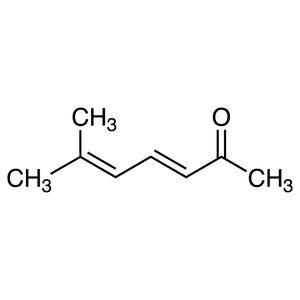
3-Methylhexyl Acetate is a chemical compound widely used as a foundational material in various laboratory reactions. It serves as a key building block in synthetic chemistry, particularly in the development of complex organic molecules. Its simple yet essential structure makes it a versatile reagent for researchers aiming to create new compounds or modify existing ones. This compound is commonly found in chemical synthesis processes where stability and reactivity control are critical. Its role in the laboratory extends beyond mere reagent use, as it supports the creation of both aromatic and aliphatic compounds through controlled chemical transformations.
One of the primary reasons 3-Methylhexyl Acetate is preferred is its chemical stability and low reactivity with other substances. This characteristic minimizes the risk of unintended side reactions, ensuring more predictable and controlled experimental outcomes. Additionally, its mild and non-irritating odor makes it suitable for use in environments where maintaining a safe and comfortable workspace is important. These properties make it an ideal choice for both research and educational settings, where consistency and safety are paramount.
In Indonesian laboratories, 3-Methylhexyl Acetate is extensively used in organic chemistry research, especially in the synthesis of new compounds and the development of industrial chemicals. It is also commonly employed in university-level teaching to help students understand molecular structures and chemical reactions. Its reliability and ease of handling have made it a staple in both academic and applied research environments across Indonesia.
TCI brochures (PDF)
- Lipids 2025-12-17 · p. 11
- Organic synthesis is a key application where 3-Methylhexyl Acetate is used to build complex molecular structures through controlled chemical reactions.
- Educational laboratories benefit from its use in teaching students about molecular structures and reaction mechanisms in organic chemistry.
- Industrial chemical development relies on this compound for creating new materials and compounds with specific properties.
- Research facilities use it in the synthesis of aromatic and aliphatic compounds due to its stability and predictable reactivity.
- Analytical laboratories may use it as a reference standard for quality control and purity testing in chemical processes.
| Brand | TCI |
|---|---|
| CAS number | 50373-54-1 |
| Molecular formula | — |
| Purity | — |
| Category | Chemistry > Building Blocks > Non-Heterocyclic Building Blocks |
| Pack sizes | — |
| Physical form | — |
| Storage | Store in a cool, dry place away from direct sunlight and incompatible materials |
3-Methylhexyl Acetate should be stored in a cool, dry environment to maintain its chemical stability and prevent degradation. It is recommended to keep it in a tightly sealed container to avoid exposure to air and moisture. The compound should be stored away from strong oxidizing agents and reactive substances to minimize the risk of unintended chemical interactions. In laboratory settings, it is important to use appropriate personal protective equipment when handling this material. Regular monitoring of storage conditions ensures the compound remains safe and effective for use in chemical experiments. Proper labeling of containers is also essential for safe handling and easy identification.
—
Produk Terkait
-
3,5,5-TrimethylhexanoylChloride TCI T0951
Regular price Rp 848.400,00Regular priceRp 609.000,00Sale price Rp 848.400,00 -
3,5,5-Trimethylhexanal TCI T0940
Regular price From Rp 717.150,00Regular priceRp 500.850,00Sale price From Rp 717.150,00 -
3,5,5-TrimethylhexanoicAcid TCI T0630
Regular price From Rp 530.250,00Regular priceRp 386.400,00Sale price From Rp 530.250,00 -
6-Methylhepta-3,5-dien-2-one TCI M3780
Regular price From Rp 1.749.300,00Regular priceRp 1.223.250,00Sale price From Rp 1.749.300,00 -
2-MethylheptanoicAcid TCI M1265
Regular price From Rp 1.272.600,00Regular priceRp 905.100,00Sale price From Rp 1.272.600,00 -
5-MethylhexanoicAcid TCI M1142
Regular price From Rp 1.298.850,00Regular priceRp 924.000,00Sale price From Rp 1.298.850,00 -
2-MethylhexadecanoicAcid TCI M1026
Regular price Rp 2.969.400,00Regular priceRp 2.091.600,00Sale price Rp 2.969.400,00 -
2-MethylhexanoicAcid TCI M0947
Regular price From Rp 742.350,00Regular priceRp 534.450,00Sale price From Rp 742.350,00