


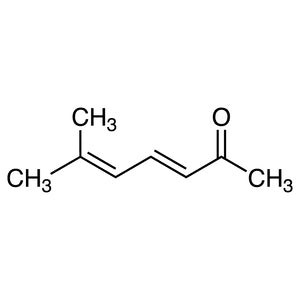
6-Methylhepta-3,5-dien-2-one is a chemical compound widely used in organic reactions for the synthesis of complex molecules. As a key building block in chemical research, it serves as a versatile intermediate in the development of aromatic and heterocyclic compounds. Its structural characteristics and reactivity make it an essential component in various synthetic pathways within the laboratory. This compound is particularly valuable for its ability to participate in multiple reaction types, making it a fundamental tool for chemists working on advanced molecular structures.
The compound's high reactivity and complex molecular structure make it a preferred choice in organic synthesis. It is known for its ability to engage in reactions involving double bonds and functional groups, which is crucial for the formation of more intricate chemical structures. Its stability under certain conditions also ensures reliable performance in laboratory settings. These properties contribute to its widespread use in both academic and industrial research environments.
In Indonesian laboratories, 6-Methylhepta-3,5-dien-2-one is commonly used in scientific research, including the development of new compounds, organic modification studies, and feasibility testing. Its role in enabling the creation of complex chemical structures makes it a valuable resource for researchers aiming to advance their work in organic chemistry. The compound's availability and reliability further support its use in various experimental contexts within the region.
Related TCI products
- Organic synthesis applications benefit from this compound's ability to participate in multiple reaction types, including aldol and Diels-Alder reactions, enabling the creation of complex molecular structures.
- It is ideal for the development of aromatic and heterocyclic compounds due to its reactivity and structural versatility, supporting the synthesis of a wide range of chemical entities.
- In research focused on compound modification, this material provides a stable and reliable building block for the transformation of existing molecules into new derivatives.
- Its use in feasibility studies allows scientists to test the potential of new synthetic pathways, contributing to the advancement of chemical research.
- The compound's role in academic and industrial research ensures its relevance in the pursuit of innovative chemical solutions and applications.
| Brand | TCI |
|---|---|
| CAS number | 1604-28-0 |
| Molecular formula | — |
| Purity | — |
| Category | Chemistry > Building Blocks > Non-Heterocyclic Building Blocks |
| Pack sizes | Available in various quantities as per supplier specifications |
| Physical form | Liquid |
| Storage | Store in a cool, dry place away from light and incompatible materials |
This compound should be stored in a cool, dry environment, away from direct sunlight and sources of heat. It is recommended to use airtight containers made of glass or high-density polyethylene to prevent contamination and maintain stability. Due to its reactivity, it should be handled with care, using appropriate personal protective equipment such as gloves and safety goggles. Avoid exposure to incompatible substances like strong oxidizing agents. Ensure proper ventilation in the workspace to minimize inhalation risks. Regular monitoring of storage conditions is essential to maintain the compound's integrity and ensure safe laboratory practices.
—
Produk Terkait
-
3-MethylhexylAcetate TCI A1396
Regular price Rp 1.298.850,00Regular priceRp 908.250,00Sale price Rp 1.298.850,00

