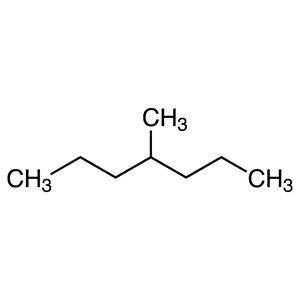
4-Methylheptane is an organic compound widely used in various chemical experiments within laboratory settings. As a building block in chemical synthesis, it provides a foundational structure that can be modified through chemical reactions to create more complex compounds. This versatility makes it an essential component in the toolkit of chemists and researchers. Its non-heterocyclic nature allows it to be used in a broad range of applications without introducing unwanted functional groups. In the laboratory, 4-Methylheptane is commonly employed as a solvent or a starting material for the synthesis of other organic compounds.
The compound’s non-polar and volatile characteristics make it a preferred choice for reactions requiring a neutral solvent. Its chemical stability ensures that it does not react with other substances under normal laboratory conditions, making it reliable for use in a variety of experimental setups. Additionally, its relatively high boiling point allows for controlled evaporation in distillation processes, while its non-toxic nature ensures safety in laboratory environments. These properties contribute to its widespread use in both research and educational settings.
In Indonesian laboratories, 4-Methylheptane is utilized in a range of chemical research activities, including organic synthesis, material characterization, and reactivity testing. It is also commonly used in educational institutions to train students in the proper handling and application of chemical substances. Its inertness and predictable behavior make it an ideal choice for both practical and theoretical experiments in the field of chemistry.
- Organic synthesis experiments benefit from 4-Methylheptane’s stable structure and non-reactive nature, allowing for controlled chemical transformations.
- Material characterization studies use it as a non-polar solvent to dissolve and analyze various compounds without interference.
- Reactivity testing in chemical research relies on its inert properties to ensure accurate and consistent results in experimental conditions.
- Educational laboratories employ it to teach students about solvent properties and chemical handling techniques in a safe environment.
- Industrial research applications use it as a base material for developing new chemical products and formulations.
| Brand | TCI |
|---|---|
| CAS number | 589-53-7 |
| Molecular formula | — |
| Purity | — |
| Category | Chemistry > Building Blocks > Non-Heterocyclic Building Blocks |
| Pack sizes | Available in various quantities as per supplier specifications |
| Physical form | Liquid |
| Storage | Store in a cool, dry place away from direct sunlight and heat sources |
4-Methylheptane should be stored in a cool, dry location, away from direct sunlight and heat sources to maintain its stability. It is recommended to use sealed, airtight containers made of materials compatible with organic solvents, such as glass or high-density polyethylene. Due to its volatility, it should be handled in a well-ventilated area to prevent inhalation of vapors. While it is non-toxic, proper personal protective equipment, including gloves and safety goggles, should be worn when handling. It should not be stored near incompatible substances such as strong oxidizers. Regular monitoring of storage conditions ensures the compound remains safe and effective for laboratory use.
—
Produk Terkait
-
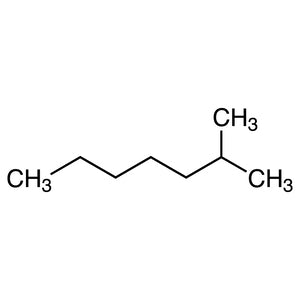
2-Methylheptane TCI M0519
Regular price Rp 3.419.850,00Regular price -
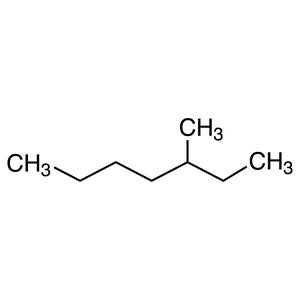
3-Methylheptane TCI M0334
Regular price Rp 875.700,00Regular price -
3-Ethyl-3-methylheptane TCI E0304
Regular price Rp 2.439.150,00Regular price -
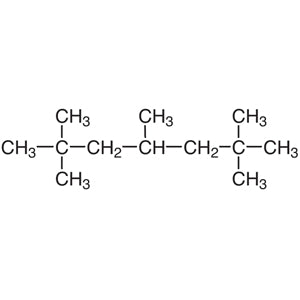
2,2,4,6,6-Pentamethylheptane TCI P0047
Regular price Rp 848.400,00Regular price -
4-Ethylheptane TCI E0260
Regular price Rp 2.359.350,00Regular price -
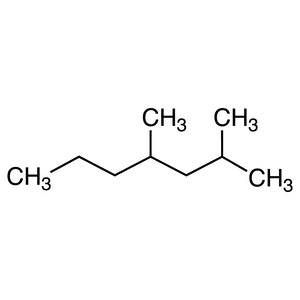
2,4-Dimethylheptane TCI D6408
Regular price Rp 4.293.450,00Regular price -
3,5-Dimethylheptane TCI D1208
Regular price Rp 3.021.900,00Regular price -
3,4-Dimethylheptane(mixtureofisomers) TCI D1207
Regular price Rp 11.846.100,00Regular price