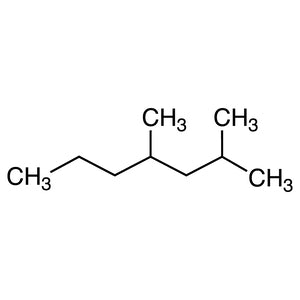
2,4-Dimethylheptane is a hydrocarbon compound widely used in chemical experiments to construct more complex molecular structures. As a building block in organic chemistry, it plays a crucial role in substitution and coupling reactions. Its non-reactive and non-polar nature makes it a reliable component for various synthetic processes. This compound is essential for researchers and students aiming to develop new substances with specific properties. It is commonly found in laboratory settings where stability and predictability are required.
The compound’s chemical inertness and lack of reactivity make it a preferred choice for many laboratory applications. Its non-polar characteristics ensure compatibility with a wide range of solvents and reaction conditions. Additionally, its well-defined boiling and melting points facilitate separation and identification processes. These properties contribute to its reliability and ease of use in both educational and research environments. The stability of 2,4-Dimethylheptane ensures that it remains unchanged under normal laboratory conditions, making it a trusted material for long-term experiments.
In Indonesian laboratories, 2,4-Dimethylheptane is frequently used by researchers and students in both teaching and research contexts. It is an essential part of the laboratory’s chemical inventory, supporting a variety of experiments in organic synthesis. Its availability in the local market ensures that it is accessible to institutions and individuals conducting chemical research. This compound is integral to meeting the standards of education and research in the Indonesian scientific community.
- Organic synthesis experiments benefit from 2,4-Dimethylheptane due to its non-reactive nature and stability, allowing for controlled reaction environments.
- It is commonly used in teaching laboratories to demonstrate molecular structure building and reaction mechanisms to students.
- The compound supports coupling reactions where its inertness prevents unwanted side reactions, ensuring accurate results.
- Its non-polar properties make it suitable for use as a solvent in various chemical processes, enhancing solubility and reaction efficiency.
- It is used in analytical chemistry for calibration and as a reference standard in chromatographic techniques.
| Brand | TCI |
|---|---|
| CAS number | 2213-23-2 |
| Molecular formula | — |
| Purity | — |
| Category | Chemistry > Building Blocks > Non-Heterocyclic Building Blocks |
| Pack sizes | Available in standard laboratory quantities |
| Physical form | Liquid |
| Storage | Store in a cool, dry place away from direct sunlight |
2,4-Dimethylheptane should be stored in a cool, dry place away from direct sunlight to maintain its stability. It is recommended to use airtight containers to prevent contamination and evaporation. Due to its non-reactive nature, it does not require special handling under normal laboratory conditions. However, it is advisable to keep it away from heat sources and open flames. The compound is not flammable, but standard laboratory safety practices should still be followed when handling it. Proper labeling of containers ensures safe handling and easy identification in the laboratory environment.
—
Produk Terkait
-
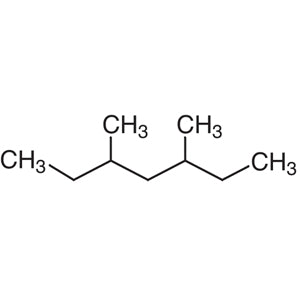
3,5-Dimethylheptane TCI D1208
Regular price Rp 3.021.900,00Regular price -
3,4-Dimethylheptane(mixtureofisomers) TCI D1207
Regular price Rp 11.846.100,00Regular price -
3,3-Dimethylheptane TCI D1206
Regular price Rp 2.094.750,00Regular price -
2,5-Dimethylheptane TCI D1205
Regular price Rp 4.133.850,00Regular price -
2,3-Dimethylheptane TCI D1203
Regular price Rp 2.332.050,00Regular price -
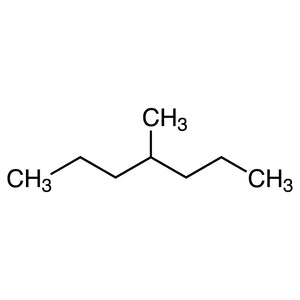
4-Methylheptane TCI M0520
Regular price Rp 928.200,00Regular price -
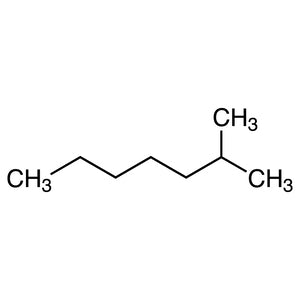
2-Methylheptane TCI M0519
Regular price Rp 3.419.850,00Regular price -
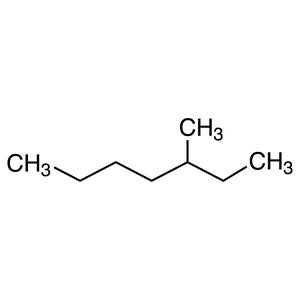
3-Methylheptane TCI M0334
Regular price Rp 875.700,00Regular price