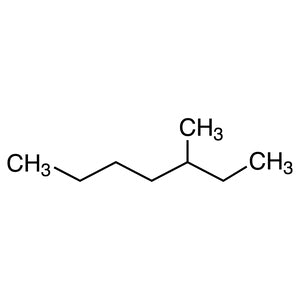
3-Methylheptane from TCI is a branched-chain alkane hydrocarbon with an eight-carbon skeleton that serves as an important reference compound in the analysis of fuels and petrochemical products. As one of the octane isomers, this compound is frequently used to prepare standard mixtures for the determination of gas chromatographic retention indices, for the calibration of flame ionization detectors, and for the identification of components within gasoline fractions. The small pack sizes available reflect its generally analytical role, namely as a comparative standard used in limited quantities rather than as a bulk process solvent.
The property that makes 3-methylheptane the compound of choice is its very high chemical stability as a saturated hydrocarbon, which means it does not react with most reagents and does not interfere with the sample matrix when used as a standard. It presents as a colourless liquid that is highly volatile and highly flammable, practically insoluble in water, yet readily miscible with other hydrocarbon solvents. Its branched structure produces a retention time that is clearly distinguishable from that of n-octane, which makes it particularly valuable in research on isomer separation and in the evaluation of the resolving power of capillary columns.
Laboratories in Indonesia draw on this compound primarily in analytical settings where a well-characterised hydrocarbon reference is required. Its typical context of use is the chromatography bench, where it supports the routine work of identifying and comparing hydrocarbon components in petroleum-derived samples. Because the quantities needed are small and the compound is employed as a comparative standard rather than a working solvent, it is handled in the modest pack sizes supplied by TCI.
- Gas chromatographic retention index determination: the compound is a recognised reference alkane whose behaviour allows analysts to assign and verify retention indices for unknown hydrocarbon peaks.
- Flame ionization detector calibration: as a stable saturated hydrocarbon of known identity, it gives a consistent detector response suitable for establishing calibration relationships in routine FID work.
- Identification of gasoline fraction components: its clearly defined retention behaviour lets analysts match and confirm peaks arising from the octane isomers present in gasoline samples.
- Isomer separation research: the branched structure gives a retention time distinctly different from n-octane, making it well suited to studies of how branched and straight-chain isomers resolve.
- Capillary column resolving power evaluation: pairing this branched isomer against its straight-chain counterpart provides a practical test of how effectively a capillary column separates closely related hydrocarbons.
| Brand | TCI |
|---|---|
| CAS number | 589-81-1 |
| Molecular formula | — |
| Purity | — |
| Category | Chemistry > Building Blocks > Non-Heterocyclic Building Blocks |
| Pack sizes | small pack sizes, consistent with analytical standard use rather than bulk solvent use |
| Physical form | colourless liquid, highly volatile |
| Storage | store in a cool place, tightly closed, away from all sources of ignition |
3-Methylheptane is highly volatile and highly flammable, so it should be stored in a cool, well-ventilated area away from open flames, sparks, hot surfaces, and other sources of ignition. Keep the material in its original tightly closed container, or in a container compatible with hydrocarbon solvents, to limit evaporative loss and vapour release. Handle it inside a fume hood, dispense only the small volumes required for standard preparation, and close the container immediately afterwards. Wear appropriate personal protective equipment, including chemical-resistant gloves, safety glasses, and a laboratory coat. Because the compound is practically insoluble in water but miscible with other hydrocarbon solvents, avoid aqueous washdown of spills and collect any released liquid with an inert absorbent for disposal in accordance with the laboratory's chemical waste procedures.
—
Produk Terkait
-
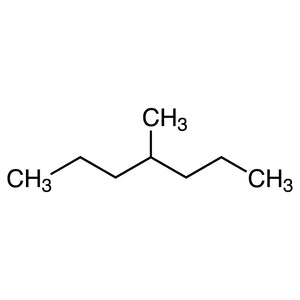
4-Methylheptane TCI M0520
Regular price Rp 928.200,00Regular price -
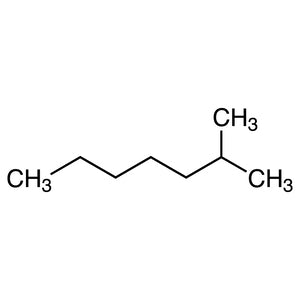
2-Methylheptane TCI M0519
Regular price Rp 3.419.850,00Regular price -
3-Ethyl-3-methylheptane TCI E0304
Regular price Rp 2.439.150,00Regular price -
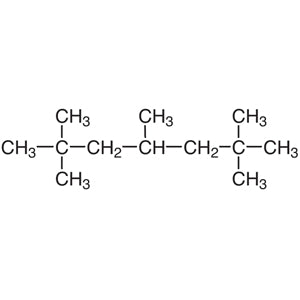
2,2,4,6,6-Pentamethylheptane TCI P0047
Regular price Rp 848.400,00Regular price -
4-Ethylheptane TCI E0260
Regular price Rp 2.359.350,00Regular price -
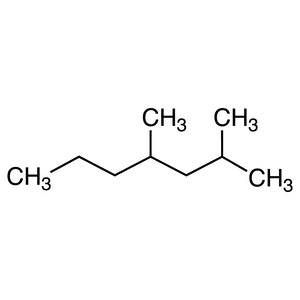
2,4-Dimethylheptane TCI D6408
Regular price Rp 4.293.450,00Regular price -
3,5-Dimethylheptane TCI D1208
Regular price Rp 3.021.900,00Regular price -
3,4-Dimethylheptane(mixtureofisomers) TCI D1207
Regular price Rp 11.846.100,00Regular price