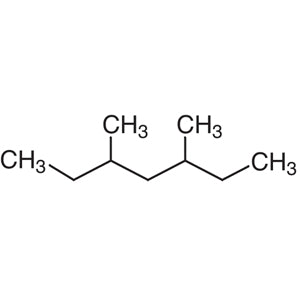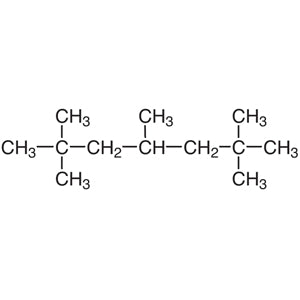
2,2,4,6,6-Pentamethylheptane is a branched alkane hydrocarbon with twelve carbon atoms, and it is also known as one form of isododecane. TCI supplies it as a non-heterocyclic building block for laboratory use under product code P0047. The molecule has no functional groups, and its carbon chain carries many methyl branches. In the laboratory it serves as an inert nonpolar solvent, as a reference compound in fuel and combustion research, and as a branched hydrocarbon standard in chromatographic analysis.
Researchers choose this compound mainly because it is inert. It has no double bonds and no heteroatoms, so it rarely takes part in reactions within an experimental system. This makes it a good medium or diluent. Its heavy branching gives it physical properties that differ from those of a straight-chain alkane with the same number of carbons, for example in how it evaporates and in its viscosity. That difference makes it useful for studying how hydrocarbon structure relates to physical properties. Its low polarity also makes it a good solvent for nonpolar organic compounds.
In Indonesia, pentamethylheptane is relevant to chemical engineering and petroleum laboratories that study fuel components and hydrocarbon behaviour. University research groups working on combustion, fuel formulation, or the physical chemistry of hydrocarbons can use it as a well-defined branched reference compound. Analytical laboratories that run gas chromatography on petroleum fractions or other organic mixtures can include it as a branched alkane standard. Organic synthesis laboratories may also use it when they need an inert nonpolar medium.
- Inert nonpolar solvent: it has no functional groups, double bonds, or heteroatoms, so it rarely interferes with the reactions or measurements it is used in.
- Fuel and combustion reference compound: as a highly branched twelve-carbon alkane, it gives combustion and fuel researchers a well-defined model of the branched hydrocarbons found in real fuels.
- Chromatography standard: it works as a branched hydrocarbon reference in chromatographic analysis, helping analysts identify and compare branched alkanes in complex organic or petroleum samples.
- Structure–property studies: its heavy methyl branching makes its evaporation behaviour and viscosity differ from straight-chain alkanes of the same carbon number, which is useful for comparative research.
- Diluent and reaction medium: its low polarity dissolves nonpolar organic compounds well, and its chemical inertness keeps it from joining in when it is used as a diluent or carrier medium.
| Brand | TCI (product code P0047) |
|---|---|
| CAS number | 13475-82-6 |
| Molecular formula | — |
| Purity | — |
| Category | Chemistry > Building Blocks > Non-Heterocyclic Building Blocks |
| Pack sizes | available in TCI's standard pack sizes; please ask AMI Scientific about current options |
| Physical form | liquid branched alkane (isododecane) |
| Storage | keep tightly closed in a cool, well-ventilated place away from sources of ignition |
Like other volatile hydrocarbons, 2,2,4,6,6-Pentamethylheptane should be treated as a flammable organic liquid. Store it in its original tightly sealed container, or in a compatible glass or solvent-resistant container, in a cool, dry, well-ventilated area. Keep it away from heat, sparks, open flames, and strong oxidizing agents. Handle it in a fume hood or well-ventilated space and wear safety glasses, chemical-resistant gloves, and a lab coat. Avoid breathing vapour and avoid prolonged contact with skin. Ground containers when transferring larger volumes, and dispose of waste according to local regulations for organic solvents. Always read the TCI Safety Data Sheet before use.
—
Produk Terkait
-
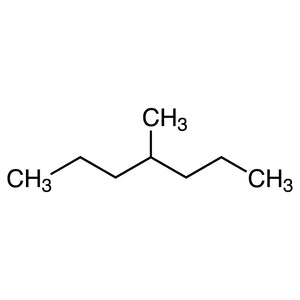
4-Methylheptane TCI M0520
Regular price Rp 928.200,00Regular price -
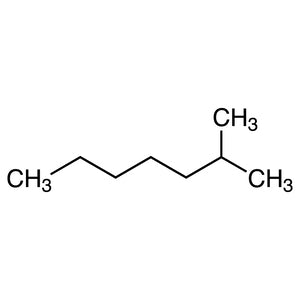
2-Methylheptane TCI M0519
Regular price Rp 3.419.850,00Regular price -
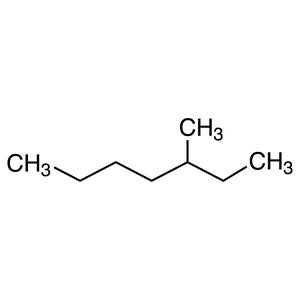
3-Methylheptane TCI M0334
Regular price Rp 875.700,00Regular price -
3-Ethyl-3-methylheptane TCI E0304
Regular price Rp 2.439.150,00Regular price -
4-Ethylheptane TCI E0260
Regular price Rp 2.359.350,00Regular price -
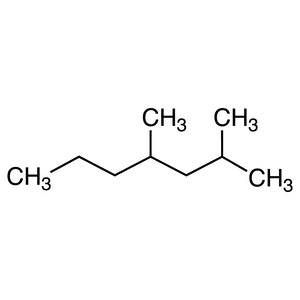
2,4-Dimethylheptane TCI D6408
Regular price Rp 4.293.450,00Regular price -
3,5-Dimethylheptane TCI D1208
Regular price Rp 3.021.900,00Regular price -
3,4-Dimethylheptane(mixtureofisomers) TCI D1207
Regular price Rp 11.846.100,00Regular price