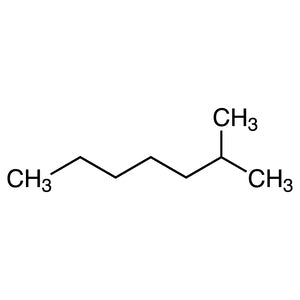
2-Methylheptane is an organic compound widely utilized in chemical experiments to construct complex molecular structures. As a fundamental building block in organic synthesis, it serves as a solvent or raw material in various chemical reactions. In the laboratory, it plays a crucial role in processes such as separation, characterization, and the synthesis of other compounds. Its non-polar and volatile nature makes it ideal for applications requiring a non-polar solvent environment. This compound is commonly used in Indonesian laboratories for research in organic chemistry, particularly in the synthesis of organic compounds and chemical analysis. Its availability in the local market ensures accessibility for researchers and students.
2-Methylheptane is characterized by its non-polar and volatile properties, which make it a preferred choice in many laboratory settings. It is not soluble in water but dissolves well in organic solvents such as ethers and chloroform. These solubility characteristics make it suitable for reactions that require a non-polar environment. Its low polarity also means it does not interact with polar substances, making it an effective solvent for non-polar compounds. These properties are essential in applications such as chromatography and extraction processes, where the separation of compounds is critical.
In Indonesian laboratories, 2-Methylheptane is commonly used in experiments involving substitution reactions, polymerization, and molecular structure characterization. Its availability and compatibility with various chemical processes make it a reliable choice for both academic and industrial research. Researchers and students rely on this compound for its consistent performance and ease of use in a wide range of chemical applications.
- Organic synthesis of complex compounds due to its non-polar nature and solvent properties.
- Chromatographic separation processes where non-polar solvents are required for compound isolation.
- Polymerization reactions as a medium for non-polar monomers to interact and form polymers.
- Molecular structure characterization in analytical chemistry for compound identification.
- Extraction processes where non-polar compounds need to be separated from polar mixtures.
| Brand | TCI |
|---|---|
| CAS number | 592-27-8 |
| Molecular formula | — |
| Purity | — |
| Category | Chemistry > Building Blocks > Non-Heterocyclic Building Blocks |
| Pack sizes | Available in various sizes as per standard laboratory requirements |
| Physical form | Liquid |
| Storage | Store in a cool, dry place away from direct sunlight and heat sources |
2-Methylheptane should be stored in a cool, dry location, away from direct sunlight and heat sources. It is recommended to use airtight containers made of materials that are compatible with organic solvents, such as glass or stainless steel. Due to its volatile nature, proper ventilation is essential when handling this compound to prevent inhalation of vapors. It should not be stored near incompatible materials such as strong oxidizers. Always ensure that the container is sealed tightly to prevent evaporation and contamination. General laboratory safety practices, such as the use of personal protective equipment, should be followed when handling this substance.
—
Produk Terkait
-
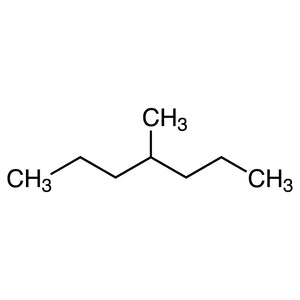
4-Methylheptane TCI M0520
Regular price Rp 928.200,00Regular price -
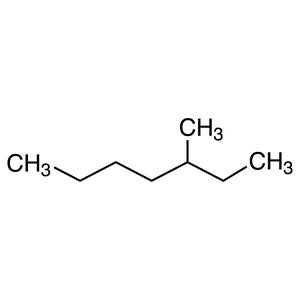
3-Methylheptane TCI M0334
Regular price Rp 875.700,00Regular price -
3-Ethyl-3-methylheptane TCI E0304
Regular price Rp 2.439.150,00Regular price -
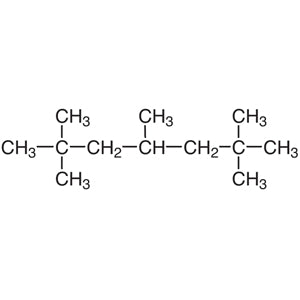
2,2,4,6,6-Pentamethylheptane TCI P0047
Regular price Rp 848.400,00Regular price -
4-Ethylheptane TCI E0260
Regular price Rp 2.359.350,00Regular price -
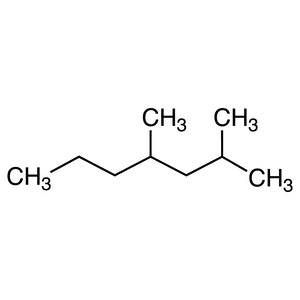
2,4-Dimethylheptane TCI D6408
Regular price Rp 4.293.450,00Regular price -
3,5-Dimethylheptane TCI D1208
Regular price Rp 3.021.900,00Regular price -
3,4-Dimethylheptane(mixtureofisomers) TCI D1207
Regular price Rp 11.846.100,00Regular price