Palladium(II) Acetate (TCI A1424), with CAS number 3375-31-3, is a chemical compound widely used in catalytic reactions, particularly in C-H activation processes. It plays a crucial role in organic synthesis by facilitating complex chemical transformations under controlled conditions. As a metal-based catalyst, it enables the acceleration of chemical reactions without being consumed in the final products. This compound is essential in modern laboratory settings, especially for research requiring efficient and selective catalytic processes. Its versatility makes it a preferred choice for various synthetic pathways, including cross-coupling and hydroformylation reactions.
Palladium(II) Acetate is valued for its chemical stability under specific conditions, which allows it to maintain its catalytic activity over extended periods. It is highly reactive towards moisture and oxygen, necessitating careful handling and storage. Despite this reactivity, its ability to mediate complex reactions makes it indispensable in synthetic chemistry. The compound is available in both solid and liquid forms, offering flexibility in experimental applications. Its effectiveness in promoting selective and efficient reactions has made it a standard reagent in many research laboratories.
In Indonesian laboratories, Palladium(II) Acetate is commonly used in organic chemistry research, especially in the synthesis of complex molecules and C-H activation studies. It is also frequently found in applications involving cross-coupling reactions and hydroformylation. Its reliability and performance in catalytic processes have made it a go-to material for researchers working on advanced synthetic methodologies. Its availability and consistent performance support its widespread use in both academic and industrial research settings.
TCI brochures (PDF)
- Alternative Cross-coupling Reagents to Unstable Pyridineboronic Acids 2026-07-24 · p. 1
- Phosphine Ligand for the Synthesis of Sterically Hindered Biaryls HFTPhos 2026-06-18 · p. 2
- Carbon Monoxide (CO) Surrogate Reagents for Carbonylation 2024-11-07 · p. 2
- Sulfur Dioxide (SO2) Surrogate Reagents Usable for Sulfonation 2026-05-18 · p. 2
- Trifluoroborate Salts for Direct Introduction of Hydroxymethyl Group and Aminomethyl Group 2026-01-05 · p. 2
- Palladium Catalysts for Cross-Coupling Reaction 2025-05-01 · p. 1
Related TCI products
- TCI P2161 3375-31-3 Palladium(II) Acetate (Purified)
- TCI P1870 42196-31-6 Palladium(II) Trifluoroacetate
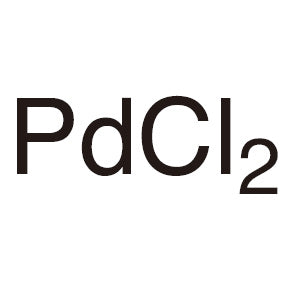
- TCI P1489 7647-10-1 Palladium(II) Chloride
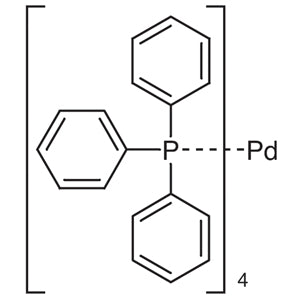
- TCI T1350 14221-01-3 Tetrakis(triphenylphosphine)palladium(0)
- TCI B3160 95408-45-0 [1,1'-Bis(di-tert-butylphosphino)ferrocene]palladium(II) Dichloride
- TCI B2064 95464-05-4 [1,1'-Bis(diphenylphosphino)ferrocene]palladium(II) Dichloride Dichloromethane Adduct
- Cross-coupling reactions benefit from Palladium(II) Acetate's ability to facilitate selective bond formation, enhancing reaction efficiency and product purity.
- C-H activation processes rely on its catalytic properties to break and form carbon-hydrogen bonds under controlled conditions.
- Hydroformylation reactions utilize its reactivity to introduce aldehyde groups into organic molecules, expanding synthetic versatility.
- Organic synthesis in research laboratories depends on its stability and effectiveness in mediating complex chemical transformations.
- Catalytic efficiency in industrial-scale chemical production is supported by its consistent performance in promoting desired reaction pathways.
From the TCI brochure
- Catalyst (cat.) in palladium-catalyzed cross-coupling of sulfinates with (X = Cl, Br) (hetero)aryl halides, 1,4-dioxane, 150 °C
| Brand | TCI |
|---|---|
| CAS number | 3375-31-3 |
| Molecular formula | — |
| Purity | — |
| Category | Chemistry > Catalysis and Inorganic Chemistry > C-H Activation [Catalysis] |
| Pack sizes | Available in various quantities to suit different experimental needs |
| Physical form | Solid or liquid, depending on the specific product variant |
| Storage | — |
Data from the TCI brochure
| Kemasan | 1g / 5g |
|---|
Source: TCI brochure RR146 (2026-07-24)
Palladium(II) Acetate should be stored in a dry, airtight container to prevent exposure to moisture and oxygen, which can degrade its catalytic properties. It is recommended to keep the material in a cool, well-ventilated area away from direct sunlight and heat sources. Suitable containers include glass or sealed plastic vessels with a tight-fitting lid. Laboratory personnel should wear appropriate personal protective equipment, such as gloves and safety goggles, when handling the compound. Due to its reactivity, it should never be stored near incompatible substances like acids or strong oxidizers. Proper labeling and storage practices ensure the safety and effectiveness of this valuable catalyst in laboratory environments.
References cited in the TCI brochure
- Tim Markovic. Pyridine sulfinates as general nucleophilic coupling partners in palladium-catalyzed cross-coupling reactions with aryl halides Chemical Science, 2017. doi:10.1039/c7sc00675f
- Gia L. Hoang. Enantioselective Desymmetrization via Carbonyl-Directed Catalytic Asymmetric Hydroboration and Suzuki–Miyaura Cross-Coupling Organic Letters, 2015. doi:10.1021/ol503764d
- Svitlana O. Sotnik. Third Generation Buchwald Precatalysts with XPhos and RuPhos: Multigram Scale Synthesis, Solvent-Dependent Isomerization of XPhos Pd G3 and Quality Control by 1H- and 31P-NMR Spectroscopy Molecules, 2021. doi:10.3390/molecules26123507
- Tsuyoshi Ueda. Trichlorophenyl Formate: Highly Reactive and Easily Accessible Crystalline CO Surrogate for Palladium-Catalyzed Carbonylation of Aryl/Alkenyl Halides and Triflates Organic Letters, 2012. doi:10.1021/ol302593z
- . Pd-Catalyzed External-CO-Free Carbonylation: Preparation of 2,4,6-Trichlorophenyl 3,4-Dihydronaphthalene-2-Carboxylate Organic Syntheses, 2014. doi:10.15227/orgsyn.091.0039
- Tsuyoshi Ueda. Palladium‐Catalyzed Reductive Carbonylation of Aryl Halides with N ‐Formylsaccharin as a CO Source Angewandte Chemie International Edition, 2013. doi:10.1002/anie.201303926
- Gary A. Molander. Synthesis and Suzuki–Miyaura Cross-Coupling Reactions of Potassium Boc-Protected Aminomethyltrifluoroborate with Aryl and Hetaryl Halides Organic Letters, 2011. doi:10.1021/ol2014768
Product Categories
- Catalysis and Inorganic ChemistryC-H Activation [Catalysis]Palladium Compounds [C-H Activation]
- Catalysis and Inorganic ChemistryOxidation [Catalysis]Metal Catalysts for Oxidation
- Catalysis and Inorganic ChemistryTransition Elements [Catalysis and Inorganic Chemistry]Palladium [Catalysis and Inorganic Chemistry]
- Catalysis and Inorganic ChemistryCross-coupling Reaction using Transition Metal Catalysts [C-C Bond Formation]Palladium Catalysts [Cross-coupling Reaction using Transition Metal Catalysts]
- Catalysis and Inorganic ChemistryMetallic Salts [Catalysis and Inorganic Chemistry]Acetate Salts [Metallic Salts]
- Synthetic ReagentsC-C Bond Formation [Synthetic Reagents]Cross-coupling Reaction using Transition Metal Catalysts [C-C Bond Formation]
Produk Terkait
-
Palladium(II)Acetate(Purified) TCI P2161
Regular price Rp 3.975.300,00Regular priceRp 2.795.100,00Sale price Rp 3.975.300,00 -
Palladium(II)Trifluoroacetate TCI P1870
Regular price From Rp 3.843.000,00Regular priceRp 2.702.700,00Sale price From Rp 3.843.000,00 -
Palladium(II)Chloride TCI P1489
Regular price From Rp 3.127.950,00Regular priceRp 2.202.900,00Sale price From Rp 3.127.950,00 -
Tetrakis(triphenylphosphine)palladium(0) TCI T1350
Regular price From Rp 1.458.450,00Regular priceRp 1.035.300,00Sale price From Rp 1.458.450,00 -
[1,1'-Bis(di-tert-butylphosphino)ferrocene]palladium(II)Dichloride TCI B3160
Regular price From Rp 6.811.350,00Regular priceRp 4.778.550,00Sale price From Rp 6.811.350,00 -
[1,1'-Bis(diphenylphosphino)ferrocene]palladium(II)DichlorideDichloromethaneAdduct TCI B2064
Regular price From Rp 2.121.000,00Regular priceRp 1.498.350,00Sale price From Rp 2.121.000,00 -
Bis(tricyclohexylphosphine)palladium(II)Dichloride TCI B2055
Regular price From Rp 2.199.750,00Regular priceRp 1.554.000,00Sale price From Rp 2.199.750,00 -
Bis(triphenylphosphine)palladium(II)Diacetate TCI B2042
Regular price From Rp 2.942.100,00Regular priceRp 2.072.700,00Sale price From Rp 2.942.100,00