


Palladium(II) Trifluoroacetate (TCI P1870), with CAS number 42196-31-6, is a chemical compound widely used in catalytic reactions, particularly in C-H activation processes. This compound plays a crucial role in laboratory settings where efficient and selective catalytic transformations are required. Its unique chemical structure enables it to act as a versatile catalyst in various organic and inorganic reactions. It is especially valuable in the field of catalysis due to its ability to facilitate complex chemical transformations under controlled conditions.
The compound is known for its strong catalytic properties and high reactivity, making it a preferred choice for researchers in both academic and industrial environments. Its ability to bind effectively to organic substrates enhances the efficiency of chemical reactions, reducing the need for additional reagents. Additionally, its stability under various reaction conditions ensures consistent performance, which is essential for reproducible results in laboratory experiments. The compound's resistance to decomposition further contributes to its reliability in long-term storage and use.
In Indonesian laboratories, Palladium(II) Trifluoroacetate is commonly used in organic synthesis, catalytic research, and inorganic chemistry applications. Its versatility and effectiveness make it an essential reagent for scientists working on advanced chemical processes. It is particularly favored in studies involving aromatic and heterocyclic compound synthesis, as well as in hydrogenation and oxidation reactions. Its availability and performance make it a key component in many laboratory workflows.
TCI brochures (PDF)
- Palladium Catalysts for Cross-Coupling Reaction 2025-05-01 · p. 1
- Oxidizing Agents 2025-06-11 · p. 9
- C-H Bond Activation Reaction 2025-06-20 · p. 4
- Metallic Salts 2025-11-06 · p. 12
- Transition Metal Catalysts 2026-04-10 · p. 13
- Suzuki-Miyaura Cross Coupling Reaction 2025-12-01 · p. 22
Related TCI products
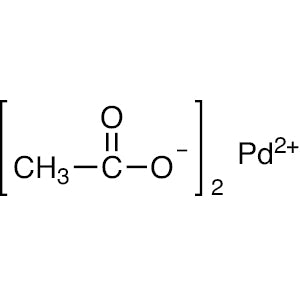
- TCI A1424 3375-31-3 Palladium(II) Acetate
- TCI P2161 3375-31-3 Palladium(II) Acetate (Purified)
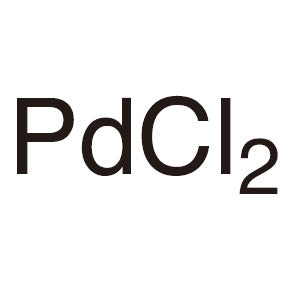
- TCI P1489 7647-10-1 Palladium(II) Chloride
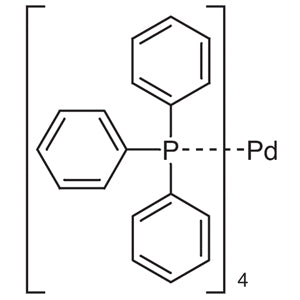
- TCI T1350 14221-01-3 Tetrakis(triphenylphosphine)palladium(0)
- TCI B3160 95408-45-0 [1,1'-Bis(di-tert-butylphosphino)ferrocene]palladium(II) Dichloride
- TCI B2064 95464-05-4 [1,1'-Bis(diphenylphosphino)ferrocene]palladium(II) Dichloride Dichloromethane Adduct
- Used in C-H activation reactions due to its high catalytic efficiency and selectivity in complex organic transformations.
- Applied in the synthesis of aromatic and heterocyclic compounds because of its strong binding affinity with organic substrates.
- Employed in hydrogenation processes for its ability to facilitate the reduction of various functional groups under controlled conditions.
- Utilized in oxidation reactions where its reactivity supports the formation of desired products with minimal by-products.
- Integrated into inorganic chemistry research for its role in catalytic systems that require stability and performance under diverse reaction conditions.
| Brand | TCI |
|---|---|
| CAS number | 42196-31-6 |
| Molecular formula | — |
| Purity | — |
| Category | Chemistry > Catalysis and Inorganic Chemistry > C-H Activation [Catalysis] |
| Pack sizes | Available in various quantities as per standard laboratory supply options |
| Physical form | Solid powder |
| Storage | Store in a cool, dry place away from moisture and direct sunlight |
Palladium(II) Trifluoroacetate should be stored in a cool, dry environment to maintain its chemical integrity and catalytic activity. It is recommended to keep the compound in airtight containers to prevent exposure to moisture and air, which could lead to degradation. Due to its reactivity, it should be handled with care, using appropriate personal protective equipment such as gloves and safety goggles. It is important to ensure that the storage area is well-ventilated to minimize any potential hazards. The compound should not be stored near incompatible materials, and access should be restricted to authorized personnel to maintain safety standards in the laboratory.
—
Product Categories
- Catalysis and Inorganic ChemistryC-H Activation [Catalysis]Palladium Compounds [C-H Activation]
- Catalysis and Inorganic ChemistryOxidation [Catalysis]Metal Catalysts for Oxidation
- Catalysis and Inorganic ChemistryTransition Elements [Catalysis and Inorganic Chemistry]Palladium [Catalysis and Inorganic Chemistry]
- Catalysis and Inorganic ChemistryCross-coupling Reaction using Transition Metal Catalysts [C-C Bond Formation]Palladium Catalysts [Cross-coupling Reaction using Transition Metal Catalysts]
- Catalysis and Inorganic ChemistryMetallic Salts [Catalysis and Inorganic Chemistry]Trifluoroacetate Salts [Metallic Salts]
- Synthetic ReagentsC-C Bond Formation [Synthetic Reagents]Cross-coupling Reaction using Transition Metal Catalysts [C-C Bond Formation]
Produk Terkait
-
Palladium(II)Acetate TCI A1424
Regular price From Rp 3.127.950,00Regular priceRp 2.202.900,00Sale price From Rp 3.127.950,00 -
Palladium(II)Acetate(Purified) TCI P2161
Regular price Rp 3.975.300,00Regular priceRp 2.795.100,00Sale price Rp 3.975.300,00 -
Palladium(II)Chloride TCI P1489
Regular price From Rp 3.127.950,00Regular priceRp 2.202.900,00Sale price From Rp 3.127.950,00 -
Tetrakis(triphenylphosphine)palladium(0) TCI T1350
Regular price From Rp 1.458.450,00Regular priceRp 1.035.300,00Sale price From Rp 1.458.450,00 -
[1,1'-Bis(di-tert-butylphosphino)ferrocene]palladium(II)Dichloride TCI B3160
Regular price From Rp 6.811.350,00Regular priceRp 4.778.550,00Sale price From Rp 6.811.350,00 -
[1,1'-Bis(diphenylphosphino)ferrocene]palladium(II)DichlorideDichloromethaneAdduct TCI B2064
Regular price From Rp 2.121.000,00Regular priceRp 1.498.350,00Sale price From Rp 2.121.000,00 -
Bis(tricyclohexylphosphine)palladium(II)Dichloride TCI B2055
Regular price From Rp 2.199.750,00Regular priceRp 1.554.000,00Sale price From Rp 2.199.750,00 -
Bis(triphenylphosphine)palladium(II)Diacetate TCI B2042
Regular price From Rp 2.942.100,00Regular priceRp 2.072.700,00Sale price From Rp 2.942.100,00




![TCI B3160 95408-45-0 [1,1'-Bis(di-tert-butylphosphino)ferrocene]palladium(II) Dichloride](http://amiscientific.com/cdn/shop/files/TCI2510B3160.jpg?v=1792661043&width=533)
![95408-45-0 [1,1'-Bis(di-tert-butylphosphino)ferrocene]palladium(II) Dichloride - AMI Scientific](http://amiscientific.com/cdn/shop/files/TCI2510B3160_a4c0b85c-059a-4cb6-9b5d-8c432346ca89.jpg?v=1767431571&width=533)
![TCI B2064 95464-05-4 [1,1'-Bis(diphenylphosphino)ferrocene]palladium(II) Dichloride Dichloromethane Adduct](http://amiscientific.com/cdn/shop/files/TCI2510B2064.jpg?v=1792660414&width=533)
![95464-05-4 [1,1'-Bis(diphenylphosphino)ferrocene]palladium(II) Dichloride Dichloromethane Adduct - AMI Scientific](http://amiscientific.com/cdn/shop/files/TCI2510B2064_55725750-1d93-4607-a5e5-5c490594863a.jpg?v=1767330765&width=533)


