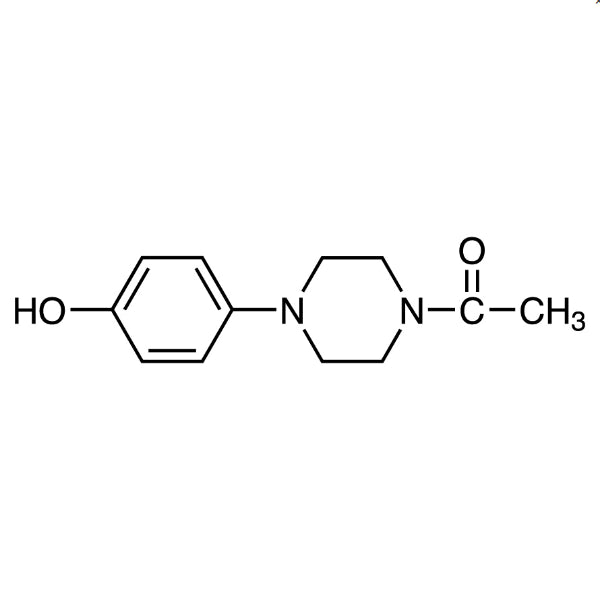
1-Acetyl-4-(4-hydroxyphenyl)piperazine is a chemical compound widely used in organic synthesis reactions within laboratory settings. As a heterocyclic building block, it serves as a versatile intermediate in the development of complex molecules. This compound is particularly valuable in the synthesis of pharmaceuticals and industrial chemicals due to its ability to participate in various functional group transformations. Its structural features allow for further modifications, making it an essential tool for chemists working on drug discovery and chemical innovation.
The compound's unique molecular structure, featuring a piperazine ring modified with a hydroxyphenyl group and an acetyl group, contributes to its chemical stability and reactivity. These properties make it a preferred choice for researchers aiming to design and synthesize a wide range of compounds. Its reactivity allows it to engage in multiple synthetic pathways, enhancing its utility in both academic and industrial research environments. The compound's flexibility in chemical reactivity supports its application in diverse chemical reactions, making it a reliable component in laboratory workflows.
In Indonesian laboratories, 1-Acetyl-4-(4-hydroxyphenyl)piperazine is commonly used in pharmaceutical research, organic chemistry studies, and the development of new chemical materials. It is a key reagent in experiments involving heterocyclic compounds, supporting advancements in drug development and chemical synthesis. Many research institutions and universities in Indonesia rely on this compound as a fundamental building block for their experimental processes. Its availability and reliability make it a standard material in chemical laboratories across the country.
Related TCI products
- TCI H0891 56621-48-8 1-(4-Hydroxyphenyl)piperazine
- TCI H1736 2963-66-8 2-(2-Hydroxyphenyl)-1H-benzimidazole
- TCI H1653 1218-69-5 2-(2-Hydroxyphenyl)-4H-1,3-benzoxazin-4-one
- TCI H1628 63676-22-2 2-(4-Hydroxyphenyl)benzo[b]thiophene-6-ol
- TCI H1063 103661-13-8 4-(4-Hydroxyphenyl)thiomorpholine 1,1-Dioxide
- TCI H0973 3411-95-8 2-(2-Hydroxyphenyl)benzothiazole
- Used in pharmaceutical research for the synthesis of drug molecules due to its structural versatility and reactivity.
- Applied in organic chemistry experiments to develop new chemical compounds and functionalized derivatives.
- Utilized in the design of heterocyclic compounds for medicinal chemistry applications and drug discovery.
- Employed in the creation of industrial chemicals, supporting the development of specialized chemical products.
- Integrated into research projects focused on chemical innovation and the exploration of new synthetic pathways.
| Brand | TCI |
|---|---|
| CAS number | 67914-60-7 |
| Molecular formula | — |
| Purity | — |
| Category | Chemistry > Building Blocks > Heterocyclic Building Blocks |
| Pack sizes | Available in various quantities as per standard laboratory supply options |
| Physical form | Solid, crystalline or amorphous depending on the batch |
| Storage | Store in a cool, dry place away from direct sunlight and moisture |
This compound should be stored in a cool, dry environment to maintain its chemical stability. It is recommended to keep it in a tightly sealed container to prevent exposure to moisture and air. Proper ventilation is essential when handling the material to minimize inhalation risks. Avoid contact with skin and eyes, and use appropriate personal protective equipment such as gloves and safety goggles. The compound should be stored away from incompatible substances to ensure safety in the laboratory. Regular inspection of storage conditions is advised to maintain optimal handling and usage.
—
Produk Terkait
-
1-(4-Hydroxyphenyl)piperazine TCI H0891
Regular price Rp 3.207.750,00Regular priceRp 2.258.550,00Sale price Rp 3.207.750,00 -
2-(2-Hydroxyphenyl)-1H-benzimidazole TCI H1736
Regular price Rp 2.623.950,00Regular priceRp 1.850.100,00Sale price Rp 2.623.950,00 -
2-(2-Hydroxyphenyl)-4H-1,3-benzoxazin-4-one TCI H1653
Regular price Rp 689.850,00Regular priceRp 497.700,00Sale price Rp 689.850,00 -
2-(4-Hydroxyphenyl)benzo[b]thiophene-6-ol TCI H1628
Regular price Rp 1.538.250,00Regular priceRp 1.090.950,00Sale price Rp 1.538.250,00 -
4-(4-Hydroxyphenyl)thiomorpholine1,1-Dioxide TCI H1063
Regular price Rp 3.127.950,00Regular priceRp 2.202.900,00Sale price Rp 3.127.950,00 -
2-(2-Hydroxyphenyl)benzothiazole TCI H0973
Regular price Rp 955.500,00Regular priceRp 683.550,00Sale price Rp 955.500,00 -
1-(4-Hydroxyphenyl)-5-mercapto-1H-tetrazole TCI H0896
Regular price Rp 769.650,00Regular priceRp 553.350,00Sale price Rp 769.650,00 -
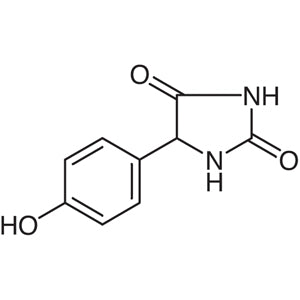
5-(4-Hydroxyphenyl)hydantoin TCI H0806
Regular price Rp 1.351.350,00Regular priceRp 960.750,00Sale price Rp 1.351.350,00


![63676-22-2 2-(4-Hydroxyphenyl)benzo[b]thiophene-6-ol - AMI Scientific](http://amiscientific.com/cdn/shop/files/TCI2510H1628.jpg?v=1767118302&width=533)