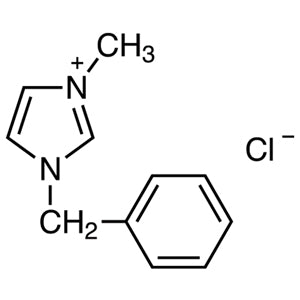
1-Allyl-3-methylimidazolium Chloride is an ionic liquid widely used in chemical and synthetic applications within laboratory settings. As a unique ionic compound, it consists of an imidazolium cation and a chloride anion, providing it with distinct chemical and physical properties. This material plays a crucial role in various experimental processes, serving as a solvent, reaction medium, or catalyst support in complex chemical syntheses. Its versatility makes it a valuable tool for researchers in both academic and industrial environments.
The compound is preferred due to its non-volatile nature, high boiling point, and excellent ionic conductivity. These properties make it ideal for reactions requiring stable and controlled conditions. Additionally, its non-flammable, colorless, and odorless characteristics contribute to its safety and efficiency in laboratory use. The absence of water and its resistance to evaporation further enhance its suitability for applications demanding high purity and chemical stability.
In Indonesian laboratories, 1-Allyl-3-methylimidazolium Chloride is commonly used in electrochemical studies, organic synthesis, and as a reaction medium for high-purity processes. Its ability to maintain chemical integrity under varying conditions makes it a reliable choice for researchers working on advanced chemical projects. The compound’s unique properties ensure it remains a key component in many experimental workflows.
Advantages (TCI brochure)
- Bears allyl groups, reported as useful starting material for polymers with ionic liquid properties
TCI brochures (PDF)
- Monomers for Poly(Ionic Liquid) Synthesis 2025-09-19 · p. 1
- Ionic Liquids 2026-06-08 · p. 7
Related TCI products
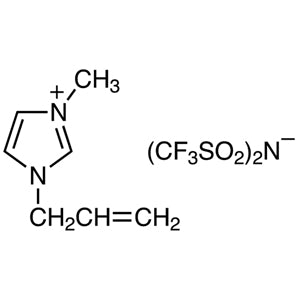
- TCI A3210 655249-87-9 1-Allyl-3-methylimidazolium Bis(trifluoromethanesulfonyl)imide
- TCI B2194 79917-90-1 1-Butyl-3-methylimidazolium Chloride
- TCI H1632 61546-01-8 1-Hexadecyl-3-methylimidazolium Chloride
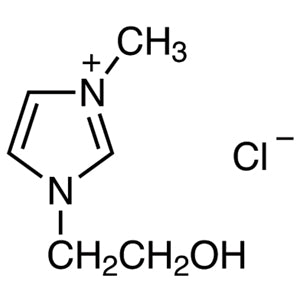
- TCI H1254 61755-34-8 1-(2-Hydroxyethyl)-3-methylimidazolium Chloride
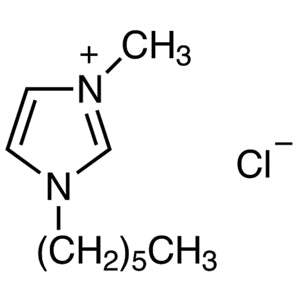
- TCI H1097 171058-17-6 1-Hexyl-3-methylimidazolium Chloride
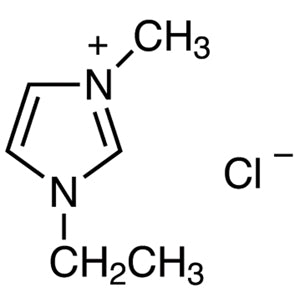
- TCI E0490 65039-09-0 1-Ethyl-3-methylimidazolium Chloride
- Electrochemical studies benefit from its high ionic conductivity, allowing efficient ion transfer in electrochemical cells.
- Organic synthesis reactions often utilize this ionic liquid as a non-aqueous solvent due to its stability and inertness.
- It serves as a reaction medium for high-purity chemical processes, ensuring minimal contamination from volatile solvents.
- In catalytic reactions, its non-volatile nature helps maintain reaction conditions without the need for frequent solvent replacement.
- It is used in green chemistry applications as an environmentally friendly alternative to traditional volatile organic solvents.
From the TCI brochure
- Polymeric electrolytes
- Polymer monolith
| Brand | TCI |
|---|---|
| CAS number | 65039-10-3 |
| Molecular formula | — |
| Purity | — |
| Category | Chemistry > Specialty Synthesis > Ionic Liquids |
| Pack sizes | Available in various quantities as per supplier listing |
| Physical form | Liquid |
| Storage | Store in a cool, dry place away from direct sunlight |
This ionic liquid should be stored in a cool, dry environment, away from direct sunlight and sources of heat. It is recommended to use sealed containers made of materials compatible with its chemical nature, such as glass or high-density polyethylene. Due to its non-volatile properties, it does not require frequent replenishment, but regular checks for container integrity are advised. In laboratory settings, it should be handled with standard chemical safety precautions, including the use of appropriate personal protective equipment. Its non-flammable nature reduces fire hazards, but it should still be kept out of reach of children and unauthorized personnel. Proper labeling and storage practices ensure safe and effective use in research environments.
—
Produk Terkait
-
1-Allyl-3-methylimidazoliumBis(trifluoromethanesulfonyl)imide TCI A3210
Regular price From Rp 2.093.700,00Regular priceRp 1.479.450,00Sale price From Rp 2.093.700,00 -
1-Butyl-3-methylimidazoliumChloride TCI B2194
Regular price From Rp 928.200,00Regular priceRp 664.650,00Sale price From Rp 928.200,00 -
1-Hexadecyl-3-methylimidazoliumChloride TCI H1632
Regular price From Rp 3.763.200,00Regular priceRp 2.647.050,00Sale price From Rp 3.763.200,00 -
1-(2-Hydroxyethyl)-3-methylimidazoliumChloride TCI H1254
Regular price From Rp 1.246.350,00Regular priceRp 887.250,00Sale price From Rp 1.246.350,00 -
1-Hexyl-3-methylimidazoliumChloride TCI H1097
Regular price From Rp 1.351.350,00Regular priceRp 960.750,00Sale price From Rp 1.351.350,00 -
1-Ethyl-3-methylimidazoliumChloride TCI E0490
Regular price From Rp 980.700,00Regular priceRp 701.400,00Sale price From Rp 980.700,00 -
1-Decyl-3-methylimidazoliumChloride TCI D5351
Regular price From Rp 1.192.800,00Regular priceRp 849.450,00Sale price From Rp 1.192.800,00 -
1-Benzyl-3-methylimidazoliumChloride TCI B5543
Regular price Rp 875.700,00Regular priceRp 627.900,00Sale price Rp 875.700,00