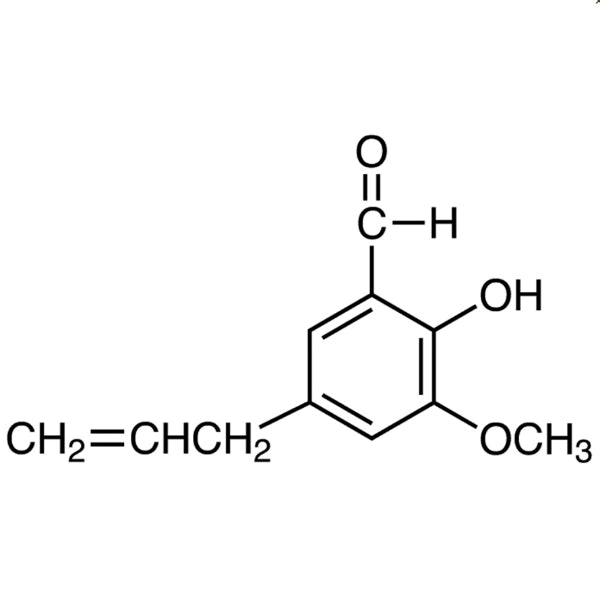
5-Allyl-3-methoxysalicylaldehyde is a chemical compound widely utilized in synthetic reactions to construct complex molecular structures. This versatile building block plays a crucial role in laboratory settings, serving as a foundational material for the development of various organic compounds. Its presence is essential in the synthesis of pharmaceuticals, organic chemicals, and aromatic compounds, making it a key component in modern chemical research. Due to its stability and reactivity, it is highly valued for its ability to participate in multiple reaction types, enhancing the efficiency of synthetic processes.
The compound's molecular structure provides it with favorable reactivity, allowing it to engage in substitution, condensation, and oxidation reactions with ease. These properties make it an ideal choice for chemists aiming to create new compounds with specific functional groups. Its controlled chemical behavior ensures predictable outcomes in experimental settings, which is vital for both academic and industrial research. This reliability supports its use across a wide range of experimental scales, from small-scale laboratory work to larger, more complex syntheses.
In Indonesian laboratories, 5-Allyl-3-methoxysalicylaldehyde is commonly used by researchers and students in the study of aromatic compound synthesis and the development of new chemical products. Its availability in the local market makes it a practical and efficient option for laboratory needs. Its relevance in both educational and research contexts underscores its importance in the chemical sciences within Indonesia.
Related TCI products
- Synthesis of complex aromatic compounds for pharmaceutical development due to its reactivity and structural versatility.
- Creation of heterocyclic compounds through substitution reactions, leveraging its ability to form stable intermediates.
- Development of organic chemical products in industrial research settings where controlled chemical behavior is essential.
- Educational use in academic laboratories for teaching synthetic chemistry techniques and molecular structure manipulation.
- Research applications in the exploration of new chemical pathways for drug discovery and material science advancements.
| Brand | TCI |
|---|---|
| CAS number | 22934-51-6 |
| Molecular formula | — |
| Purity | — |
| Category | Chemistry > Building Blocks > Non-Heterocyclic Building Blocks |
| Pack sizes | Available in various quantities as per standard laboratory supply standards |
| Physical form | Solid or liquid, depending on the specific formulation and supplier packaging |
| Storage | Store in a cool, dry place away from direct sunlight and incompatible materials |
This compound should be stored in a cool, dry environment to maintain its chemical stability and prevent degradation. It is recommended to use airtight containers to minimize exposure to moisture and air, which could affect its reactivity. Proper labeling of storage containers is essential for safety and identification purposes. Handling should be done with appropriate personal protective equipment, such as gloves and safety goggles, to ensure laboratory safety. Avoid contact with incompatible substances to prevent unwanted chemical reactions. Regular monitoring of storage conditions ensures the compound remains suitable for use in laboratory applications.
—
Produk Terkait
-
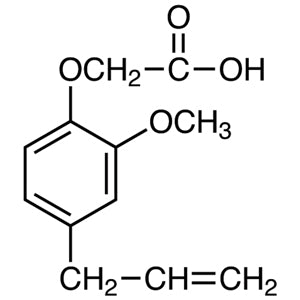
(4-Allyl-2-methoxyphenoxy)aceticAcid TCI A3037
Regular price Rp 2.093.700,00Regular priceRp 1.479.450,00Sale price Rp 2.093.700,00 -
4-(Dibutylamino)salicylaldehyde TCI D3260
Regular price Rp 5.432.700,00Regular priceRp 3.814.650,00Sale price Rp 5.432.700,00 -
5-Chloro-3-nitrosalicylaldehyde TCI C2249
Regular price Rp 1.246.350,00Regular priceRp 871.500,00Sale price Rp 1.246.350,00 -
3-Chloromethyl-5-nitrosalicylaldehyde TCI C1305
Regular price Rp 5.539.800,00Regular priceRp 3.873.450,00Sale price Rp 5.539.800,00 -
Salicylaldehyde TCI S0275
Regular price Rp 584.850,00Regular priceRp 408.450,00Sale price Rp 584.850,00 -
Salicylaldehyde TCI S0004
Regular price Rp 689.850,00Regular priceRp 481.950,00Sale price Rp 689.850,00 -
3-Ethoxysalicylaldehyde TCI E0253
Regular price Rp 875.700,00Regular priceRp 612.150,00Sale price Rp 875.700,00 -
4,6-Dimethoxysalicylaldehyde TCI D4165
Regular price Rp 1.167.600,00Regular priceRp 815.850,00Sale price Rp 1.167.600,00