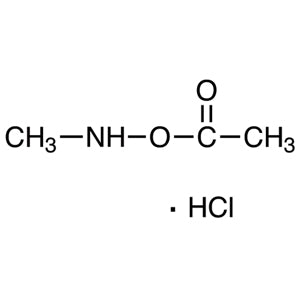
TCI A2193 180798-01-0 O-Acetyl-N-carbobenzoxyhydroxylamine is a chemical compound widely used in laboratory settings for organic synthesis. This compound serves as a building block in the creation of complex molecules, playing a crucial role in various chemical reactions. Its unique molecular structure allows it to participate in multiple synthetic pathways, making it a versatile tool for chemists. In research laboratories, it is often employed to develop new compounds with specific functional groups, contributing to advancements in pharmaceutical and organic chemistry.
The compound is valued for its chemical stability and reactivity, which make it an ideal choice for a range of synthetic processes. It can undergo esterification, hydrolysis, and other reaction types, depending on the conditions and reagents used. Its ability to react selectively with other compounds ensures that it remains a preferred material for precise chemical synthesis. The specificity of its molecular structure allows for controlled modifications, making it suitable for applications that require high accuracy and reproducibility.
In Indonesian laboratories, TCI A2193 180798-01-0 is commonly used in chemical research, particularly in pharmaceutical and organic chemistry fields. It is a key component in the development of new drugs and the study of molecular interactions. Its availability and effectiveness make it a popular choice among researchers looking to synthesize complex organic compounds with specific properties. This compound is essential for supporting innovation and discovery in the scientific community.
Related TCI products
- TCI B4780 85006-25-3 N,O-Bis(tert-butoxycarbonyl)hydroxylamine
- TCI B4589 39684-28-1 O-(tert-Butyl)hydroxylamine Hydrochloride
- TCI B1700 57497-39-9 N-(tert-Butyl)hydroxylamine Hydrochloride
- TCI H1581 5470-11-1 Hydroxylamine Hydrochloride
- TCI H0196 10039-54-0 Hydroxylamine Sulfate
- TCI N1013 35657-36-4 O-(4-Nitrobenzoyl)hydroxylamine
- Organic synthesis of complex molecules for pharmaceutical development due to its reactivity and structural versatility.
- Facilitating esterification and hydrolysis reactions in the creation of functionalized compounds for drug design.
- Supporting research in pharmacology by enabling the synthesis of compounds for studying molecular interactions.
- Assisting in the development of new chemical entities through controlled substitution and coupling reactions.
- Enabling the production of specialized intermediates for use in advanced chemical and biological research.
| Brand | TCI |
|---|---|
| CAS number | 180798-01-0 |
| Molecular formula | — |
| Purity | — |
| Category | Chemistry > Building Blocks > Non-Heterocyclic Building Blocks |
| Pack sizes | Available in various quantities as per supplier specifications |
| Physical form | Solid (as per standard product description) |
| Storage | Store in a cool, dry place away from direct light and moisture |
This compound should be stored in a cool, dry environment, away from direct sunlight and moisture to maintain its chemical stability. It is recommended to use airtight containers to prevent exposure to air and humidity, which could affect its reactivity. Proper labeling of storage containers is essential to ensure safe handling and prevent accidental use. In laboratory settings, it is important to follow standard safety protocols, including the use of personal protective equipment when handling. The compound should not be stored near incompatible materials such as strong acids or bases. Regular monitoring of storage conditions ensures the integrity and effectiveness of the material for research applications.
—
Produk Terkait
-
N,O-Bis(tert-butoxycarbonyl)hydroxylamine TCI B4780
Regular price From Rp 1.431.150,00Regular priceRp 1.016.400,00Sale price From Rp 1.431.150,00 -
O-(tert-Butyl)hydroxylamineHydrochloride TCI B4589
Regular price From Rp 2.650.200,00Regular priceRp 1.869.000,00Sale price From Rp 2.650.200,00 -
N-(tert-Butyl)hydroxylamineHydrochloride TCI B1700
Regular price From Rp 1.378.650,00Regular priceRp 979.650,00Sale price From Rp 1.378.650,00 -
HydroxylamineHydrochloride TCI H1581
Regular price From Rp 477.750,00Regular priceRp 333.900,00Sale price From Rp 477.750,00 -
HydroxylamineSulfate TCI H0196
Regular price From Rp 477.750,00Regular priceRp 333.900,00Sale price From Rp 477.750,00 -
O-(4-Nitrobenzoyl)hydroxylamine TCI N1013
Regular price From Rp 1.272.600,00Regular priceRp 905.100,00Sale price From Rp 1.272.600,00 -
O-(2,4-Dinitrophenyl)hydroxylamine TCI D5103
Regular price From Rp 1.458.450,00Regular priceRp 1.035.300,00Sale price From Rp 1.458.450,00 -
O-Acetyl-N-methylhydroxylamineHydrochloride TCI A2365
Regular price From Rp 2.623.950,00Regular priceRp 1.850.100,00Sale price From Rp 2.623.950,00