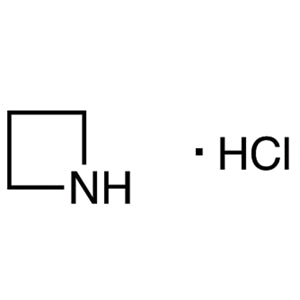
Azetidine Hydrochloride is a chemical compound widely used in laboratory settings for the synthesis of heterocyclic compounds. It serves as a fundamental building block in organic chemistry, particularly in reactions that require high reactivity and structural complexity. Its core structure consists of a protonated azetidine ring, making it a versatile intermediate in the development of pharmaceuticals, polymers, and other organic materials. This compound is essential for researchers aiming to create complex molecular structures with specific functional groups.
The chemical properties of Azetidine Hydrochloride make it a preferred choice in laboratory applications. It exhibits stability under certain conditions but remains highly reactive in substitution and addition reactions. This reactivity allows it to participate in a wide range of chemical transformations, making it a flexible reagent for various synthetic pathways. Its availability in multiple packaging options ensures ease of use across different experimental scales, from small-scale research to larger industrial applications.
In Indonesian laboratories, Azetidine Hydrochloride is commonly used in organic chemistry research, especially in the fields of pharmacology, materials science, and analytical chemistry. It is frequently utilized by researchers and students for experiments that require the synthesis of heterocyclic compounds. Its role in creating complex molecular structures makes it an important tool for both academic and industrial research in Indonesia.
Related TCI products
- TCI B5217 1153949-11-1 1-(tert-Butoxycarbonyl)-3-(cyanomethylene)azetidine
- TCI B5160 177947-96-5 1-(tert-Butoxycarbonyl)azetidine-3-carboxaldehyde
- TCI B4271 325775-44-8 tert-Butyl 3-(Aminomethyl)azetidine-1-carboxylate
- TCI B3540 142253-55-2 1-(tert-Butoxycarbonyl)azetidine-3-carboxylic Acid
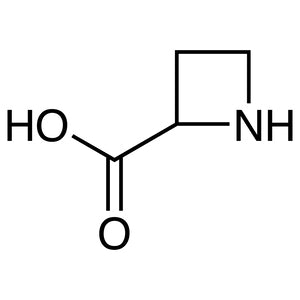
- TCI A3562 2517-04-6 Azetidine-2-carboxylic Acid
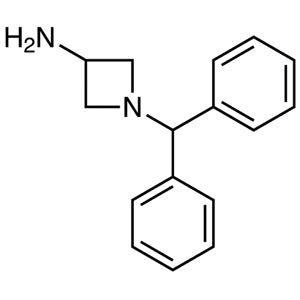
- TCI A3283 40432-52-8 3-Amino-1-(diphenylmethyl)azetidine
- Organic synthesis in pharmaceutical research due to its reactivity and structural versatility.
- Development of new polymers and materials through heterocyclic compound formation.
- Analytical chemistry applications for compound identification and structural analysis.
- Educational use in academic settings for teaching synthetic chemistry techniques.
- Drug discovery processes where heterocyclic structures are essential for bioactive molecules.
| Brand | TCI |
|---|---|
| CAS number | 36520-39-5 |
| Molecular formula | — |
| Purity | — |
| Category | Chemistry > Building Blocks > Heterocyclic Building Blocks |
| Pack sizes | Available in various quantities to suit different experimental needs. |
| Physical form | Solid, typically in crystalline or powder form. |
| Storage | Store in a cool, dry place away from moisture and direct sunlight. |
Azetidine Hydrochloride should be stored in a cool, dry environment to maintain its chemical stability. It is recommended to keep the compound in airtight containers to prevent moisture absorption, which can affect its reactivity. Due to its potential reactivity, it should be handled in a well-ventilated area, and appropriate personal protective equipment should be worn. Avoid exposure to strong oxidizing agents or incompatible substances. Regular monitoring of storage conditions ensures the integrity of the compound for laboratory use. Proper labeling and storage practices help maintain safety and efficiency in laboratory operations.
—
Produk Terkait
-
1-(tert-Butoxycarbonyl)-3-(cyanomethylene)azetidine TCI B5217
Regular price From Rp 823.200,00Regular price -
1-(tert-Butoxycarbonyl)azetidine-3-carboxaldehyde TCI B5160
Regular price From Rp 1.829.100,00Regular price -
tert-Butyl3-(Aminomethyl)azetidine-1-carboxylate TCI B4271
Regular price From Rp 2.809.800,00Regular price -
1-(tert-Butoxycarbonyl)azetidine-3-carboxylicAcid TCI B3540
Regular price From Rp 955.500,00Regular price -
Azetidine-2-carboxylicAcid TCI A3562
Regular price From Rp 2.199.750,00Regular price -
3-Amino-1-(diphenylmethyl)azetidine TCI A3283
Regular price From Rp 637.350,00Regular price -
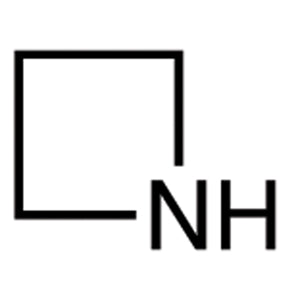
Azetidine TCI A3257
Regular price Rp 3.180.450,00Regular price -
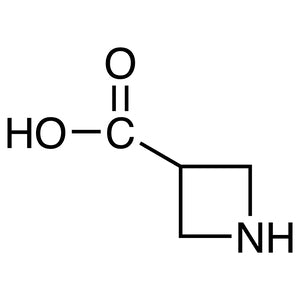
Azetidine-3-carboxylicAcid TCI A1646
Regular price From Rp 1.167.600,00Regular price