Azetidine is a chemical compound classified under heterocyclic structures, featuring a core of four carbon atoms and one nitrogen atom. It plays a crucial role in laboratory settings, particularly in organic and pharmaceutical research, where it serves as a fundamental building block for the synthesis of complex molecules. Its unique structure allows it to participate in various chemical reactions, making it an essential component in the development of new compounds and materials. Azetidine is widely used in both academic and industrial laboratories for its versatility and chemical reactivity.
Azetidine is valued for its chemical stability under controlled conditions, which ensures consistent performance in laboratory experiments. However, it is highly reactive to environmental factors such as high temperatures and excessive moisture, requiring careful handling. This reactivity makes it ideal for applications that demand precise chemical reactions, such as ring-opening and substitution reactions. Its ability to integrate nitrogen atoms into molecular structures also enhances its utility in creating diverse chemical compounds with specific functional properties.
In Indonesian laboratories, azetidine is commonly used by chemists, pharmacologists, and materials scientists. It supports research in the development of new drugs, industrial chemicals, and advanced materials. Due to its structural versatility, azetidine is a preferred choice for researchers seeking to explore the potential of heterocyclic compounds in various scientific applications.
Related TCI products
- TCI B5217 1153949-11-1 1-(tert-Butoxycarbonyl)-3-(cyanomethylene)azetidine
- TCI B5160 177947-96-5 1-(tert-Butoxycarbonyl)azetidine-3-carboxaldehyde
- TCI B4271 325775-44-8 tert-Butyl 3-(Aminomethyl)azetidine-1-carboxylate
- TCI B3540 142253-55-2 1-(tert-Butoxycarbonyl)azetidine-3-carboxylic Acid
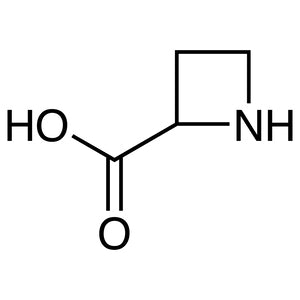
- TCI A3562 2517-04-6 Azetidine-2-carboxylic Acid
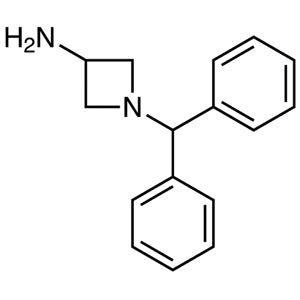
- TCI A3283 40432-52-8 3-Amino-1-(diphenylmethyl)azetidine
- Organic synthesis applications benefit from azetidine's ability to act as a nitrogen-containing building block, enabling the creation of complex molecular structures with high precision.
- Pharmaceutical research utilizes azetidine to develop new drug compounds, as its heterocyclic structure can be modified to target specific biological pathways.
- Materials science applications rely on azetidine for the synthesis of polymers and other advanced materials with tailored chemical properties.
- Analytical chemistry experiments use azetidine as a standard reference compound for testing reaction mechanisms and chemical behavior under different conditions.
- Industrial chemical production incorporates azetidine to create a wide range of products, including dyes, pesticides, and specialty chemicals.
| Brand | TCI |
|---|---|
| CAS number | 503-29-7 |
| Molecular formula | — |
| Purity | — |
| Category | Chemistry > Building Blocks > Heterocyclic Building Blocks |
| Pack sizes | As available from supplier |
| Physical form | Liquid or solid, depending on supplier packaging |
| Storage | Store in a cool, dry place away from direct sunlight and incompatible materials. |
Azetidine should be stored in a cool, dry environment, away from direct sunlight and sources of heat. It is recommended to use airtight containers made of glass or high-density polyethylene to prevent exposure to moisture and air. Due to its reactivity, it should be kept separate from strong oxidizing agents and incompatible substances. Laboratory personnel should wear appropriate personal protective equipment, including gloves and safety goggles, when handling azetidine. Proper ventilation is essential to minimize inhalation risks. Regular monitoring of storage conditions ensures the compound remains stable and safe for use in research applications.
—
Produk Terkait
-
1-(tert-Butoxycarbonyl)-3-(cyanomethylene)azetidine TCI B5217
Regular price From Rp 823.200,00Regular price -
1-(tert-Butoxycarbonyl)azetidine-3-carboxaldehyde TCI B5160
Regular price From Rp 1.829.100,00Regular price -
tert-Butyl3-(Aminomethyl)azetidine-1-carboxylate TCI B4271
Regular price From Rp 2.809.800,00Regular price -
1-(tert-Butoxycarbonyl)azetidine-3-carboxylicAcid TCI B3540
Regular price From Rp 955.500,00Regular price -
Azetidine-2-carboxylicAcid TCI A3562
Regular price From Rp 2.199.750,00Regular price -
3-Amino-1-(diphenylmethyl)azetidine TCI A3283
Regular price From Rp 637.350,00Regular price -
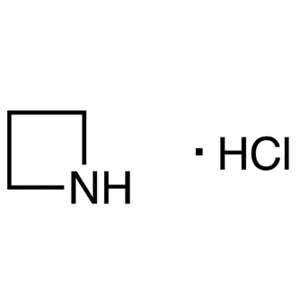
AzetidineHydrochloride TCI A2451
Regular price From Rp 1.167.600,00Regular price -
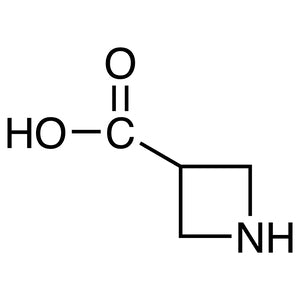
Azetidine-3-carboxylicAcid TCI A1646
Regular price From Rp 1.167.600,00Regular price