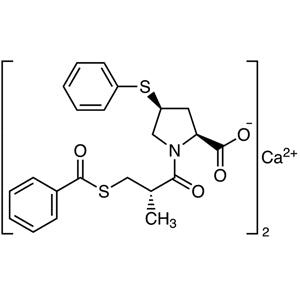
Atorvastatin Calcium Salt Trihydrate is a chemical compound widely utilized in laboratory research focused on pharmacology and biochemistry. As a trihydrate form of calcium atorvastatin, it functions as an HMG-CoA reductase inhibitor, playing a crucial role in studying lipid metabolism and cholesterol regulation. This compound is essential for understanding the mechanisms of statin-based therapies and their impact on cardiovascular diseases. Its chemical stability and solubility make it a reliable reagent for various analytical techniques.
The compound’s high purity and consistent quality ensure reproducibility in experimental results, making it a preferred choice for researchers. Its solubility in organic solvents such as ethyl acetate and acetone allows for versatile application in chromatographic and spectroscopic analyses. Additionally, its chemical stability under normal laboratory conditions enhances its usability in long-term studies and repeated experiments. These properties contribute to its popularity among scientists requiring reliable and consistent reagents.
In Indonesian laboratories, Atorvastatin Calcium Salt Trihydrate is commonly used in health research, pharmaceutical development, and biotechnology applications. It supports studies on metabolic disorders, drug efficacy evaluation, and the development of new therapeutic agents. Researchers in Indonesia rely on this compound to advance their work in cardiovascular disease treatment and metabolic health research. Its availability and reliability make it a key component in many scientific investigations.
TCI brochures (PDF)
- HMG-CoA Reductase Inhibitors Statins(PP003E)202609 2026-09-10 · p. 1
- Pharmaceutical Ingredients for Research and Experimental Use 2026-03-09 · p. 22
- Reagents for Biological Research 2025-03-11 · p. 45
- Cardiovascular Research: This compound is ideal for studying lipid metabolism and cholesterol regulation, aiding in the development of new cardiovascular therapies.
- Pharmacological Studies: It is used to evaluate the pharmacological effects of statins, helping researchers understand drug mechanisms and efficacy.
- Metabolic Disease Analysis: Its role in HMG-CoA reductase inhibition makes it suitable for investigating metabolic disorders related to cholesterol.
- Drug Development: Researchers use it to test new drug formulations and assess their impact on lipid profiles and cardiovascular health.
- Biochemical Assays: Its solubility and stability make it a valuable reagent for chromatographic and spectroscopic analyses in biochemical research.
| Brand | TCI |
|---|---|
| CAS number | 344423-98-9 |
| Molecular formula | — |
| Purity | — |
| Category | Life Science > Biochemicals and Reagents > Enzymes, Enzyme Inhibitors, Enzyme Substrates |
| Pack sizes | Available in standard laboratory quantities as specified by the supplier |
| Physical form | Solid trihydrate |
| Storage | Store in a cool, dry place away from moisture and direct light |
Atorvastatin Calcium Salt Trihydrate should be stored in a cool, dry environment to maintain its chemical stability and prevent degradation. It is recommended to keep the compound in airtight containers to minimize exposure to moisture and air, which can affect its integrity. Laboratory personnel should handle the compound with care, using appropriate personal protective equipment such as gloves and safety goggles to ensure safety during handling. It is important to avoid contact with incompatible substances and to follow standard laboratory safety protocols. Proper storage conditions help preserve the compound’s quality and ensure its effectiveness in research applications.
—
Product Categories
- Biochemicals and ReagentsEnzymes, Enzyme Inhibitors, Enzyme SubstratesEnzyme Inhibitors [Biochemicals and Reagents]
- Biochemicals and ReagentsPharmaceutical Research Reagents (for Experimental Use)Antilipemic Ingredients (for Research and Experimental Use)
- Pharmaceutical Development and Drug Discovery ResearchPharmaceutical Research Reagents (for Experimental Use)Antilipemic Ingredients (for Research and Experimental Use)
Produk Terkait
-
AtorvastatinLactone TCI A3114
Regular price From Rp 2.173.500,00Regular priceRp 1.535.100,00Sale price From Rp 2.173.500,00 -
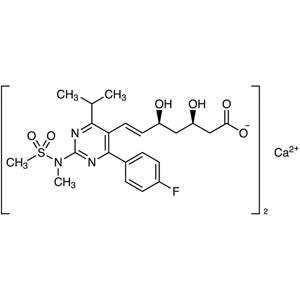
RosuvastatinCalcium TCI R0180
Regular price Rp 4.186.350,00Regular priceRp 2.943.150,00Sale price Rp 4.186.350,00 -
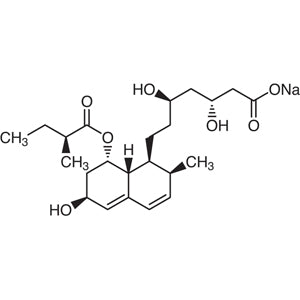
PravastatinSodium TCI P1796
Regular price From Rp 4.823.700,00Regular priceRp 3.388.350,00Sale price From Rp 4.823.700,00 -
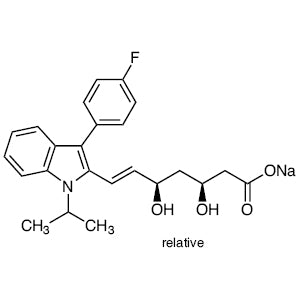
FluvastatinSodiumSalt TCI F0820
Regular price From Rp 3.630.900,00Regular priceRp 2.554.650,00Sale price From Rp 3.630.900,00 -
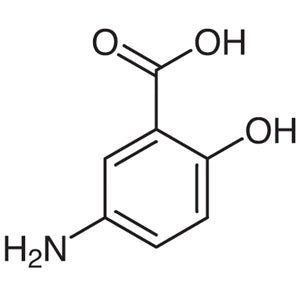
5-AminosalicylicAcid TCI A0317
Regular price From Rp 1.008.000,00Regular priceRp 720.300,00Sale price From Rp 1.008.000,00 -
ImidaprilHydrochloride TCI I0901
Regular price From Rp 4.161.150,00Regular priceRp 2.925.300,00Sale price From Rp 4.161.150,00 -
Imatinib TCI I0906
Regular price From Rp 1.378.650,00Regular priceRp 979.650,00Sale price From Rp 1.378.650,00 -
ZofenoprilCalcium TCI Z0041
Regular price From Rp 2.889.600,00Regular priceRp 2.035.950,00Sale price From Rp 2.889.600,00