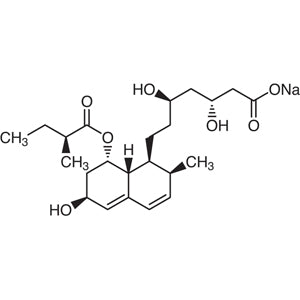
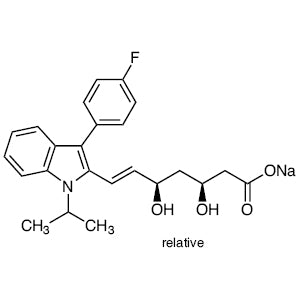
Rosuvastatin Calcium TCI R0180, with CAS number 147098-20-2, is a chemical compound widely used in life science laboratory experiments. As a calcium salt of rosuvastatin, it functions as an HMG-CoA reductase inhibitor, making it essential for research into cholesterol metabolism and cardiovascular diseases. This compound is commonly utilized in biochemical and pharmacological studies to evaluate the effects of statins on lipid profiles and related metabolic pathways. Its role extends to enzyme inhibition studies, where it helps in understanding the mechanisms of lipid-lowering drugs and their therapeutic applications.
The chemical properties of Rosuvastatin Calcium make it a preferred choice for high-precision scientific applications. It exhibits excellent solubility in organic solvents, which facilitates its use in various chemical reactions and synthesis processes. The compound maintains high purity and chemical stability, ensuring reliable results in analytical and experimental procedures. These characteristics make it suitable for use in both basic and applied research settings, where accuracy and consistency are critical. Its consistent performance and purity level also support reproducibility in laboratory experiments, enhancing the credibility of scientific findings.
In Indonesian laboratories, Rosuvastatin Calcium is frequently used in research related to public health and metabolic disorders. It plays a key role in studies examining the impact of hypolipidemic drugs on lipid metabolism and in the development of new therapeutic agents. Its relevance extends to pharmacological research, where it helps in evaluating drug efficacy and safety. Due to its reliability and versatility, it is a valuable resource for researchers working on cardiovascular and metabolic disease models.
TCI brochures (PDF)
- HMG-CoA Reductase Inhibitors Statins(PP003E)202609 2026-09-10 · p. 1
- Pharmaceutical Ingredients for Research and Experimental Use 2026-03-09 · p. 22
- Pharmacological research utilizes Rosuvastatin Calcium to study the mechanism of action of statins in lowering cholesterol levels and preventing cardiovascular diseases.
- Biochemical analysis employs this compound to assess enzyme inhibition and metabolic pathways related to lipid metabolism in cellular and tissue samples.
- Drug development projects use Rosuvastatin Calcium as a model compound to evaluate the efficacy and safety of new hypolipidemic agents in preclinical trials.
- Enzyme inhibition studies benefit from its role as a specific inhibitor of HMG-CoA reductase, aiding in the investigation of metabolic enzyme functions.
- Metabolic disorder research incorporates this compound to explore the impact of lipid-lowering drugs on metabolic profiles and disease progression in experimental models.
| Brand | TCI |
|---|---|
| CAS number | 147098-20-2 |
| Molecular formula | — |
| Purity | — |
| Category | Life Science > Biochemicals and Reagents > Enzymes, Enzyme Inhibitors, Enzyme Substrates |
| Pack sizes | Available in various quantities as per standard laboratory supply formats |
| Physical form | Solid powder |
| Storage | Store in a cool, dry place away from moisture and direct sunlight |
Rosuvastatin Calcium should be stored in a cool, dry environment to maintain its chemical stability and prevent degradation. It is recommended to keep the compound in a tightly sealed container to minimize exposure to moisture and air. Due to its potential reactivity with certain substances, it should be handled in a well-ventilated area, preferably under a fume hood. Avoid contact with incompatible materials such as strong acids or bases. When working with this compound, it is essential to follow standard laboratory safety protocols, including the use of personal protective equipment. Proper storage and handling ensure the integrity of the compound and the safety of laboratory personnel.
—
Product Categories
- Biochemicals and ReagentsEnzymes, Enzyme Inhibitors, Enzyme SubstratesEnzyme Inhibitors [Biochemicals and Reagents]
- Biochemicals and ReagentsPharmaceutical Research Reagents (for Experimental Use)Antilipemic Ingredients (for Research and Experimental Use)
- Biochemicals and Reagents
- Cell BiologyCell Signaling and NeuroscienceLipids in Cell Signaling
- Pharmaceutical Development and Drug Discovery ResearchPharmaceutical Research Reagents (for Experimental Use)Antilipemic Ingredients (for Research and Experimental Use)
Produk Terkait
-
PravastatinSodium TCI P1796
Regular price From Rp 4.823.700,00Regular priceRp 3.388.350,00Sale price From Rp 4.823.700,00 -
Gemfibrozil TCI G0368
Regular price From Rp 1.351.350,00Regular priceRp 960.750,00Sale price From Rp 1.351.350,00 -
FenofibricAcid TCI F1011
Regular price From Rp 875.700,00Regular priceRp 627.900,00Sale price From Rp 875.700,00 -
Fenofibrate TCI F0674
Regular price From Rp 1.298.850,00Regular priceRp 924.000,00Sale price From Rp 1.298.850,00 -
FluvastatinSodiumSalt TCI F0820
Regular price From Rp 3.630.900,00Regular priceRp 2.554.650,00Sale price From Rp 3.630.900,00 -
Zafirlukast TCI Z0029
Regular price Rp 5.194.350,00Regular priceRp 3.647.700,00Sale price Rp 5.194.350,00 -
Ketoprofen TCI K0038
Regular price Rp 2.942.100,00Regular priceRp 2.072.700,00Sale price Rp 2.942.100,00 -
Digoxin TCI D1828
Regular price From Rp 1.113.000,00Regular priceRp 793.800,00Sale price From Rp 1.113.000,00