1-Acetoxy-5-bromo-1,2-benziodoxol-3(1H)-one is a synthetic reagent widely used in organic chemistry for its reactivity and versatility in chemical reactions. This compound belongs to the class of hypervalent iodine compounds, which are known for their high reactivity in various synthetic processes. Its unique molecular structure makes it an essential tool for researchers aiming to synthesize complex organic molecules and heterocyclic compounds. In the laboratory, it serves as a key reagent in oxidation and substitution reactions, contributing to the development of new chemical structures with potential applications in multiple scientific fields.
The compound’s high reactivity is attributed to its hypervalent iodine content, which enhances its ability to participate in a wide range of chemical transformations. Its stability under controlled conditions allows for consistent performance in laboratory settings, making it a reliable choice for synthetic chemists. The presence of acetoxy and bromo groups further contributes to its utility in functional group transformations. These properties make it a preferred reagent for those seeking to achieve precise and efficient chemical syntheses.
In Indonesian laboratories, this compound is commonly used in research and development activities across various scientific disciplines. It is frequently found in chemical, pharmaceutical, and materials science laboratories, where it supports the synthesis of compounds with applications in drug development, polymer science, and advanced materials. Its availability in solid form simplifies handling and storage, making it a practical choice for both academic and industrial research settings.
Advantages (TCI brochure)
- Powerful oxidizing ability, superior to iodobenzene diacetate (PIDA)
- Easy oxidation of benzylic alcohols and aliphatic secondary alcohols
- Easy removal process for co-product (5-bromo-2-iodobenzoic acid)
TCI brochures (PDF)
- A Highly Active Trivalent Iodine Compound for Oxidation Reactions ABBX 2024-07-30 · p. 1
- Hypervalent Iodine Compounds 2025-06-12 · p. 2
- Oxidizing Agents 2025-06-11 · p. 3
Related TCI products
- TCI T3272 181934-29-2 1-[(Trimethylsilyl)ethynyl]-1,2-benziodoxol-3(1H)-one
- TCI T3039 181934-30-5 1-[(Triisopropylsilyl)ethynyl]-1,2-benziodoxol-3(1H)-one
- TCI T3590 181934-34-9 1-[2-(Triisopropylsilyl)ethynyl]-3,3-bis(trifluoromethyl)-1,2-benziodoxole
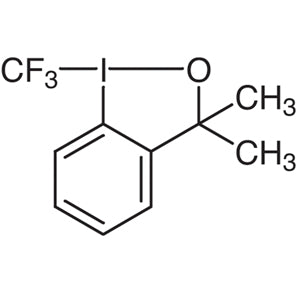
- TCI T2624 887144-97-0 1-Trifluoromethyl-3,3-dimethyl-1,2-benziodoxole
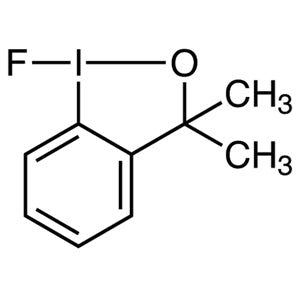
- TCI F0957 1391728-13-4 1-Fluoro-3,3-dimethyl-1,2-benziodoxole
- TCI A0069 1163-67-3 3-Acetoxy-2-naphthanilide
- Organic synthesis is a primary application where this reagent is used for its ability to participate in oxidation and substitution reactions, enabling the creation of complex organic molecules.
- Pharmaceutical research benefits from its use in the synthesis of heterocyclic compounds, which are often key components in drug development and medicinal chemistry.
- Materials science laboratories utilize this compound for the synthesis of advanced materials with unique chemical properties, such as polymers and functional coatings.
- Analytical chemistry applications include its use as a reagent in spectroscopic and chromatographic analyses to identify and characterize complex chemical structures.
- Educational institutions employ this compound in teaching and research to demonstrate the principles of hypervalent iodine chemistry and synthetic methodologies.
From the TCI brochure
- Oxidation of benzylic alcohols to aldehydes
- Oxidation of aliphatic secondary alcohols to ketones
| Brand | TCI |
|---|---|
| CAS number | 1580548-81-7 |
| Molecular formula | — |
| Purity | — |
| Category | Chemistry > Synthetic Reagents > Hypervalent Iodine Compounds |
| Pack sizes | Available in various quantities as per standard laboratory supply |
| Physical form | Solid |
| Storage | Store in a cool, dry place away from light and incompatible materials |
Data from the TCI brochure
| Yield [Purity], benzylic alcohol to aldehyde (substrate structure shown) | 90% [90%] (2.0 eq. A2678, CHCl3, 60 ºC, 24h) |
|---|---|
| Yield [Purity], cyclic aliphatic secondary alcohol to ketone (substrate structure shown) | 78% [76%] (2.0 eq. A2678, CHCl3, 60 ºC, 24h) |
Source: TCI brochure RR039 (2024-07-30)
This compound should be stored in a cool, dry environment, away from direct sunlight and sources of heat. It is recommended to use airtight containers made of materials compatible with its chemical properties, such as glass or high-density polyethylene. Due to its reactivity, it should be handled with care, and appropriate personal protective equipment, including gloves and safety goggles, should be worn when working with it. It is important to ensure that the storage area is well-ventilated to prevent the accumulation of any potentially harmful vapors. Proper labeling of containers is essential to ensure safe handling and prevent accidental exposure. Regular inspection of storage conditions is advised to maintain the compound's stability and effectiveness in laboratory applications.
References cited in the TCI brochure
- Masataka Iinuma. Oxidation of Alcohols to Aldehydes or Ketones with 1‐Acetoxy‐1,2‐benziodoxole‐3(1H)‐one Derivatives European Journal of Organic Chemistry, 2013. doi:10.1002/ejoc.201301466
Produk Terkait
-
1-[(Trimethylsilyl)ethynyl]-1,2-benziodoxol-3(1H)-one TCI T3272
Regular price From Rp 3.895.500,00Regular priceRp 2.739.450,00Sale price From Rp 3.895.500,00 -
1-[(Triisopropylsilyl)ethynyl]-1,2-benziodoxol-3(1H)-one TCI T3039
Regular price From Rp 1.908.900,00Regular priceRp 1.350.300,00Sale price From Rp 1.908.900,00 -
1-[2-(Triisopropylsilyl)ethynyl]-3,3-bis(trifluoromethyl)-1,2-benziodoxole TCI T3590
Regular price Rp 2.518.950,00Regular priceRp 1.776.600,00Sale price Rp 2.518.950,00 -
1-Trifluoromethyl-3,3-dimethyl-1,2-benziodoxole TCI T2624
Regular price From Rp 5.724.600,00Regular priceRp 4.018.350,00Sale price From Rp 5.724.600,00 -
1-Fluoro-3,3-dimethyl-1,2-benziodoxole TCI F0957
Regular price Rp 6.306.300,00Regular priceRp 4.425.750,00Sale price Rp 6.306.300,00 -
3-Acetoxy-2-naphthanilide TCI A0069
Regular price Rp 1.246.350,00Regular priceRp 887.250,00Sale price Rp 1.246.350,00 -
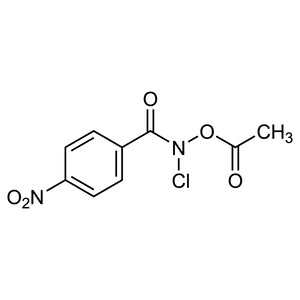
N-Acetoxy-N-chloro-4-nitrobenzamide TCI A3694
Regular price From Rp 2.464.350,00Regular priceRp 1.738.800,00Sale price From Rp 2.464.350,00 -
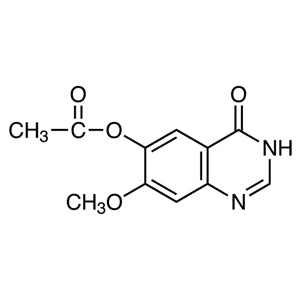
6-Acetoxy-7-methoxy-3H-quinazolin-4-one TCI A2717
Regular price From Rp 637.350,00Regular priceRp 460.950,00Sale price From Rp 637.350,00