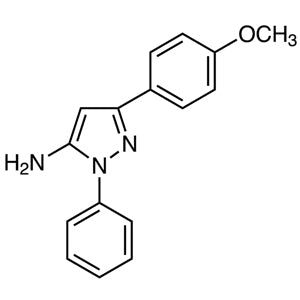
3-Amino-5-(4-methoxyphenyl)pyrazole is a chemical compound widely used as a foundational building block in the synthesis of complex heterocyclic compounds. Its unique molecular structure, featuring a pyrazole ring with amino and methoxyphenyl substituents, makes it a valuable reagent in organic chemistry. In laboratory settings, this compound plays a critical role in facilitating the formation of intricate molecular architectures, especially in reactions requiring high reactivity and structural versatility. Its presence in synthetic pathways allows chemists to explore new chemical transformations and develop advanced materials.
The compound’s reactivity stems from its functional groups, which enable participation in nucleophilic, electrophilic, and substitution reactions. These properties make it a preferred choice for researchers aiming to create pharmaceuticals, agrochemicals, and industrial chemicals. Its ability to interact with various reagents and catalysts enhances its utility in diverse synthetic strategies. Additionally, its stability under controlled conditions ensures reliable performance in laboratory experiments, contributing to the reproducibility of results.
In Indonesian laboratories, 3-Amino-5-(4-methoxyphenyl)pyrazole is commonly used in organic chemistry research, particularly in academic and industrial settings focused on drug development and material innovation. Its availability through local suppliers like AMI Scientific supports local research efforts, reducing reliance on imported materials. This accessibility fosters a more sustainable and efficient research environment, enabling scientists to conduct experiments with greater ease and consistency.
Related TCI products
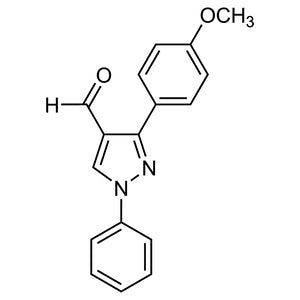
- TCI M3803 36640-42-3 3-(4-Methoxyphenyl)-1-phenyl-1H-pyrazole-4-carbaldehyde
- TCI M2902 199682-73-0 3-(4-Methoxyphenyl)pyrazole-4-carboxaldehyde
- TCI A3039 103646-82-8 5-Amino-1-(p-tolyl)pyrazole-4-carbonitrile
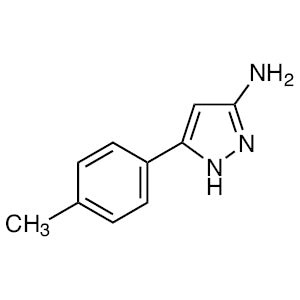
- TCI A2954 78597-54-3 5-Amino-3-(4-methylphenyl)pyrazole
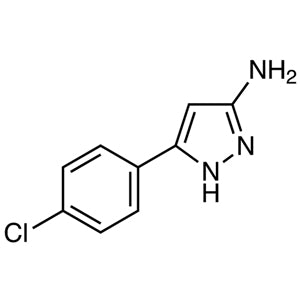
- TCI A2952 78583-81-0 3-Amino-5-(4-chlorophenyl)pyrazole
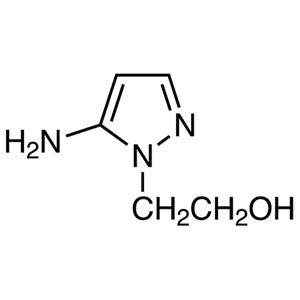
- TCI A2619 73616-27-0 5-Amino-1-(2-hydroxyethyl)pyrazole
- Organic synthesis of heterocyclic compounds due to its reactive pyrazole core and methoxyphenyl substituent.
- Development of pharmaceuticals and agrochemicals through its ability to participate in nucleophilic and electrophilic reactions.
- Creation of complex molecular structures in academic research by serving as a versatile building block.
- Investigation of catalytic reactions where its functional groups enhance reactivity and selectivity.
- Support for industrial chemical processes requiring high-performance reagents for compound modification.
| Brand | TCI |
|---|---|
| CAS number | 19541-95-8 |
| Molecular formula | — |
| Purity | — |
| Category | Chemistry > Building Blocks > Heterocyclic Building Blocks |
| Pack sizes | Available in standard laboratory quantities |
| Physical form | Solid |
| Storage | Store in a cool, dry place away from light and moisture |
This compound should be stored in a cool, dry environment, away from direct light and moisture to maintain its chemical integrity. It is recommended to use airtight containers made of glass or polyethylene to prevent contamination and degradation. Due to its reactivity, it should be handled with care, using appropriate personal protective equipment such as gloves and safety goggles. It is important to ensure proper ventilation in the workspace to avoid inhalation of vapors. Avoid exposure to incompatible substances, and always follow standard laboratory safety protocols when working with this material.
—
Produk Terkait
-
3-(4-Methoxyphenyl)-1-phenyl-1H-pyrazole-4-carbaldehyde TCI M3803
Regular price From Rp 1.405.950,00Regular priceRp 998.550,00Sale price From Rp 1.405.950,00 -
3-(4-Methoxyphenyl)pyrazole-4-carboxaldehyde TCI M2902
Regular price From Rp 1.351.350,00Regular priceRp 960.750,00Sale price From Rp 1.351.350,00 -
5-Amino-1-(p-tolyl)pyrazole-4-carbonitrile TCI A3039
Regular price Rp 3.365.250,00Regular priceRp 2.368.800,00Sale price Rp 3.365.250,00 -
5-Amino-3-(4-methylphenyl)pyrazole TCI A2954
Regular price From Rp 2.677.500,00Regular priceRp 1.887.900,00Sale price From Rp 2.677.500,00 -
3-Amino-5-(4-chlorophenyl)pyrazole TCI A2952
Regular price From Rp 900.900,00Regular priceRp 645.750,00Sale price From Rp 900.900,00 -
5-Amino-1-(2-hydroxyethyl)pyrazole TCI A2619
Regular price From Rp 1.405.950,00Regular priceRp 998.550,00Sale price From Rp 1.405.950,00 -
1-[4-(4-Amino-3-methoxyphenyl)piperazin-1-yl]ethanone TCI A3255
Regular price From Rp 1.246.350,00Regular priceRp 887.250,00Sale price From Rp 1.246.350,00 -
5-Amino-3-(4-methoxyphenyl)-1-phenylpyrazole TCI A3055
Regular price From Rp 1.140.300,00Regular priceRp 812.700,00Sale price From Rp 1.140.300,00