2-Amino-5-chlorobenzaldehyde is a versatile organic compound widely used in laboratory settings for its reactivity and structural versatility. As a building block in organic synthesis, it plays a crucial role in the development of complex molecules. Its aromatic structure provides a stable yet reactive platform for various chemical transformations, making it an essential component in synthetic chemistry. This compound is particularly valuable for its ability to participate in substitution and condensation reactions, which are fundamental to the creation of pharmaceuticals and industrial chemicals.
The compound’s unique combination of an amino group and a chloro substituent on the aromatic ring contributes to its high reactivity and functional versatility. These functional groups enable it to engage in a wide range of chemical reactions, including nucleophilic substitutions and electrophilic additions. Its solubility in organic solvents further enhances its utility, allowing for easy integration into diverse synthetic protocols. This characteristic makes it a preferred choice for researchers seeking to modify existing compounds or synthesize new ones with specific properties.
In Indonesian laboratories, 2-Amino-5-chlorobenzaldehyde is extensively used in organic chemistry research. It is commonly employed in the development of new compounds and the modification of existing ones, supporting both academic and industrial research. Its stability and reactivity make it a reliable reagent for a variety of chemical processes, contributing to the advancement of chemical synthesis in the region.
- Organic synthesis applications benefit from the compound's reactivity and structural versatility, enabling the creation of complex molecules.
- Pharmaceutical research utilizes this compound for the development of new drug candidates due to its functional groups and synthetic flexibility.
- Industrial chemical production relies on its ability to participate in substitution and condensation reactions, supporting the manufacture of various chemical products.
- Academic research in chemistry uses it as a building block for teaching and experimental purposes, enhancing students’ understanding of synthetic methods.
- Compound modification projects leverage its unique functional groups to tailor molecules for specific applications and properties.
| Brand | TCI |
|---|---|
| CAS number | 20028-53-9 |
| Molecular formula | — |
| Purity | — |
| Category | Chemistry > Building Blocks > Non-Heterocyclic Building Blocks |
| Pack sizes | Available in various quantities as per standard laboratory requirements |
| Physical form | Solid |
| Storage | Store in a cool, dry place away from light and moisture |
This compound should be stored in a cool, dry environment, away from direct light and moisture to maintain its chemical integrity. It is recommended to use airtight containers to prevent exposure to air and humidity, which could affect its stability. Due to its reactivity, it should be handled with care, using appropriate personal protective equipment such as gloves and safety goggles. Proper ventilation is essential when working with this material to minimize inhalation risks. It should not be stored near incompatible substances, such as strong oxidizers or acids, to avoid potential chemical interactions. Regular inspection of storage conditions is advised to ensure long-term stability and safety in the laboratory setting.
—
Produk Terkait
-
3-Bromo-5-chlorobenzaldehyde TCI B4839
Regular price Rp 1.696.800,00Regular price -
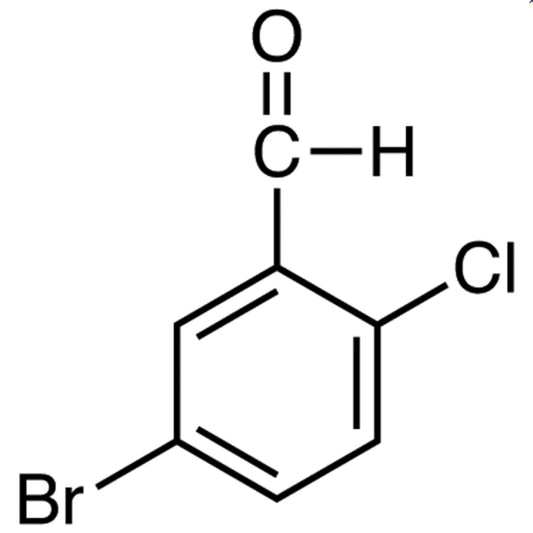
5-Bromo-2-chlorobenzaldehyde TCI B4756
Regular price From Rp 743.400,00Regular price -
4-Bromo-2-chlorobenzaldehyde TCI B3948
Regular price From Rp 1.908.900,00Regular price -
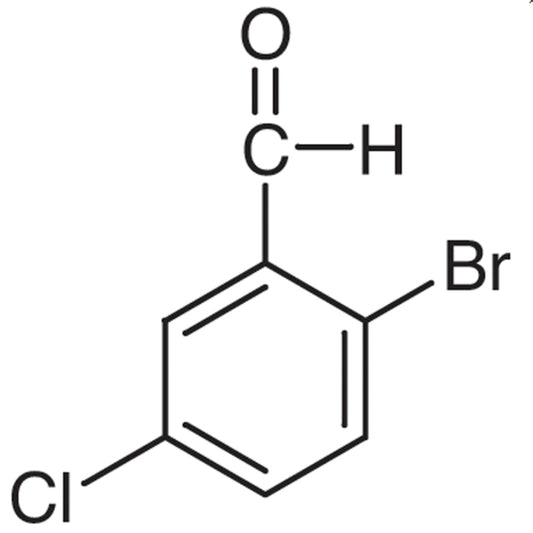
2-Bromo-5-chlorobenzaldehyde TCI B2955
Regular price From Rp 1.008.000,00Regular price -
2-Chlorobenzaldehyde TCI C0561
Regular price From Rp 477.750,00Regular price -
4-Chlorobenzaldehyde TCI C0125
Regular price From Rp 505.050,00Regular price -
3-Chlorobenzaldehyde TCI C0124
Regular price From Rp 530.250,00Regular price -
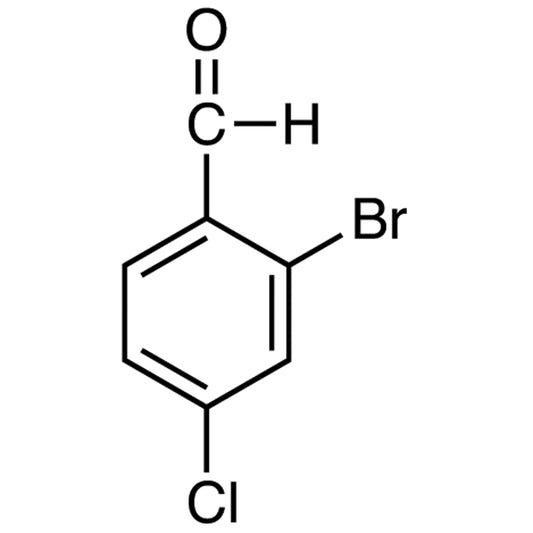
2-Bromo-4-chlorobenzaldehyde TCI B5524
Regular price From Rp 1.378.650,00Regular price