4-Bromo-2-chlorobenzaldehyde is a chemical compound widely used as a building block in the synthesis of complex organic compounds. Its aromatic structure, combined with bromo and chloro substituents, provides unique reactivity and versatility in chemical reactions. This compound plays a crucial role in organic chemistry laboratories, where it serves as a foundational material for the development of various functional compounds. Its stability and controlled reactivity make it an essential component in the creation of pharmaceuticals, industrial chemicals, and functional molecules.
The compound’s chemical and physical properties make it a preferred choice for laboratory applications. Its molecular structure allows for participation in a range of reaction mechanisms, including nucleophilic and electrophilic reactions. The presence of both bromo and chloro groups enhances its ability to undergo substitution and oxidation reactions, making it highly adaptable in synthetic pathways. Additionally, its solid form and ease of processing facilitate its use in various experimental scales, from small-scale research to larger industrial applications.
In Indonesian laboratories, 4-Bromo-2-chlorobenzaldehyde is extensively used in organic chemistry research, particularly in academic institutions and research organizations. Its availability and specific synthetic utility make it a key component in the chemical supply chain for experimental work. Researchers rely on this compound for its reliability and effectiveness in producing compounds with desired properties, supporting both educational and industrial chemical development.
Related TCI products
- Organic synthesis is a primary application where this compound is used to create complex molecules with specific functional groups.
- Pharmaceutical research benefits from its reactivity, enabling the development of new drugs and therapeutic agents.
- Industrial chemical production utilizes its structural versatility for the synthesis of various chemical intermediates.
- Functional molecule development leverages its ability to participate in multiple reaction mechanisms.
- Educational laboratories use it as a teaching tool to demonstrate synthetic pathways and chemical reactivity.
| Brand | TCI |
|---|---|
| CAS number | 158435-41-7 |
| Molecular formula | — |
| Purity | — |
| Category | Chemistry > Building Blocks > Non-Heterocyclic Building Blocks |
| Pack sizes | Available in various quantities as per standard laboratory supply |
| Physical form | Solid |
| Storage | Store in a cool, dry place away from light and moisture |
This compound should be stored in a cool, dry environment, away from direct light and moisture to maintain its stability and reactivity. It is recommended to use airtight containers to prevent exposure to air and humidity, which could affect its chemical integrity. Laboratory personnel should handle it with appropriate personal protective equipment, including gloves and safety goggles, to ensure safe handling. Due to its reactivity, it should be stored separately from incompatible substances to avoid unwanted chemical interactions. Regular monitoring of storage conditions is advised to ensure the compound remains in optimal condition for use in experimental work.
—
Produk Terkait
-
3-Bromo-5-chlorobenzaldehyde TCI B4839
Regular price Rp 1.696.800,00Regular priceRp 1.186.500,00Sale price Rp 1.696.800,00 -
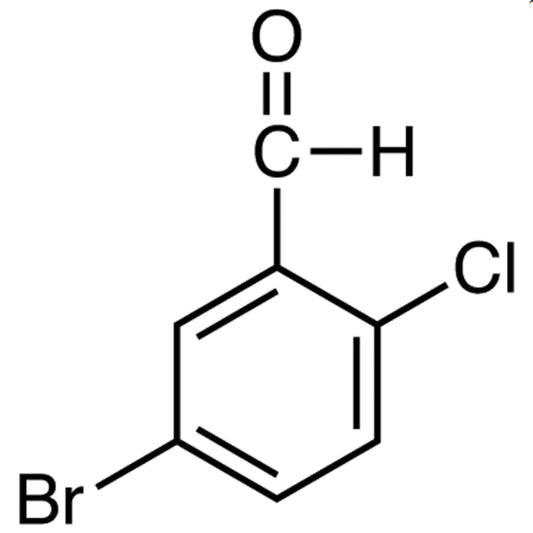
5-Bromo-2-chlorobenzaldehyde TCI B4756
Regular price From Rp 743.400,00Regular priceRp 519.750,00Sale price From Rp 743.400,00 -
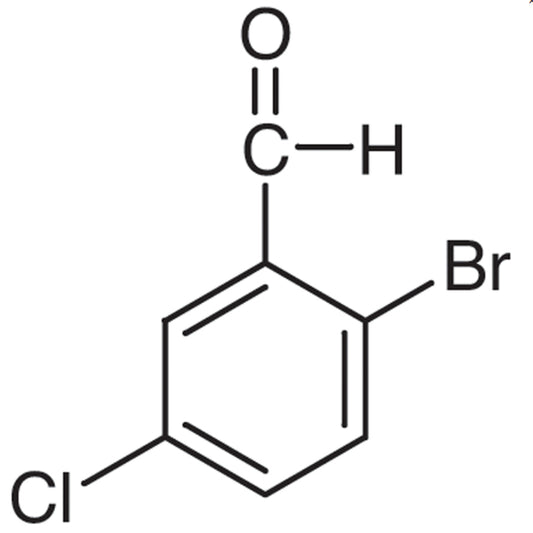
2-Bromo-5-chlorobenzaldehyde TCI B2955
Regular price From Rp 1.008.000,00Regular priceRp 704.550,00Sale price From Rp 1.008.000,00 -
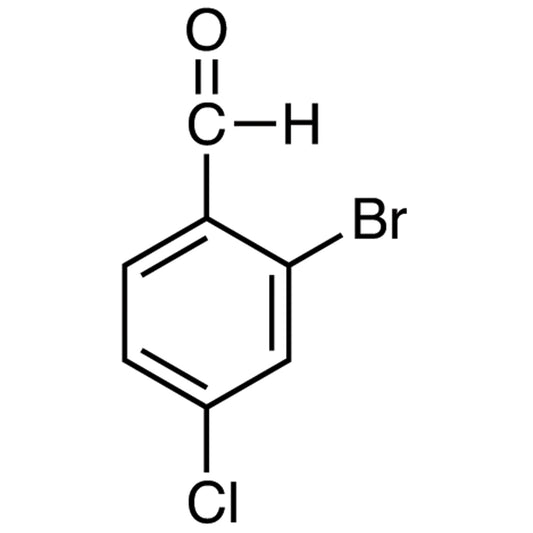
2-Bromo-4-chlorobenzaldehyde TCI B5524
Regular price From Rp 1.378.650,00Regular priceRp 963.900,00Sale price From Rp 1.378.650,00 -
2-Amino-5-chlorobenzaldehyde TCI A3064
Regular price From Rp 1.988.700,00Regular priceRp 1.405.950,00Sale price From Rp 1.988.700,00 -
2-Chlorobenzaldehyde TCI C0561
Regular price From Rp 477.750,00Regular priceRp 333.900,00Sale price From Rp 477.750,00 -
4-Chlorobenzaldehyde TCI C0125
Regular price From Rp 505.050,00Regular priceRp 352.800,00Sale price From Rp 505.050,00 -
3-Chlorobenzaldehyde TCI C0124
Regular price From Rp 530.250,00Regular priceRp 370.650,00Sale price From Rp 530.250,00