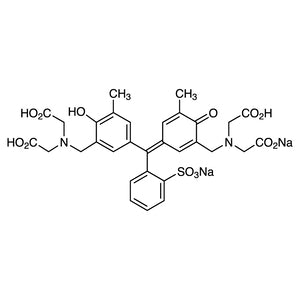
Alizarin Complexone is a chemical compound widely used in laboratory experiments as a staining agent. It plays a crucial role in analytical chemistry, particularly in the detection and quantification of metal ions in solution. This compound is known for its ability to form stable complexes with various metal ions, making it an essential tool in qualitative and quantitative analysis. Its application spans across different research fields, including environmental and geological studies, where identifying trace metal ions is critical.
The chemical properties of Alizarin Complexone make it a preferred choice for laboratory use. It exhibits high affinity for heavy metal ions such as lead, tin, and zinc, allowing for accurate and reliable results. It is soluble in organic solvents like ethanol and acetone, which enhances its versatility in different experimental setups. Additionally, its chemical stability under controlled conditions ensures consistent performance, reducing the risk of unwanted reactions during analysis.
In Indonesian laboratories, Alizarin Complexone is commonly used in analytical chemistry, geology, and environmental science. Its ability to form complexes with metal ions makes it ideal for identifying and measuring their concentrations in various samples. Due to its stability and solubility, it is a reliable reagent for both qualitative and quantitative analysis, supporting research in multiple scientific disciplines.
TCI brochures (PDF)
- Titration Reagents and TLC Stains 2026-05-07 · p. 8
- Metal Ion Analysis – Alizarin Complexone is ideal for detecting and quantifying heavy metal ions due to its strong binding affinity, ensuring accurate results in environmental and industrial samples.
- Qualitative Analysis – It is used in identifying metal ions in solution through color changes, making it a valuable tool in basic chemistry and educational laboratories.
- Environmental Testing – Alizarin Complexone helps in analyzing trace metals in soil and water samples, supporting environmental monitoring and contamination studies.
- Geological Research – It is employed in the analysis of mineral samples to determine the presence of specific metal ions, aiding in geological and mineralogical studies.
- Chemical Research – Its stability and reactivity make it suitable for use in complex chemical reactions and analytical procedures in research laboratories.
| Brand | TCI |
|---|---|
| CAS number | 3952-78-1 |
| Molecular formula | — |
| Purity | — |
| Category | Chemistry > Stains and Dyes (for Research and Experimental Use) > Stains and Dyes (Other) (for Research and Experimental Use) |
| Pack sizes | — |
| Physical form | — |
| Storage | — |
Alizarin Complexone should be stored in a cool, dry place away from direct sunlight to maintain its chemical stability. It is recommended to keep it in a sealed container to prevent moisture absorption and contamination. Due to its solubility in organic solvents, it should be handled with care to avoid spills or exposure. Proper laboratory safety practices, such as using gloves and goggles, should be followed when handling this compound. It is important to ensure that storage conditions are consistent to preserve its effectiveness for analytical purposes. Regular inspection of storage containers is advised to maintain the integrity of the material.
—
Produk Terkait
-
AlizarinYellowGG TCI A0578
Regular price Rp 1.618.050,00Regular priceRp 1.130.850,00Sale price Rp 1.618.050,00 -
Alizarin TCI D0242
Regular price Rp 1.167.600,00Regular priceRp 831.600,00Sale price Rp 1.167.600,00 -
XylenolOrange TCI B0477
Regular price From Rp 928.200,00Regular priceRp 664.650,00Sale price From Rp 928.200,00 -
H-Resorcinol[SpectrophotometricreagentforthedeterminationofBbyFIA] TCI A5017
Regular price Rp 3.232.950,00Regular priceRp 2.260.650,00Sale price Rp 3.232.950,00 -
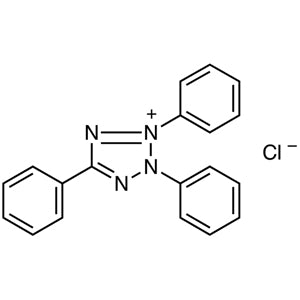
2,3,5-TriphenyltetrazoliumChloride TCI T0520
Regular price From Rp 662.550,00Regular priceRp 478.800,00Sale price From Rp 662.550,00 -
Purpurin TCI P0605
Regular price Rp 6.386.100,00Regular priceRp 4.481.400,00Sale price Rp 6.386.100,00 -
Murexide TCI M0474
Regular price From Rp 795.900,00Regular priceRp 572.250,00Sale price From Rp 795.900,00 -
Anthrone TCI A0509
Regular price From Rp 1.035.300,00Regular priceRp 723.450,00Sale price From Rp 1.035.300,00