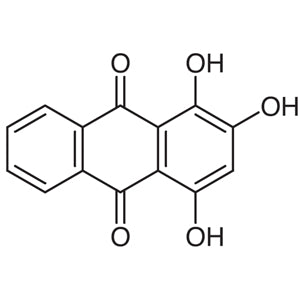
Purpurin from TCI (product code P0605) is a hydroxylated anthraquinone compound, specifically 1,2,4-trihydroxyanthraquinone, long known as one of the natural dyes obtained from the roots of the madder plant (Rubia). In the modern laboratory, purpurin is used as a stain and dye for research and experimental work. Its main use is in histology, where it detects calcium. It also serves as a model compound in studies of anthraquinones, fluorescence and natural dye chemistry. This product is intended for research and experimental use only and is not for clinical diagnosis.
Researchers choose purpurin because its anthraquinone framework carries several hydroxyl groups. These groups give it a strong red to orange colour and let it form complexes with metal ions. Its ability to bind calcium is what makes it useful for staining calcium deposits in tissue. The compound is also fluorescent, so it can be used in fluorescence microscopy and in optical sensor studies. Its colour can change with pH and with the presence of metal ions, a property used in indicator research and analytical chemistry. Because it is a well-characterised natural dye, it is also a dependable reference material for comparative work.
In Indonesia, purpurin is relevant to histology and experimental pathology laboratories in faculties of medicine and veterinary medicine. Researchers there study calcification and mineral deposits in tissue sections. It is also useful to chemistry and pharmacy research groups that work on anthraquinone compounds, natural dyes and fluorescent probes. Teaching laboratories can use it to show how a classic plant-derived dye still works as a research tool today. AMI Scientific supplies the genuine TCI product to support this work.
TCI brochures (PDF)
- Phytochemicals 2025-12-17 · p. 13
Related TCI products
- Histological calcium staining: purpurin binds calcium and produces a visible colour, so it can stain calcium deposits in experimental tissue sections.
- Fluorescence microscopy: the compound is fluorescent, so researchers can use it to observe stained structures under fluorescence microscopy as well as under brightfield viewing.
- Anthraquinone model studies: as 1,2,4-trihydroxyanthraquinone, purpurin is a well-defined hydroxylated anthraquinone and works well as a model compound for studies of structure, reactivity and spectroscopic behaviour.
- Indicator and analytical chemistry research: its colour changes with pH and with the presence of metal ions, so it can be studied as an indicator and as a complexing agent in analytical methods.
- Natural dye chemistry and optical sensor studies: as a historic madder dye with metal-binding and fluorescent properties, purpurin suits research on natural colourants and on the design of optical sensors.
| Brand | TCI (product code P0605) |
|---|---|
| CAS number | 81-54-9 |
| Molecular formula | — |
| Purity | — |
| Category | Chemistry > Stains and Dyes (for Research and Experimental Use) > Stains and Dyes (Other) (for Research and Experimental Use) |
| Pack sizes | available in TCI standard pack sizes; please confirm the current options with AMI Scientific |
| Physical form | solid with a red to orange colour; check the product label and certificate of analysis for details |
| Storage | keep the container tightly closed in a cool, dry place away from light, following the TCI label and SDS |
Store purpurin in its original, tightly closed container in a cool, dry, well-ventilated place. Protect it from direct light and moisture, since dyes and fluorescent compounds can degrade with prolonged exposure. Always follow the storage conditions on the TCI label and Safety Data Sheet. Use clean, dry spatulas and glass or chemically compatible containers when weighing or preparing solutions, and label all prepared stains clearly with the name and date. Wear standard laboratory protective equipment, including gloves, safety glasses and a lab coat. Avoid inhaling dust and avoid contact with skin and eyes, because the dye stains strongly. Handle the powder in a fume hood or a ventilated area. Dispose of waste according to local regulations and your institution's chemical waste procedures.
—
Produk Terkait
-
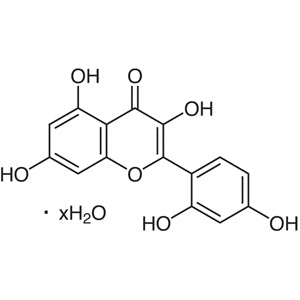
MorinHydrate TCI P0041
Regular price From Rp 955.500,00Regular price -
Vanillin TCI H0264
Regular price From Rp 530.250,00Regular price -
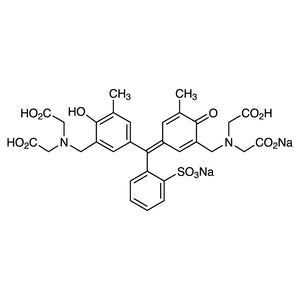
XylenolOrange TCI B0477
Regular price From Rp 875.700,00Regular price -
H-Resorcinol[SpectrophotometricreagentforthedeterminationofBbyFIA] TCI A5017
Regular price Rp 3.232.950,00Regular price -
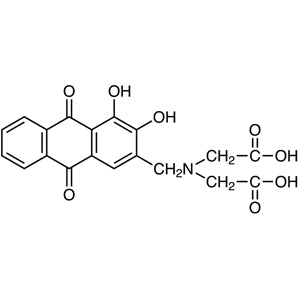
AlizarinComplexone TCI A3227
Regular price From Rp 1.590.750,00Regular price -
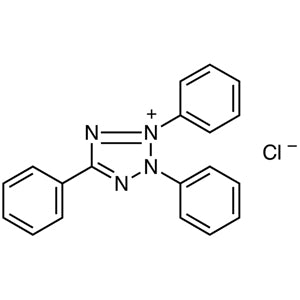
2,3,5-TriphenyltetrazoliumChloride TCI T0520
Regular price From Rp 610.050,00Regular price -
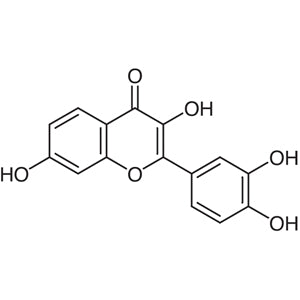
Fisetin TCI T0121
Regular price From Rp 848.400,00Regular price -
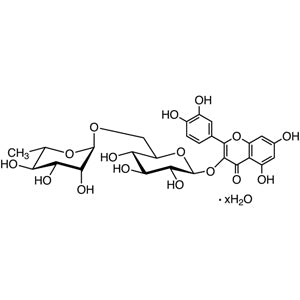
RutinHydrate TCI R0035
Regular price Rp 1.378.650,00Regular price

![3627-01-8 H-Resorcinol [Spectrophotometric reagent for the determination of B by FIA] - AMI Scientific](http://amiscientific.com/cdn/shop/files/TCI2510A5017.jpg?v=1767084839&width=533)