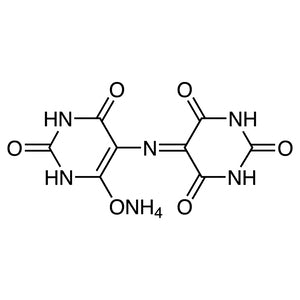
Murexide is a chemical compound widely used in laboratory settings, particularly in analytical chemistry and biochemistry. As a type of dye, it plays a crucial role in detecting and analyzing specific ions through qualitative or quantitative reactions. Its ability to bind with particular ions makes it an essential tool for identifying and studying chemical components in various experimental processes. In research environments, Murexide is often employed as a reagent for testing and separating chemical substances, contributing to the accuracy and reliability of experimental results.
One of the key properties that make Murexide a preferred choice is its chemical stability and solubility in organic solvents such as ethyl acetate and acetone. These characteristics allow it to remain effective in a wide range of chemical reactions without significant degradation. Additionally, Murexide exhibits good reactivity towards specific metal ions, making it suitable for applications requiring high sensitivity. Its consistent performance and reliability in laboratory conditions make it a trusted reagent for researchers and scientists.
In Indonesian laboratories, Murexide is commonly used in scientific research across various disciplines. It is particularly valued for its role in staining processes, where it helps highlight specific structures in biological or chemical samples. Its application extends to analytical techniques that require precise detection and measurement, supporting the advancement of scientific studies in Indonesia.
TCI brochures (PDF)
- Titration Reagents and TLC Stains 2026-05-07 · p. 11
Related TCI products
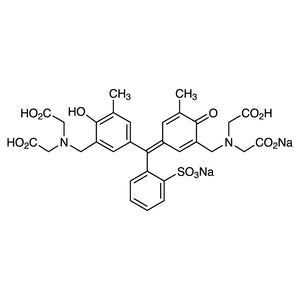
- TCI B0477 1202864-39-8 Xylenol Orange
- TCI A5010 68504-35-8 Sulfonazo III [Spectrophotometric reagent for alkaline earth metals and indicator for the precipitation titration of SO4 with Ba]
- TCI A5008 14979-11-4 Dimethylsulfonazo III [Spectrophotometric reagent for alkaline earth metals and indicator for the precipitation titration of SO4 with Ba]
- TCI A5003 1147-56-4 TAN [=1-(2-Thiazolylazo)-2-naphthol] [Spectrophotometric reagent for transition metals]
- TCI A5002 2246-46-0 TAR [=4-(2-Thiazolylazo)resorcinol]
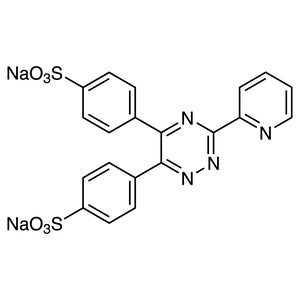
- TCI P0830 28048-33-1 3-(2-Pyridyl)-5,6-bis(4-sulfophenyl)-1,2,4-triazine Disodium Salt
- Analytical Chemistry: Murexide is used to detect specific ions in solution, aiding in the identification of trace elements in complex mixtures.
- Biochemistry Research: It serves as a reagent for staining and visualizing biological structures, enhancing the clarity of microscopic observations.
- Metal Ion Detection: Due to its reactivity with certain metal ions, it is ideal for qualitative and quantitative analysis in metal ion studies.
- Chemical Separation Techniques: Murexide is employed in chromatography and other separation methods to distinguish between different compounds.
- Environmental Analysis: It is used to analyze water and soil samples for the presence of specific contaminants, supporting environmental research.
| Brand | TCI |
|---|---|
| CAS number | 3051-09-0 |
| Molecular formula | — |
| Purity | — |
| Category | Chemistry > Stains and Dyes (for Research and Experimental Use) > Stains and Dyes (Other) (for Research and Experimental Use) |
| Pack sizes | Available in various quantities as per supplier specifications |
| Physical form | Solid or powder, depending on the formulation |
| Storage | Store in a cool, dry place away from direct sunlight |
Murexide should be stored in a cool, dry place away from direct sunlight to maintain its chemical stability. It is recommended to use airtight containers to prevent exposure to moisture and air, which could affect its performance. As a chemical dye, it is important to handle Murexide with care, using appropriate personal protective equipment such as gloves and safety goggles. It should not be stored near incompatible substances, such as strong acids or bases, to avoid any potential chemical reactions. Proper labeling of storage containers is essential to ensure safe handling and prevent accidental exposure. In laboratory settings, Murexide should be used in well-ventilated areas to minimize inhalation risks.
—
Produk Terkait
-
XylenolOrange TCI B0477
Regular price From Rp 875.700,00Regular price -
SulfonazoIII[SpectrophotometricreagentforalkalineearthmetalsandindicatorfortheprecipitationtitrationofSO4withBa] TCI A5010
Regular price From Rp 1.193.850,00Regular price -
DimethylsulfonazoIII[SpectrophotometricreagentforalkalineearthmetalsandindicatorfortheprecipitationtitrationofSO4withBa] TCI A5008
Regular price From Rp 2.094.750,00Regular price -
TAN[=1-(2-Thiazolylazo)-2-naphthol][Spectrophotometricreagentfortransitionmetals] TCI A5003
Regular price From Rp 1.829.100,00Regular price -
TAR[=4-(2-Thiazolylazo)resorcinol] TCI A5002
Regular price From Rp 1.856.400,00Regular price -
3-(2-Pyridyl)-5,6-bis(4-sulfophenyl)-1,2,4-triazineDisodiumSalt TCI P0830
Regular price Rp 1.035.300,00Regular price -
PyrogallolRed TCI P0572
Regular price From Rp 1.008.000,00Regular price -
PyrocatecholViolet TCI P0568
Regular price From Rp 664.650,00Regular price
![68504-35-8 Sulfonazo III [Spectrophotometric reagent for alkaline earth metals and indicator for the precipitation titration of SO4 with Ba] - AMI Scientific](http://amiscientific.com/cdn/shop/files/TCI2510A5010.jpg?v=1769179452&width=533)
![14979-11-4 Dimethylsulfonazo III [Spectrophotometric reagent for alkaline earth metals and indicator for the precipitation titration of SO4 with Ba] - AMI Scientific](http://amiscientific.com/cdn/shop/files/TCI2510A5008.jpg?v=1768358964&width=533)
![TCI A5003 1147-56-4 TAN [=1-(2-Thiazolylazo)-2-naphthol] [Spectrophotometric reagent for transition metals] — struktur kimia](http://amiscientific.com/cdn/shop/files/TCI2510A5003-struktur.jpg?v=1791525233&width=533)
![2246-46-0 TAR [=4-(2-Thiazolylazo)resorcinol] - AMI Scientific](http://amiscientific.com/cdn/shop/files/TCI_755a57a1-c262-4e66-ab3d-595087b9034b.png?v=1766991254&width=533)