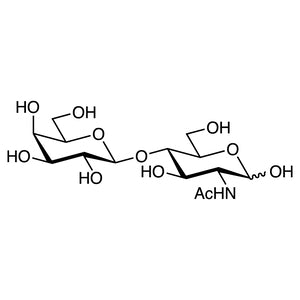
N-Acetyllactosamine is a chemical compound widely used in biochemical and glycoscience research within laboratories. It is a derivative of lactose and possesses a complex glycosidic structure, making it a valuable tool in various scientific investigations. This compound is commonly used as a substrate or modifier in enzymatic reactions, particularly in studies involving β-galactosidase activity. Its role in these reactions is critical for understanding enzyme mechanisms and catalytic processes. Due to its structural complexity, it also plays a key role in the synthesis of other glycosidic compounds and in molecular structure analysis.
N-Acetyllactosamine is preferred for its chemical stability under specific conditions, although it is sensitive to moisture and air exposure. Its solubility varies depending on the solvent used, which makes it adaptable for different experimental setups. This variability in solubility allows researchers to tailor their experimental conditions for optimal results. Additionally, its molecular structure enables it to interact with proteins and other biomolecules, making it a versatile reagent in biochemical assays. These properties make it a reliable and precise choice for laboratory applications requiring high accuracy.
In Indonesian laboratories, N-Acetyllactosamine is frequently used in applied research across disciplines such as pharmacology, biochemistry, and biotechnology. It is an essential component in studies focused on enzyme mechanisms and molecular interactions, contributing to advancements in scientific understanding. Its presence in these research areas highlights its importance in both fundamental and applied scientific investigations.
- Enzymatic Reaction Studies: N-Acetyllactosamine serves as a substrate for β-galactosidase, enabling researchers to study enzyme activity and catalytic mechanisms.
- Glycoside Synthesis: Its complex structure makes it ideal for the synthesis of other glycosidic compounds, supporting the development of new biochemical materials.
- Molecular Structure Analysis: It is used in analytical techniques to investigate molecular interactions and structural properties of biomolecules.
- Protein-Ligand Interaction Research: Its ability to interact with proteins allows for the study of binding affinities and molecular recognition processes.
- Biotechnological Applications: It is employed in biotechnology research for the development of enzyme-based processes and functional biomaterials.
| Brand | TCI |
|---|---|
| CAS number | 32181-59-2 |
| Molecular formula | — |
| Purity | — |
| Category | Chemistry > Chemical Biology > Glycoscience |
| Pack sizes | Available in various quantities as per supplier specifications |
| Physical form | Solid or powder, depending on formulation |
| Storage | Store in a cool, dry place away from moisture and air exposure |
N-Acetyllactosamine should be stored in a cool, dry environment to prevent degradation due to moisture and air exposure. It is recommended to use airtight containers to maintain its chemical integrity. Laboratory personnel should handle the compound with care, using appropriate personal protective equipment to ensure safety. Due to its sensitivity, it should be stored in a controlled environment to preserve its stability and effectiveness. Proper storage conditions are essential to maintain its quality and usability in research applications. Always ensure that the compound is kept away from direct sunlight and sources of heat to avoid any adverse effects on its properties.
—
Product Categories
- GlycoscienceDisaccharides [Glycoscience]
- GlycoscienceFunctional OligosaccharidesMilk Oligosaccharides [Functional Oligosaccharides]
- GlycoscienceFunctional OligosaccharidesNatural Oligosaccharides [Functional Oligosaccharides]
- GlycoscienceGlyco Building BlocksProtected Sugars [Oligosaccharides by Component Sugar]
- GlycoscienceOligosaccharides by Component SugarGalactose [Oligosaccharides by Component Sugar]
- GlycoscienceOligosaccharides by Component SugarGlucosamine [Oligosaccharides by Component Sugar]
- GlycoscienceOligosaccharides by Component SugarLacNAc [Oligosaccharides by Component Sugar]
Produk Terkait
-
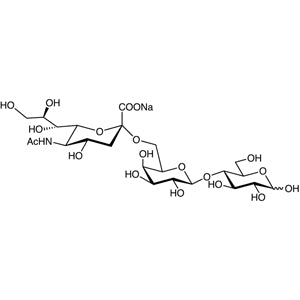
6'-SialyllactoseSodiumSalt TCI S0886
Regular price From Rp 5.485.200,00Regular priceRp 3.851.400,00Sale price From Rp 5.485.200,00 -
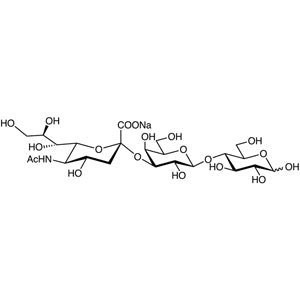
3'-SialyllactoseSodiumSalt TCI S0885
Regular price From Rp 4.399.500,00Regular priceRp 3.092.250,00Sale price From Rp 4.399.500,00 -
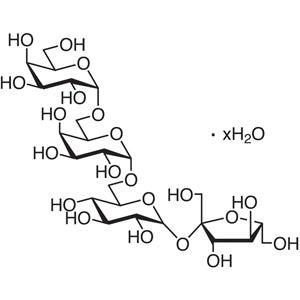
StachyoseHydrate TCI S0397
Regular price From Rp 5.405.400,00Regular priceRp 3.795.750,00Sale price From Rp 5.405.400,00 -
Lactulose TCI L0140
Regular price Rp 2.068.500,00Regular priceRp 1.461.600,00Sale price Rp 2.068.500,00 -
D-(+)-LactoseMonohydrate TCI L0008
Regular price Rp 637.350,00Regular priceRp 460.950,00Sale price Rp 637.350,00 -
SGN TCI G0560
Regular price Rp 4.161.150,00Regular priceRp 2.925.300,00Sale price Rp 4.161.150,00 -
AMOR TCI M3044
Regular price Rp 11.632.950,00Regular priceRp 8.150.100,00Sale price Rp 11.632.950,00 -
D-(+)-MelibioseMonohydrate TCI M0050
Regular price From Rp 557.550,00Regular priceRp 405.300,00Sale price From Rp 557.550,00