4-(4-Acetyl-2-methoxy-5-nitrophenoxy)butanoic Acid is a chemical compound widely used in laboratory settings for its unique photolabile properties. This compound belongs to the category of photolabile protecting groups, which are essential in chemical and biochemical experiments where controlled and reversible protection of functional groups is required. Its role in the laboratory is primarily to shield reactive sites on organic molecules during synthetic processes, allowing for precise manipulation under specific conditions. This makes it a valuable tool for researchers working on complex molecule synthesis and drug development.
The compound's preference stems from its stability under normal conditions and its ability to be selectively removed upon exposure to light. This property enables precise control over chemical reactions, reducing unwanted side reactions and improving the efficiency of synthesis pathways. Additionally, its molecular structure ensures minimal degradation during storage, making it a reliable choice for long-term use in laboratory environments. These characteristics make it a favored material in both academic and industrial research settings.
In Indonesian laboratories, this compound is commonly used in scientific research and educational institutions focused on organic and biochemical studies. Its availability and effectiveness in controlled chemical reactions make it a preferred choice for researchers aiming to achieve high precision in their experiments. It is particularly useful in applications requiring light-induced activation, such as photochemical synthesis and functional group protection.
TCI brochures (PDF)
- Protecting Agents 2025-03-25 · p. 12
Related TCI products
- TCI B6669 1410809-15-2 tert-Butyl 4-(4-Acetyl-2-methoxy-5-nitrophenoxy)butanoate
- TCI B6668 1410809-16-3 tert-Butyl 4-[4-(1-Hydroxyethyl)-2-methoxy-5-nitrophenoxy]butanoate
- TCI F1247 135112-27-5 (S)-2-[[[(9H-Fluoren-9-yl)methoxy]carbonyl]amino]butanoic Acid
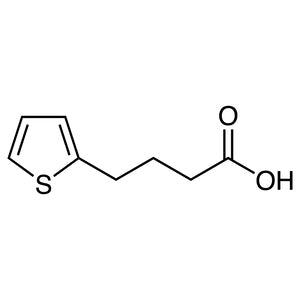
- TCI T4178 4653-11-6 4-(Thiophen-2-yl)butanoic Acid
- TCI M3886 31349-48-1 4-(1-Methyl-5-nitro-1H-benzo[d]imidazol-2-yl)butanoic Acid
- TCI M3248 40662-29-1 3-Methyl-3-(2,4,5-trimethyl-3,6-dioxocyclohexa-1,4-dien-1-yl)butanoic Acid
- Photolabile Protecting Group Applications: This compound is ideal for protecting functional groups in organic molecules during synthesis, allowing for controlled deprotection via light exposure.
- Drug Development Research: It is used in the synthesis of complex pharmaceutical compounds where precise control over reaction conditions is critical.
- Biochemical Modification Studies: Its ability to act as a reversible protecting group makes it suitable for modifying biomolecules in biochemical experiments.
- Photochemical Synthesis Projects: The compound enables the creation of light-sensitive intermediates, facilitating selective reactions under controlled light conditions.
- Educational Laboratory Work: It is frequently used in teaching labs to demonstrate photolabile chemistry and its applications in organic synthesis.
| Brand | TCI |
|---|---|
| CAS number | 188891-18-1 |
| Molecular formula | — |
| Purity | — |
| Category | Chemistry > Chemical Biology > Photolabile Protecting Groups |
| Pack sizes | Available in various quantities as per supplier specifications |
| Physical form | Solid, crystalline powder |
| Storage | Store in a cool, dry place away from direct light |
This compound should be stored in a cool, dry environment, away from direct sunlight and sources of heat. It is recommended to keep it in a sealed container to prevent moisture absorption and maintain its chemical integrity. Due to its photolabile nature, it should be protected from light exposure during storage and handling. When in use, it should be handled in a well-ventilated area to ensure safety. Proper personal protective equipment, such as gloves and safety goggles, should be worn to minimize direct contact. Regular monitoring of storage conditions is advised to ensure the compound remains stable and effective for laboratory applications.
—
Product Categories
Produk Terkait
-
tert-Butyl4-(4-Acetyl-2-methoxy-5-nitrophenoxy)butanoate TCI B6669
Regular price Rp 5.009.550,00Regular priceRp 3.518.550,00Sale price Rp 5.009.550,00 -
tert-Butyl4-[4-(1-Hydroxyethyl)-2-methoxy-5-nitrophenoxy]butanoate TCI B6668
Regular price Rp 8.135.400,00Regular priceRp 5.704.650,00Sale price Rp 8.135.400,00 -
(S)-2-[[[(9H-Fluoren-9-yl)methoxy]carbonyl]amino]butanoicAcid TCI F1247
Regular price From Rp 1.167.600,00Regular priceRp 831.600,00Sale price From Rp 1.167.600,00 -
4-(Thiophen-2-yl)butanoicAcid TCI T4178
Regular price From Rp 1.008.000,00Regular priceRp 720.300,00Sale price From Rp 1.008.000,00 -
4-(1-Methyl-5-nitro-1H-benzo[d]imidazol-2-yl)butanoicAcid TCI M3886
Regular price Rp 4.028.850,00Regular priceRp 2.832.900,00Sale price Rp 4.028.850,00 -
3-Methyl-3-(2,4,5-trimethyl-3,6-dioxocyclohexa-1,4-dien-1-yl)butanoicAcid TCI M3248
Regular price Rp 2.199.750,00Regular priceRp 1.554.000,00Sale price Rp 2.199.750,00 -
3,5-Bis(4-nitrophenoxy)benzoicAcid TCI B2120
Regular price Rp 7.605.150,00Regular priceRp 5.334.000,00Sale price Rp 7.605.150,00 -
2-(4-Nitrophenoxy)naphthalene TCI N0807
Regular price Rp 1.590.750,00Regular priceRp 1.111.950,00Sale price Rp 1.590.750,00