3,5-Bis(4-nitrophenoxy)benzoic Acid is a chemical compound widely used in materials science research, particularly in the synthesis of dendrimer structures. This compound plays a crucial role in the development of complex molecular architectures by enabling the attachment of other molecules through specific chemical bonds. Its unique structure allows for precise control over molecular assembly, making it an essential reagent in advanced polymer and macromolecule research. In laboratory settings, it serves as a fundamental building block for creating materials with tailored properties, such as functional polymers and specialized chemical compounds.
The compound’s chemical stability and controlled reactivity make it a preferred choice for high-precision chemical reactions. Its molecular structure, consisting of nitro groups and benzoate moieties, provides unique reactivity that allows researchers to modify molecular structures with specificity. These characteristics make it ideal for applications requiring precise chemical manipulation. The predictable behavior of this compound under various reaction conditions enhances its reliability in both academic and industrial research environments.
In Indonesian laboratories, 3,5-Bis(4-nitrophenoxy)benzoic Acid is commonly used in the development of new materials, including functional polymers and specialty chemicals for industrial applications. Researchers at educational institutions and research organizations frequently utilize this compound to explore innovative material properties and chemical synthesis techniques. Its versatility and effectiveness make it a key component in advancing materials science and organic chemistry research in the region.
Related TCI products
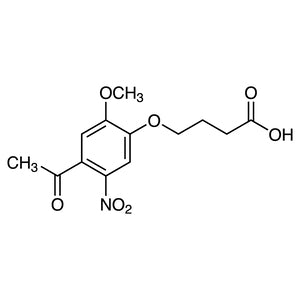
- TCI A3678 188891-18-1 4-(4-Acetyl-2-methoxy-5-nitrophenoxy)butanoic Acid
- TCI N0807 71311-82-5 2-(4-Nitrophenoxy)naphthalene
- TCI H1048 2-[4-(Hydroxymethyl)-2-nitrophenoxy]ethanol
- TCI B6669 1410809-15-2 tert-Butyl 4-(4-Acetyl-2-methoxy-5-nitrophenoxy)butanoate
- TCI B6668 1410809-16-3 tert-Butyl 4-[4-(1-Hydroxyethyl)-2-methoxy-5-nitrophenoxy]butanoate
- TCI B4723 115929-59-4 2-Bromo-4-methoxy-6-nitrophenol
- Dendrimer Synthesis: This compound is ideal for constructing complex dendrimer structures due to its ability to form multiple covalent bonds with other molecules.
- Functional Polymer Development: Its unique molecular structure enables the creation of polymers with specific functional properties, such as enhanced solubility or reactivity.
- Organic Chemistry Research: The compound’s controlled reactivity and stability make it suitable for a wide range of organic synthesis reactions requiring precision.
- Material Characterization Studies: It is used in experiments that analyze the structural and chemical properties of new materials, aiding in the development of advanced materials.
- Industrial Chemical Applications: Researchers use it to develop specialty chemicals for various industrial applications, including coatings and pharmaceuticals.
| Brand | TCI |
|---|---|
| CAS number | 173550-33-9 |
| Molecular formula | — |
| Purity | — |
| Category | Materials Science > Polymer/Macromolecule Reagents > Dendrimer Building Blocks |
| Pack sizes | Available in standard laboratory quantities |
| Physical form | Solid powder |
| Storage | Store in a cool, dry place away from light and moisture |
This compound should be stored in a cool, dry environment, away from direct light and moisture to maintain its chemical stability. It is recommended to use airtight containers to prevent exposure to air and humidity, which could affect its reactivity. In laboratory settings, it should be handled with appropriate personal protective equipment, such as gloves and safety goggles, to ensure safety during use. Due to its chemical nature, it should be stored separately from incompatible substances to avoid any potential reactions. Proper labeling and storage conditions are essential to maintain the integrity and effectiveness of the compound in research applications.
—
Product Categories
Produk Terkait
-
4-(4-Acetyl-2-methoxy-5-nitrophenoxy)butanoicAcid TCI A3678
Regular price Rp 1.908.900,00Regular priceRp 1.350.300,00Sale price Rp 1.908.900,00 -
2-(4-Nitrophenoxy)naphthalene TCI N0807
Regular price Rp 1.590.750,00Regular priceRp 1.111.950,00Sale price Rp 1.590.750,00 -
TCI H1048 2-[4-(Hydroxymethyl)-2-nitrophenoxy]ethanol
Regular price From Rp 1.643.250,00Regular priceRp 1.164.450,00Sale price From Rp 1.643.250,00 -
tert-Butyl4-(4-Acetyl-2-methoxy-5-nitrophenoxy)butanoate TCI B6669
Regular price Rp 5.009.550,00Regular priceRp 3.518.550,00Sale price Rp 5.009.550,00 -
tert-Butyl4-[4-(1-Hydroxyethyl)-2-methoxy-5-nitrophenoxy]butanoate TCI B6668
Regular price Rp 8.135.400,00Regular priceRp 5.704.650,00Sale price Rp 8.135.400,00 -
2-Bromo-4-methoxy-6-nitrophenol TCI B4723
Regular price From Rp 557.550,00Regular priceRp 405.300,00Sale price From Rp 557.550,00 -
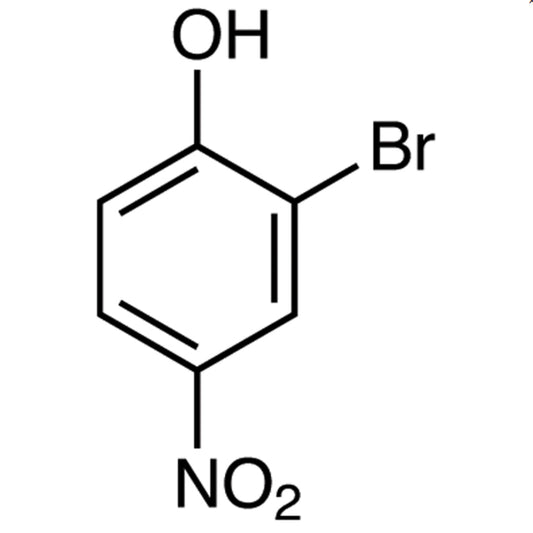
2-Bromo-4-nitrophenol TCI B3918
Regular price From Rp 2.625.000,00Regular priceRp 1.835.400,00Sale price From Rp 2.625.000,00 -
4-Bromo-2-nitrophenol TCI B2363
Regular price From Rp 1.035.300,00Regular priceRp 723.450,00Sale price From Rp 1.035.300,00