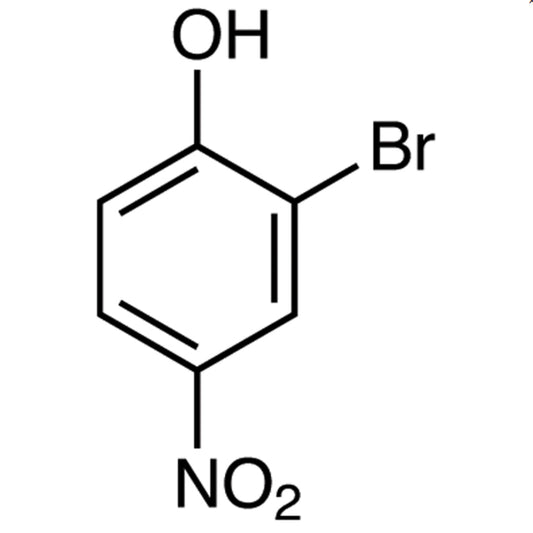
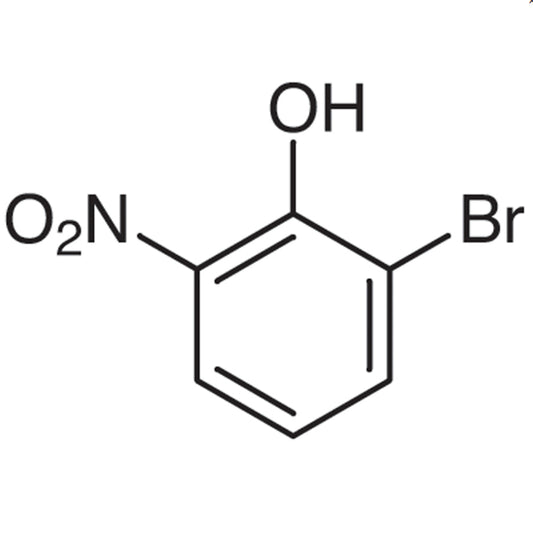
4-Bromo-2-nitrophenol is a chemical compound widely used as a foundational building block in various chemical reactions, particularly in the synthesis of complex aromatic compounds. This compound plays a crucial role in organic chemistry laboratories, where it serves as a key reagent for constructing more intricate molecular structures. Its presence in synthetic pathways is essential for the development of pharmaceuticals, polymers, and industrial chemicals. Due to its unique molecular structure, which includes both bromo and nitro groups, it is a versatile tool for chemists seeking to manipulate aromatic rings through substitution and electrophilic reactions.
The compound's polar nature and high reactivity make it a preferred choice in laboratory settings. The combination of bromo and nitro substituents enhances its ability to participate in a variety of chemical transformations, including nitration, bromination, and aromatic substitution reactions. These properties allow it to be an effective reagent in both academic and industrial research. Its stability under controlled conditions and compatibility with a range of solvents further contribute to its widespread use in chemical synthesis.
In Indonesian laboratories, 4-Bromo-2-nitrophenol is commonly utilized in organic chemistry research, especially in academic and industrial settings. It is a key component in the synthesis of new compounds relevant to both local and international needs. Its role in educational programs and research initiatives underscores its importance in advancing chemical knowledge and innovation in the region.
- Organic synthesis: This compound is ideal for creating complex aromatic structures due to its reactive bromo and nitro groups.
- Pharmaceutical research: It serves as a precursor in the development of new drugs and therapeutic agents.
- Polymer science: It is used in the synthesis of functional polymers and specialty materials.
- Industrial chemistry: It contributes to the production of dyes, pesticides, and other chemical products.
- Educational research: It is a valuable teaching tool for students studying organic chemistry and synthetic methods.
| Brand | TCI |
|---|---|
| CAS number | 7693-52-9 |
| Molecular formula | — |
| Purity | — |
| Category | Chemistry > Building Blocks > Non-Heterocyclic Building Blocks |
| Pack sizes | Available in various quantities as per standard laboratory supply. |
| Physical form | Solid, typically in crystalline or powder form. |
| Storage | Store in a cool, dry place away from light and incompatible substances. |
This compound should be stored in a cool, dry environment, away from direct sunlight and sources of heat. It is recommended to use airtight containers made of glass or polyethylene to prevent moisture absorption and contamination. Due to its reactivity, it should be handled in a well-ventilated area, preferably under a fume hood. Avoid contact with strong oxidizing agents or incompatible materials. Always wear appropriate personal protective equipment, including gloves, goggles, and a lab coat, to ensure safety during handling and use. Proper storage and handling are essential to maintain the compound's integrity and ensure safe laboratory practices.
—
Produk Terkait
-
2-Bromo-4-methoxy-6-nitrophenol TCI B4723
Regular price From Rp 557.550,00Regular priceRp 405.300,00Sale price From Rp 557.550,00 -
2-Bromo-4-nitrophenol TCI B3918
Regular price From Rp 2.625.000,00Regular priceRp 1.835.400,00Sale price From Rp 2.625.000,00 -
2-Bromo-6-nitrophenol TCI B2203
Regular price From Rp 1.378.650,00Regular priceRp 963.900,00Sale price From Rp 1.378.650,00 -
5-Bromo-2-nitrophenol TCI B5788
Regular price From Rp 2.545.200,00Regular priceRp 1.779.750,00Sale price From Rp 2.545.200,00 -
4-tert-Butyl-2-nitrophenol TCI B1812
Regular price From Rp 1.008.000,00Regular priceRp 704.550,00Sale price From Rp 1.008.000,00 -
4-tert-Butyl-2,6-dinitrophenol TCI B1803
Regular price Rp 2.016.000,00Regular priceRp 1.409.100,00Sale price Rp 2.016.000,00 -
2-NitrophenolSodiumSalt TCI N0222
Regular price From Rp 1.220.100,00Regular priceRp 852.600,00Sale price From Rp 1.220.100,00 -
4-Nitrophenol TCI N0220
Regular price From Rp 505.050,00Regular priceRp 352.800,00Sale price From Rp 505.050,00