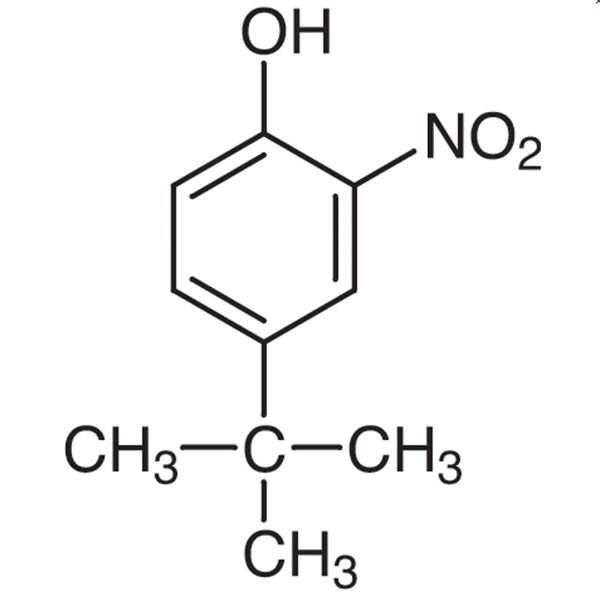
4-tert-Butyl-2-nitrophenol is a chemical compound widely used in laboratory settings as a building block for organic synthesis. It serves as a key intermediate in various chemical reactions, including substitution and nitration processes. Its presence in the lab allows researchers to construct more complex molecules with controlled outcomes. This compound is particularly valued for its stability and reactivity, making it a reliable component in synthetic pathways. Its role in creating aromatic compounds and its participation in redox reactions further enhance its importance in chemical research.
The chemical and physical properties of 4-tert-Butyl-2-nitrophenol make it a preferred choice for laboratory applications. It is relatively non-volatile and stable under normal conditions, which ensures consistent performance during experiments. The presence of an active nitro group enables it to participate in a variety of chemical transformations, such as electrophilic substitution and redox reactions. These characteristics contribute to its versatility and reliability in both academic and industrial research environments.
In Indonesian laboratories, 4-tert-Butyl-2-nitrophenol is commonly used by researchers and students in organic chemistry projects. Its availability and stable properties make it a practical choice for a wide range of experiments. It is frequently incorporated into synthetic protocols to produce more complex organic compounds. Its reliability and ease of handling have made it a staple in both teaching and research laboratories across Indonesia.
- Organic synthesis experiments benefit from 4-tert-Butyl-2-nitrophenol as it serves as a stable and reactive building block for creating complex aromatic compounds.
- Nitration reactions often utilize this compound due to its nitro group, which facilitates the formation of nitro derivatives under controlled conditions.
- Redox reaction studies frequently incorporate this material because of its ability to participate in electron transfer processes, making it ideal for electrochemical research.
- Substitution reactions in aromatic systems are enhanced by the compound’s structural stability and reactivity, supporting precise synthetic pathways.
- Teaching laboratories use this compound to demonstrate fundamental organic chemistry concepts, such as electrophilic substitution and functional group reactivity.
| Brand | TCI |
|---|---|
| CAS number | 3279-07-0 |
| Molecular formula | — |
| Purity | — |
| Category | Chemistry > Building Blocks > Non-Heterocyclic Building Blocks |
| Pack sizes | Available in various quantities as per standard laboratory supply formats |
| Physical form | Solid, typically in crystalline or powder form |
| Storage | Store in a cool, dry place away from direct sunlight and incompatible materials |
4-tert-Butyl-2-nitrophenol should be stored in a cool, dry environment to maintain its stability and prevent degradation. It is recommended to keep the compound in a sealed container to minimize exposure to moisture and air. Due to its potential reactivity, it should be stored away from strong oxidizing agents and reducing substances. Proper labeling and safe handling are essential to ensure laboratory safety. Regular inspection of storage conditions is advised to maintain the integrity of the material. Always use appropriate personal protective equipment when handling this compound to ensure a safe working environment.
—
Produk Terkait
-
2-Bromo-4-methoxy-6-nitrophenol TCI B4723
Regular price From Rp 557.550,00Regular priceRp 405.300,00Sale price From Rp 557.550,00 -
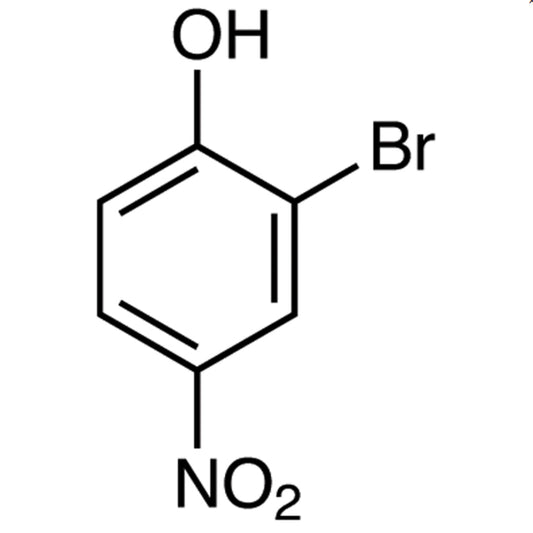
2-Bromo-4-nitrophenol TCI B3918
Regular price From Rp 2.625.000,00Regular priceRp 1.835.400,00Sale price From Rp 2.625.000,00 -
4-Bromo-2-nitrophenol TCI B2363
Regular price From Rp 1.035.300,00Regular priceRp 723.450,00Sale price From Rp 1.035.300,00 -
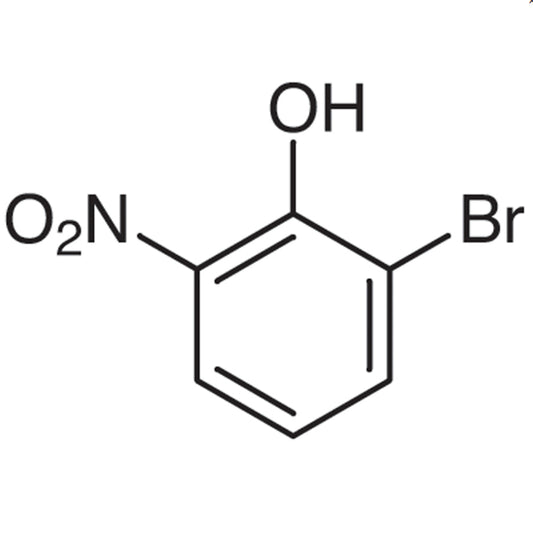
2-Bromo-6-nitrophenol TCI B2203
Regular price From Rp 1.378.650,00Regular priceRp 963.900,00Sale price From Rp 1.378.650,00 -
4-tert-Butyl-2,6-dinitrophenol TCI B1803
Regular price Rp 2.016.000,00Regular priceRp 1.409.100,00Sale price Rp 2.016.000,00 -
2-NitrophenolSodiumSalt TCI N0222
Regular price From Rp 1.220.100,00Regular priceRp 852.600,00Sale price From Rp 1.220.100,00 -
4-Nitrophenol TCI N0220
Regular price From Rp 505.050,00Regular priceRp 352.800,00Sale price From Rp 505.050,00 -
2-Nitrophenol TCI N0219
Regular price From Rp 584.850,00Regular priceRp 408.450,00Sale price From Rp 584.850,00