Samarium(III) Chloride Hexahydrate (SmCl₃·6H₂O) is a chemical compound widely used in laboratory settings for its unique reactivity and versatility. As a rare earth element, it plays a crucial role in catalytic reactions and inorganic chemistry applications. This compound is commonly employed in the synthesis of complex compounds and in reactions requiring rare earth-based catalysts. Its presence in various chemical processes highlights its importance in both academic and industrial research environments. Due to its chemical properties, it is a valuable tool for researchers exploring the reactivity of rare earth metals and their organometallic derivatives.
The compound is known for its stable crystalline structure and good solubility in water, making it easy to handle and integrate into various chemical reactions. Its thermal stability allows it to be used under a wide range of laboratory conditions. Additionally, SmCl₃·6H₂O is non-toxic and free from harmful substances, which simplifies its handling and disposal. These properties make it a preferred choice for researchers aiming for precision and controlled chemical reactions. Its reliability and consistent performance contribute to its widespread use in modern chemical laboratories.
In Indonesian laboratories, SmCl₃·6H₂O is frequently used in studies related to rare earth metal reactivity and in the development of new materials. It is also employed in the creation of organometallic compounds and in research involving magnetic and conductive materials. Its availability and compatibility with standard laboratory procedures make it an essential component in many chemical and catalytic experiments conducted in Indonesia.
Related TCI products
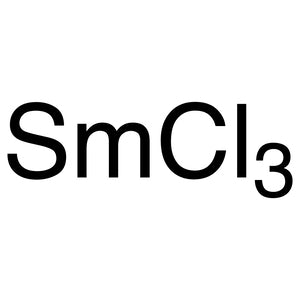
- TCI A3511 10361-82-7 Samarium(III) Chloride
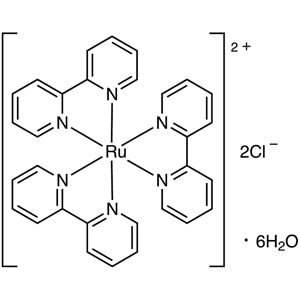
- TCI T1655 50525-27-4 Tris(2,2'-bipyridyl)ruthenium(II) Chloride Hexahydrate
- TCI N0851 7791-20-0 Nickel(II) Chloride Hexahydrate
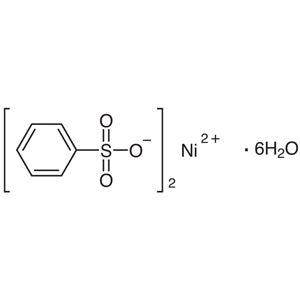
- TCI B0034 39819-65-3 Nickel(II) Benzenesulfonate Hexahydrate
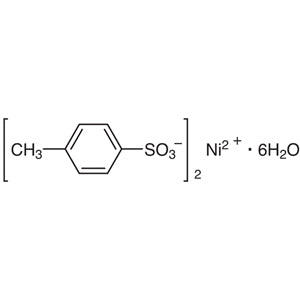
- TCI T0276 6944-05-4 Nickel(II) p-Toluenesulfonate Hexahydrate
- TCI S0385 49721-50-8 Spermidine Phosphate Hexahydrate
- Used in catalytic reactions due to its ability to act as a rare earth-based catalyst, enhancing reaction efficiency and selectivity.
- Applied in the synthesis of complex inorganic compounds, where its reactivity supports the formation of stable chemical structures.
- Employed in research on rare earth metal reactivity, providing insights into the behavior of these elements under different chemical conditions.
- Utilized in the development of new materials, such as magnetic and conductive substances, due to its unique chemical properties.
- Incorporated into organometallic compound synthesis, where it facilitates the formation of metal-carbon bonds in various organic reactions.
| Brand | TCI |
|---|---|
| CAS number | 13465-55-9 |
| Molecular formula | — |
| Purity | — |
| Category | Chemistry > Catalysis and Inorganic Chemistry > Rare Earth Elements |
| Pack sizes | Available in standard laboratory quantities as per supplier specifications |
| Physical form | Solid, crystalline |
| Storage | Store in a cool, dry place away from moisture and direct sunlight |
Samarium(III) Chloride Hexahydrate should be stored in a cool, dry environment to maintain its stability and prevent degradation. It is recommended to use airtight containers to protect it from moisture and humidity, which could affect its chemical properties. Since it is non-toxic, general laboratory safety protocols should still be followed, including proper ventilation and the use of personal protective equipment when handling. The compound should be kept away from incompatible materials to avoid any potential chemical interactions. Regular inspection of storage conditions ensures that the material remains in optimal condition for use in laboratory experiments.
—
Produk Terkait
-
Samarium(III)Chloride TCI A3511
Regular price From Rp 1.988.700,00Regular priceRp 1.405.950,00Sale price From Rp 1.988.700,00 -
Tris(2,2'-bipyridyl)ruthenium(II)ChlorideHexahydrate TCI T1655
Regular price From Rp 2.835.000,00Regular priceRp 1.998.150,00Sale price From Rp 2.835.000,00 -
Nickel(II)ChlorideHexahydrate TCI N0851
Regular price From Rp 505.050,00Regular priceRp 352.800,00Sale price From Rp 505.050,00 -
Nickel(II)BenzenesulfonateHexahydrate TCI B0034
Regular price Rp 1.988.700,00Regular priceRp 1.390.200,00Sale price Rp 1.988.700,00 -
Nickel(II)p-ToluenesulfonateHexahydrate TCI T0276
Regular price From Rp 1.246.350,00Regular priceRp 871.500,00Sale price From Rp 1.246.350,00 -
SpermidinePhosphateHexahydrate TCI S0385
Regular price Rp 1.008.000,00Regular priceRp 704.550,00Sale price Rp 1.008.000,00 -
DisodiumSuccinateHexahydrate TCI S0105
Regular price From Rp 530.250,00Regular priceRp 386.400,00Sale price From Rp 530.250,00 -
SperminePhosphateHexahydrate TCI S0069
Regular price From Rp 2.174.550,00Regular priceRp 1.520.400,00Sale price From Rp 2.174.550,00