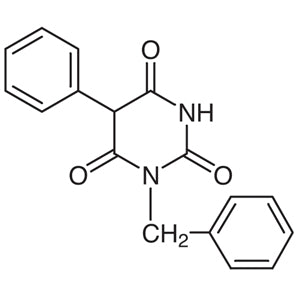
5-Benzylidenebarbituric Acid is a chemical compound classified under the category of heterocyclic building blocks. It plays a crucial role in laboratory settings, particularly in the synthesis of complex molecules. This compound is widely utilized in organic chemistry and pharmacology for constructing heterocyclic structures that are essential in the development of various pharmaceutical compounds. Its versatility and reactivity make it a valuable tool for researchers aiming to create bioactive molecules with specific therapeutic properties.
The compound is known for its stable chemical structure and its ability to react with a variety of reagents, making it a preferred choice for synthetic chemists. Its chemical properties allow it to be used in different reaction conditions, including polar and non-polar solvents. This adaptability enhances its utility in the synthesis of diverse organic compounds. Additionally, its heterocyclic framework enables it to interact with various biological targets, expanding its application in drug discovery and development.
In Indonesian laboratories, 5-Benzylidenebarbituric Acid is commonly used in organic chemistry and pharmacology research. It is frequently employed in the development of new therapeutic agents, including antidepressants and antipsychotics. Researchers in academic and industrial settings rely on this compound to explore its potential in creating molecules with targeted biological activities. Its consistent performance and reliability make it a staple in many laboratory workflows across Indonesia.
Related TCI products
- Organic synthesis applications benefit from this compound's ability to form stable heterocyclic structures, essential for creating complex pharmaceutical molecules.
- Pharmacological research utilizes it to develop new drugs with specific biological activities, such as antidepressants and antipsychotics.
- Chemical research in Indonesian laboratories often incorporates it for its reactivity and compatibility with various reagents in synthetic pathways.
- Drug discovery projects leverage its heterocyclic framework to design compounds that can interact with specific biological targets.
- Academic institutions use it as a fundamental building block in teaching and research, supporting both theoretical and practical studies in organic chemistry.
| Brand | TCI |
|---|---|
| CAS number | 27402-47-7 |
| Molecular formula | — |
| Purity | — |
| Category | Chemistry > Building Blocks > Heterocyclic Building Blocks |
| Pack sizes | — |
| Physical form | — |
| Storage | Store in a cool, dry place away from light and moisture |
This compound should be stored in a cool, dry place, away from direct light and moisture to maintain its chemical stability. It is recommended to use airtight containers to prevent exposure to air and humidity, which could affect its reactivity. In laboratory settings, it should be handled with appropriate personal protective equipment, such as gloves and safety goggles, to ensure safety during use. Due to its chemical nature, it should be kept separate from incompatible substances to avoid unintended reactions. Proper labeling of storage containers is essential for safe handling and easy identification. Regular monitoring of storage conditions ensures the compound remains in optimal condition for use in research applications.
—
Produk Terkait
-
5-[4-(Diethylamino)benzylidene]rhodanine TCI D0464
Regular price From Rp 822.150,00Regular priceRp 590.100,00Sale price From Rp 822.150,00 -
IsobarbituricAcid TCI I0310
Regular price Rp 2.439.150,00Regular priceRp 1.705.200,00Sale price Rp 2.439.150,00 -
2-ThiobarbituricAcid[forBiochemicalResearch] TCI T2834
Regular price Rp 1.193.850,00Regular priceRp 834.750,00Sale price Rp 1.193.850,00 -
2-ThiobarbituricAcid TCI T0192
Regular price From Rp 1.378.650,00Regular priceRp 979.650,00Sale price From Rp 1.378.650,00 -
BarbituricAcid TCI B0003
Regular price From Rp 505.050,00Regular priceRp 352.800,00Sale price From Rp 505.050,00 -
5-NitrobarbituricAcidTrihydrate TCI N0128
Regular price From Rp 1.749.300,00Regular priceRp 1.223.250,00Sale price From Rp 1.749.300,00 -
1-Benzyl-5-phenylbarbituricAcid TCI B2789
Regular price Rp 1.803.900,00Regular priceRp 1.261.050,00Sale price Rp 1.803.900,00 -
5-Acetyl-1,3-dimethylbarbituricAcid TCI A2555
Regular price Rp 5.698.350,00Regular priceRp 3.984.750,00Sale price Rp 5.698.350,00