Benzil, with the chemical formula C6H5CH3, is an essential organic compound widely used in chemical laboratories. As a building block in synthetic chemistry, it plays a crucial role in the development of aromatic and heterocyclic compounds. Its molecular structure is stable yet reactive, allowing it to participate in various chemical reactions. Benzil is particularly valued for its ability to initiate or accelerate specific reactions, making it indispensable in both research and educational settings. Its versatility and chemical reactivity make it a go-to material for chemists working on complex syntheses or analytical procedures.
One of the key reasons benzil is preferred in laboratories is its chemical properties. It exhibits a high boiling point and melting point, which facilitates controlled heating and cooling during experiments. Additionally, its stability under certain conditions ensures reliable results in chemical processes. Benzil's ability to form bonds with various functional groups further enhances its utility. These characteristics make it a reliable and consistent material for both industrial and academic applications.
In Indonesian laboratories, benzil is commonly used in organic synthesis and chemical analysis. It is frequently found in educational experiments where students learn about chemical reactions and molecular structures. Its availability and chemical properties make it a staple in both research and teaching environments, supporting a wide range of scientific investigations.
Advantages (TCI brochure)
- Convertible to heteroaryls due to reactive diketone moiety.
TCI brochures (PDF)
- Building Blocks Bearing 1,2-Diketone Moiety for Heterocyclic Compounds and Organic Semiconducting Polymers 2025-01-17 · p. 1
- Polymerization Initiators 2025-09-17 · p. 3
- Biomaterials Research Reagents 2025-02-19 · p. 25
- Organic synthesis where benzil serves as a starting material for the creation of aromatic and heterocyclic compounds due to its reactivity and stability.
- Educational experiments to demonstrate chemical reactions and molecular bonding, offering a practical approach to learning chemistry.
- Analytical chemistry applications where benzil is used as a reference compound for identifying and quantifying substances in complex mixtures.
- Reactions requiring initiation or acceleration, such as substitution reactions, where benzil's chemical properties make it an effective catalyst.
- Industrial processes involving the production of pharmaceuticals and dyes, where benzil's structural versatility supports the development of new compounds.
From the TCI brochure
- Imidazole intermediates
- Quinoxaline intermediates
- Hole transporting materials
- Semiconducting polymers
| Brand | TCI |
|---|---|
| CAS number | 134-81-6 |
| Molecular formula | — |
| Purity | — |
| Category | Chemistry > Building Blocks > Non-Heterocyclic Building Blocks |
| Pack sizes | Available in various quantities as per standard laboratory supply |
| Physical form | Solid |
| Storage | Store in a cool, dry place away from direct sunlight |
Data from the TCI brochure
| Ukuran kemasan | 25g / 500g |
|---|
Source: TCI brochure FF102 (2025-01-17)
Benzil should be stored in a cool, dry environment to maintain its chemical stability. It is recommended to keep it in a sealed container to prevent exposure to moisture and air, which could affect its reactivity. Due to its solid form, it is best stored in airtight containers made of glass or non-reactive plastic to avoid contamination. Proper labeling of storage containers is essential for safety and identification. In laboratory settings, benzil should be handled with care, using appropriate personal protective equipment to ensure safe handling and prevent any potential chemical exposure. Regular inspection of storage conditions ensures that the material remains in optimal condition for use in experiments and research.
References cited in the TCI brochure
- João Pina. Synthesis and Characterization of the Ground and Excited States of Tripodal-like Oligothienyl-imidazoles The Journal of Physical Chemistry B, 2010. doi:10.1021/jp9104954
- . Synthesis, Photophysical, Electrochemical and Thermal Studies of 2,3-Bithienylpyrazino[2,3-b]phenazine Chemical Science Transactions, 2015. doi:10.7598/cst2015.1050
- Zhihui Chen. High-Electron Mobility Tetrafluoroethylene-Containing Semiconducting Polymers Chemistry of Materials, 2020. doi:10.1021/acs.chemmater.9b04425
- Huanxin Guo. A Coplanar π‐Extended Quinoxaline Based Hole‐Transporting Material Enabling over 21 % Efficiency for Dopant‐Free Perovskite Solar Cells Angewandte Chemie International Edition, 2020. doi:10.1002/anie.202013128
Product Categories
Produk Terkait
-
3'-Hydroxyacetophenone TCI A0104
Regular price From Rp 1.113.000,00Regular priceRp 793.800,00Sale price From Rp 1.113.000,00 -
Anthraquinone TCI A0502
Regular price From Rp 477.750,00Regular priceRp 333.900,00Sale price From Rp 477.750,00 -
Methyl2-Benzoylbenzoate TCI B1231
Regular price From Rp 955.500,00Regular priceRp 683.550,00Sale price From Rp 955.500,00 -
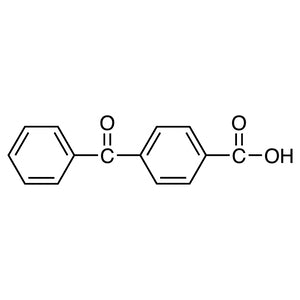
4-BenzoylbenzoicAcid TCI B1164
Regular price From Rp 2.041.200,00Regular priceRp 1.442.700,00Sale price From Rp 2.041.200,00 -
MethylBenzoylformate TCI B1033
Regular price From Rp 1.220.100,00Regular priceRp 868.350,00Sale price From Rp 1.220.100,00 -
BenzoinIsopropylEther TCI B0942
Regular price From Rp 557.550,00Regular priceRp 405.300,00Sale price From Rp 557.550,00 -
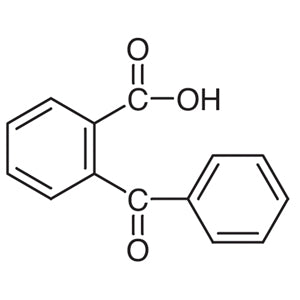
2-BenzoylbenzoicAcid TCI B0103
Regular price Rp 582.750,00Regular priceRp 423.150,00Sale price Rp 582.750,00 -
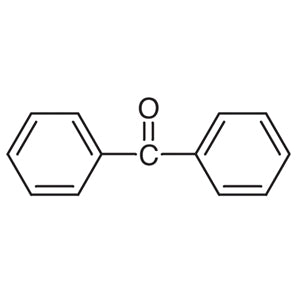
Benzophenone TCI B0083
Regular price From Rp 477.750,00Regular priceRp 333.900,00Sale price From Rp 477.750,00