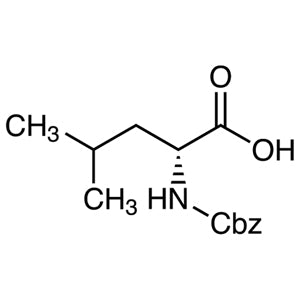
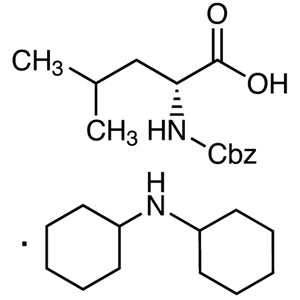
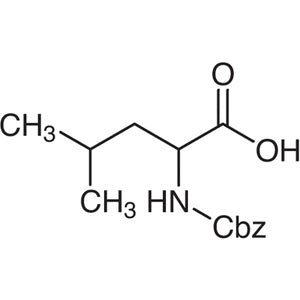
Benzoyl-DL-leucine is a chemical compound widely used in laboratory settings for its role in chemical and biochemical experiments, particularly in peptide chemistry and organic synthesis. This compound serves as a key building block in the development of bioactive molecules, making it essential for researchers working in chemical biology. Its complex molecular structure allows it to participate in various chemical reactions, contributing to the study of enzyme activity and peptide modification. Due to its versatility, Benzoyl-DL-leucine is a valuable tool for scientists aiming to explore the properties of organic compounds and their biological functions.
The compound is preferred for its chemical stability under controlled conditions, which ensures consistent results in experimental processes. Its high purity and solid form make it ideal for precise laboratory applications, where accuracy is crucial. Additionally, Benzoyl-DL-leucine is sensitive to moisture and air exposure, which necessitates careful handling and storage. These properties make it a reliable choice for researchers who require a stable and high-quality reagent for their experiments.
In Indonesian laboratories, Benzoyl-DL-leucine is commonly used by researchers in universities and research institutions. It supports studies in chemistry, pharmacology, and biotechnology, particularly in drug development and biochemical analysis. Its application in these fields highlights its importance as a fundamental reagent for advancing scientific research in Indonesia.
TCI brochures (PDF)
- Amino Acids and Peptide Synthesis Reagents 2025-08-14 · p. 16
Related TCI products
- TCI F1028 103478-62-2 N-[(9H-Fluoren-9-ylmethoxy)carbonyl]-N-methyl-L-leucine
- TCI F0603 114360-54-2 N-[(9H-Fluoren-9-ylmethoxy)carbonyl]-D-leucine
- TCI F0295 35661-60-0 N-[(9H-Fluoren-9-ylmethoxy)carbonyl]-L-leucine
- TCI D1498 1100-22-7 Dansyl-L-leucine
- TCI C2839 28862-79-5 N-Carbobenzoxy-D-leucine
- TCI C2135 7662-58-0 N-Carbobenzoxy-D-leucine Dicyclohexylammonium Salt
- Peptide Synthesis: Benzoyl-DL-leucine is used in the synthesis of peptides due to its ability to participate in peptide bond formation and structural modification.
- Enzymatic Activity Studies: The compound is utilized to investigate enzyme mechanisms and substrate specificity in biochemical assays.
- Organic Compound Modification: It serves as a key reagent in the functionalization of organic molecules, enabling the creation of bioactive derivatives.
- Drug Development Research: Benzoyl-DL-leucine is employed in the development of pharmaceutical compounds, supporting the design of new therapeutic agents.
- Biochemical Analysis: It is used in analytical techniques to study molecular interactions and biological activity in complex systems.
| Brand | TCI |
|---|---|
| CAS number | 17966-67-5 |
| Molecular formula | — |
| Purity | — |
| Category | Chemistry > Chemical Biology > Peptide Chemistry |
| Pack sizes | Available in various quantities as per standard laboratory supply |
| Physical form | Solid |
| Storage | Requires protection from moisture and air exposure |
Benzoyl-DL-leucine should be stored in a cool, dry place away from direct sunlight and sources of heat. It is recommended to keep the compound in airtight containers to prevent moisture absorption and degradation. Due to its sensitivity to environmental factors, it should be handled with care using appropriate personal protective equipment. Storage conditions should be strictly controlled to maintain its chemical integrity and ensure consistent performance in laboratory experiments. Regular monitoring of storage conditions is essential to prevent any compromise in the compound's quality and usability.
—
Product Categories
Produk Terkait
-
N-[(9H-Fluoren-9-ylmethoxy)carbonyl]-N-methyl-L-leucine TCI F1028
Regular price Rp 1.192.800,00Regular priceRp 849.450,00Sale price Rp 1.192.800,00 -
N-[(9H-Fluoren-9-ylmethoxy)carbonyl]-D-leucine TCI F0603
Regular price From Rp 742.350,00Regular priceRp 534.450,00Sale price From Rp 742.350,00 -
N-[(9H-Fluoren-9-ylmethoxy)carbonyl]-L-leucine TCI F0295
Regular price From Rp 530.250,00Regular priceRp 386.400,00Sale price From Rp 530.250,00 -
Dansyl-L-leucine TCI D1498
Regular price From Rp 662.550,00Regular priceRp 478.800,00Sale price From Rp 662.550,00 -
N-Carbobenzoxy-D-leucine TCI C2839
Regular price From Rp 2.491.650,00Regular priceRp 1.757.700,00Sale price From Rp 2.491.650,00 -
N-Carbobenzoxy-D-leucineDicyclohexylammoniumSalt TCI C2135
Regular price From Rp 662.550,00Regular priceRp 478.800,00Sale price From Rp 662.550,00 -
N-Benzyloxycarbonyl-L-leucine TCI C0739
Regular price From Rp 689.850,00Regular priceRp 497.700,00Sale price From Rp 689.850,00 -
N-Carbobenzoxy-DL-leucine TCI C0642
Regular price From Rp 662.550,00Regular priceRp 478.800,00Sale price From Rp 662.550,00