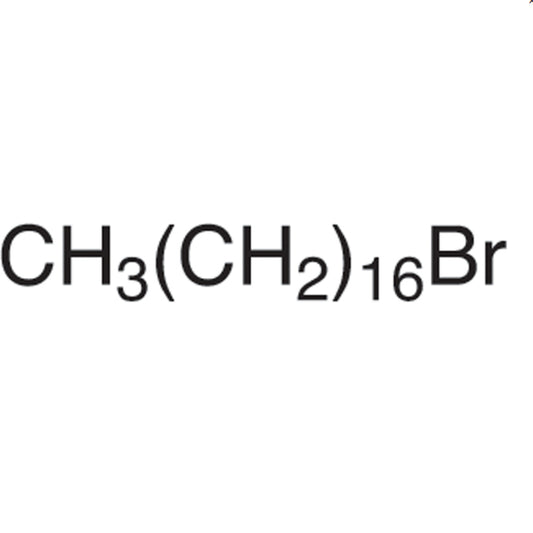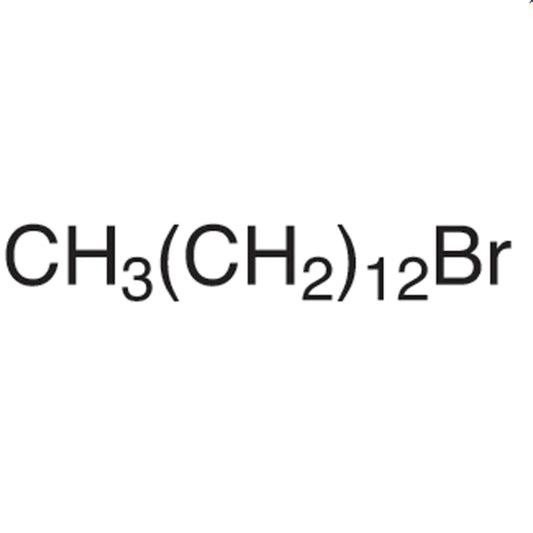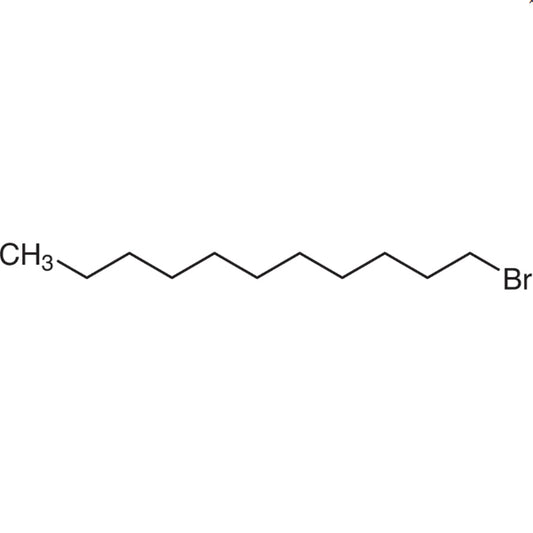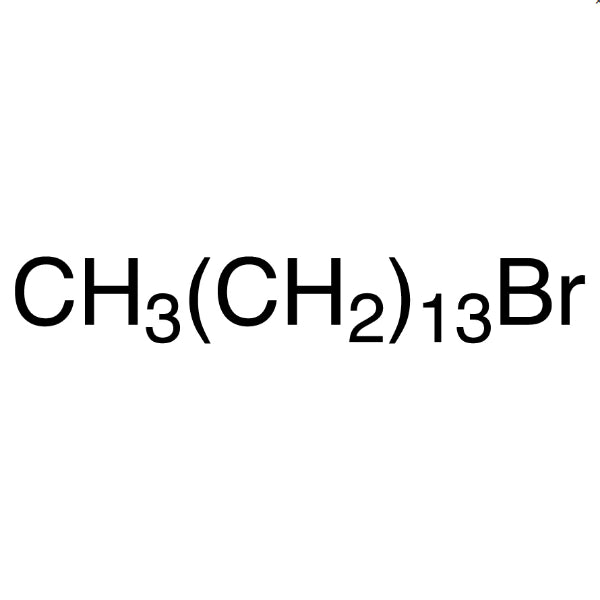
1-Bromotetradecane is a chemical compound widely used as a foundational material in various chemical reactions within laboratory settings. It belongs to the category of non-heterocyclic building blocks, making it a valuable resource for constructing more complex molecular structures. This compound is commonly employed in organic synthesis, particularly in nucleophilic substitution reactions and other processes that require alkyl halides. Its role as a reagent is essential in the development of new chemical compounds and the advancement of synthetic methodologies in research and education.
The chemical properties of 1-Bromotetradecane contribute to its popularity among chemists. It exhibits a stable chemical nature with controlled reactivity, allowing for precise manipulation during synthesis. The compound’s clear molecular structure and high consistency ensure reliable results in experimental procedures. These characteristics make it ideal for applications that demand accuracy and reproducibility. Its inertness in uncontrolled environments also enhances its safety profile, making it a preferred choice for laboratory use.
In Indonesian laboratories, 1-Bromotetradecane is frequently utilized in organic chemistry research, especially within academic institutions and research organizations. It plays a crucial role in teaching and developing synthetic techniques for complex compounds. Its presence supports both educational and research activities, contributing to the growth of scientific knowledge and technological innovation in the region.
TCI brochures (PDF)
- Building Blocks for Organic Semiconductor 2026-03-24 · p. 42
- Organic synthesis is a primary application where 1-Bromotetradecane serves as a versatile alkyl halide for nucleophilic substitution reactions and structural modifications.
- Teaching laboratories use this compound to demonstrate fundamental chemical reactions and synthetic strategies in undergraduate and graduate courses.
- Research institutions incorporate it into advanced studies for the development of new materials and pharmaceutical compounds through controlled chemical transformations.
- Analytical chemistry applications benefit from its stability and predictable reactivity, aiding in the characterization of complex molecular structures.
- Industrial research and development projects rely on its properties for the synthesis of specialty chemicals and functional materials.
| Brand | TCI |
|---|---|
| CAS number | 112-71-0 |
| Molecular formula | — |
| Purity | — |
| Category | Chemistry > Building Blocks > Non-Heterocyclic Building Blocks |
| Pack sizes | Available in various quantities as per standard laboratory supply formats |
| Physical form | Liquid |
| Storage | Store in a cool, dry place away from light and incompatible materials |
1-Bromotetradecane should be stored in a cool, dry environment, away from direct sunlight and sources of heat. It is recommended to keep the compound in a tightly sealed container to prevent evaporation and contamination. Suitable storage containers include glass or high-density polyethylene (HDPE) bottles, which are resistant to chemical interactions. In laboratory settings, it is important to ensure proper ventilation and avoid exposure to open flames or sparks. The compound should be kept away from incompatible substances such as strong bases or oxidizing agents. Regular inspection of storage conditions is advised to maintain the integrity and safety of the material.
—
Product Categories
Produk Terkait
-
1-Chlorotetradecane TCI C0622
Regular price From Rp 505.050,00Regular priceRp 352.800,00Sale price From Rp 505.050,00 -
1-Tetradecanol TCI T0084
Regular price From Rp 477.750,00Regular priceRp 333.900,00Sale price From Rp 477.750,00 -
1-Bromoheptadecane TCI B0937
Regular price From Rp 3.340.050,00Regular priceRp 2.335.200,00Sale price From Rp 3.340.050,00 -
1-Bromopentadecane TCI B0936
Regular price From Rp 3.949.050,00Regular priceRp 2.761.500,00Sale price From Rp 3.949.050,00 -
1-Bromotridecane TCI B0935
Regular price From Rp 2.518.950,00Regular priceRp 1.760.850,00Sale price From Rp 2.518.950,00 -
1-Bromoundecane TCI B0934
Regular price From Rp 1.035.300,00Regular priceRp 723.450,00Sale price From Rp 1.035.300,00 -
1-Bromononane TCI B0933
Regular price From Rp 1.485.750,00Regular priceRp 1.038.450,00Sale price From Rp 1.485.750,00 -
1-Bromopentane TCI B0628
Regular price From Rp 530.250,00Regular priceRp 370.650,00Sale price From Rp 530.250,00