Tci B0246 517-60-2 Mellitic Acid is a chemical compound widely used in laboratory settings for the synthesis of complex molecules. It is a tri-carboxylic acid with a unique molecular structure composed of three carboxylic acid groups connected covalently. This structure gives it high reactivity, making it a valuable tool in organic chemistry. Mellitic Acid is commonly used as a building block in the creation of heterocyclic compounds and other organic substances, playing a crucial role in the development of new chemical materials. Its versatility and reactivity make it an essential component in many synthetic processes.
The chemical properties of Mellitic Acid make it a preferred choice in various laboratory applications. It exhibits strong reactivity towards bases and metal-binding compounds, which is particularly useful in activation or modification reactions. Its solubility in organic solvents such as ethyl acrylate and acetone allows for easy mixing and reaction processes. These characteristics enhance its usability in different chemical procedures, ensuring efficient and effective outcomes. The compound's ability to participate in multiple chemical reactions further solidifies its importance in laboratory research.
In Indonesian laboratories, Mellitic Acid is extensively used in chemical research, especially in the synthesis of organic compounds and the development of new chemical materials. It is frequently found in research related to the pharmaceutical industry, industrial chemicals, and environmental studies. Its availability and reliability make it a popular choice among researchers and scientists working in various fields of chemistry.
TCI brochures (PDF)
- Organic Linker Molecules for Metal Organic Frameworks (MOFs) 2026-05-11 · p. 4
Related TCI products
- TCI A0088 142-45-0 Acetylenedicarboxylic Acid
- TCI T3896 160248-28-2 Tetrakis(4-carboxyphenyl)methane
- TCI T3894 1078153-58-8 1,2,4,5-Tetrakis(4-carboxyphenyl)benzene
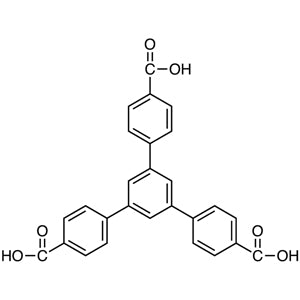
- TCI T2647 50446-44-1 1,3,5-Tris(4-carboxyphenyl)benzene
- TCI B4232 23351-91-9 5-Bromoisophthalic Acid
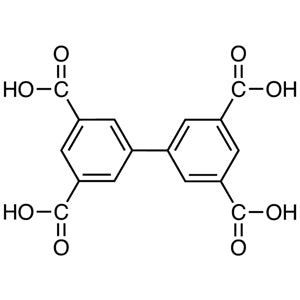
- TCI B3792 4371-28-2 Biphenyl-3,3',5,5'-tetracarboxylic Acid
- Organic Synthesis: Mellitic Acid is ideal for organic synthesis due to its reactivity and ability to form complex structures.
- Heterocyclic Compound Development: It is widely used in the creation of heterocyclic compounds because of its carboxylic acid groups.
- Industrial Chemical Research: Mellitic Acid supports research in industrial chemical development due to its versatile chemical properties.
- Pharmaceutical Applications: It is commonly used in pharmaceutical research for the synthesis of new drug compounds.
- Environmental Studies: Mellitic Acid is used in environmental research for analyzing and developing new chemical treatments.
| Brand | TCI |
|---|---|
| CAS number | 517-60-2 |
| Molecular formula | — |
| Purity | — |
| Category | Chemistry > Building Blocks > Non-Heterocyclic Building Blocks |
| Pack sizes | Available in various quantities as per supplier standards |
| Physical form | Solid |
| Storage | Store in a cool, dry place away from moisture and direct sunlight |
Mellitic Acid should be stored in a cool, dry place away from moisture and direct sunlight to maintain its chemical integrity. It is recommended to use airtight containers made of glass or high-density polyethylene to prevent contamination and degradation. Due to its reactivity, it should be handled with care, using appropriate personal protective equipment such as gloves and safety goggles. Avoid exposure to strong bases or metal compounds to prevent unwanted chemical reactions. Proper labeling and storage conditions are essential to ensure safe handling and long-term stability in the laboratory environment.
—
Product Categories
- Organic-Inorganic Hybrid MaterialsMetal Organic Frameworks (MOF) and Their Raw MaterialsOrganic Linker Molecules [Metal Organic Frameworks (MOFs) Precursors]
- Polymer/Macromolecule ReagentsMetal Organic Frameworks (MOF) and Their Raw MaterialsOrganic Linker Molecules [Metal Organic Frameworks (MOFs) Precursors]
Produk Terkait
-
AcetylenedicarboxylicAcid TCI A0088
Regular price From Rp 1.220.100,00Regular priceRp 868.350,00Sale price From Rp 1.220.100,00 -
Tetrakis(4-carboxyphenyl)methane TCI T3896
Regular price Rp 6.863.850,00Regular priceRp 4.799.550,00Sale price Rp 6.863.850,00 -
1,2,4,5-Tetrakis(4-carboxyphenyl)benzene TCI T3894
Regular price From Rp 2.837.100,00Regular priceRp 1.983.450,00Sale price From Rp 2.837.100,00 -
1,3,5-Tris(4-carboxyphenyl)benzene TCI T2647
Regular price From Rp 3.683.400,00Regular priceRp 2.575.650,00Sale price From Rp 3.683.400,00 -
5-BromoisophthalicAcid TCI B4232
Regular price From Rp 1.193.850,00Regular priceRp 834.750,00Sale price From Rp 1.193.850,00 -
Biphenyl-3,3',5,5'-tetracarboxylicAcid TCI B3792
Regular price Rp 3.949.050,00Regular priceRp 2.761.500,00Sale price Rp 3.949.050,00 -
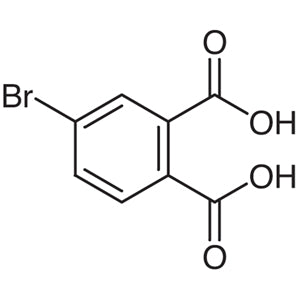
4-BromophthalicAcid TCI B2257
Regular price From Rp 584.850,00Regular priceRp 408.450,00Sale price From Rp 584.850,00 -
BenzenepentacarboxylicAcid TCI B0952
Regular price From Rp 12.747.000,00Regular priceRp 8.913.450,00Sale price From Rp 12.747.000,00