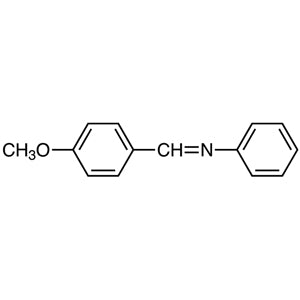
Butyl 4-[(4-Methoxybenzylidene)amino]cinnamate is a chemical compound widely used in electronic material research, particularly in the field of liquid crystal (LC) materials. This compound plays a crucial role in the development of advanced optical and electronic devices by enabling the creation of materials with unique optical and electrical properties. Its application extends to the formulation of materials that respond to electric or thermal stimuli, making it essential for the advancement of modern display and optical technologies. In the laboratory, it serves as a key component in the synthesis of materials that require precise molecular alignment and stability under various conditions.
The compound is favored for its chemical stability, solubility in organic solvents, and ability to form well-ordered molecular structures. These properties make it an ideal choice for applications requiring high consistency and performance. Its solubility in a wide range of solvents also simplifies the synthesis and processing of materials, enhancing its versatility in laboratory settings. The combination of these characteristics ensures that it remains a reliable and effective material for researchers working on cutting-edge electronic and optical technologies.
In Indonesian laboratories, this compound is commonly used in research and development projects focused on liquid crystal materials for information and communication technology applications. Scientists and researchers in educational institutions and research organizations rely on it to explore new possibilities in material science. Its presence in these laboratories underscores its importance in advancing the field of electronic materials and optical devices.
TCI brochures (PDF)
- Liquid Crystal Materials 2026-04-01 · p. 9
Related TCI products
- TCI M0602 6421-30-3 Ethyl 4-[(4-Methoxybenzylidene)amino]cinnamate
- TCI B0250 30633-94-4 N-(4-Methoxy-2-hydroxybenzylidene)-4-butylaniline
- TCI M0582 836-41-9 N-(4-Methoxybenzylidene)aniline
- TCI M0275 26227-73-6 N-(4-Methoxybenzylidene)-4-butylaniline
- TCI H0419 35280-78-5 4'-Hexyloxybenzylidene-4-cyanoaniline
- TCI E0262 29743-08-6 4'-Ethoxybenzylidene-4-butylaniline
- Liquid Crystal Material Development: This compound is ideal for creating LC materials with tailored optical and electrical properties, supporting advanced display technologies.
- Optical Device Fabrication: Its molecular structure enables the formation of ordered structures, making it suitable for the production of high-performance optical components.
- Electronic Material Synthesis: The compound’s solubility and stability make it a preferred choice for synthesizing materials used in electronic devices and sensors.
- Thermal Response Material Research: Its ability to respond to thermal stimuli is valuable in studies involving temperature-sensitive materials and smart materials.
- Conductive Polymer Formulation: The compound contributes to the development of conductive polymers used in flexible electronics and optoelectronic applications.
| Brand | TCI |
|---|---|
| CAS number | 16833-17-3 |
| Molecular formula | — |
| Purity | — |
| Category | Materials Science > Electronic Materials > Liquid Crystal (LC) Materials |
| Pack sizes | Available in various sizes as per standard laboratory supply |
| Physical form | Solid powder |
| Storage | Store in a cool, dry place away from direct sunlight |
This compound should be stored in a cool, dry environment, away from direct sunlight and sources of heat. It is recommended to use airtight containers made of glass or high-density polyethylene to prevent contamination and maintain its chemical integrity. Due to its organic nature, it should be kept in a well-ventilated area to minimize exposure to air and moisture. Laboratory personnel should wear appropriate personal protective equipment, such as gloves and safety goggles, when handling the compound. Proper labeling of containers is essential to ensure safe handling and prevent accidental use. Regular monitoring of storage conditions will help maintain the compound's stability and effectiveness for research applications.
—
Produk Terkait
-
Ethyl4-[(4-Methoxybenzylidene)amino]cinnamate TCI M0602
Regular price Rp 8.745.450,00Regular priceRp 6.130.950,00Sale price Rp 8.745.450,00 -
N-(4-Methoxy-2-hydroxybenzylidene)-4-butylaniline TCI B0250
Regular price Rp 7.075.950,00Regular priceRp 4.963.350,00Sale price Rp 7.075.950,00 -
N-(4-Methoxybenzylidene)aniline TCI M0582
Regular price From Rp 689.850,00Regular priceRp 497.700,00Sale price From Rp 689.850,00 -
N-(4-Methoxybenzylidene)-4-butylaniline TCI M0275
Regular price Rp 1.590.750,00Regular priceRp 1.127.700,00Sale price Rp 1.590.750,00 -
4'-Hexyloxybenzylidene-4-cyanoaniline TCI H0419
Regular price Rp 3.843.000,00Regular priceRp 2.702.700,00Sale price Rp 3.843.000,00 -
4'-Ethoxybenzylidene-4-butylaniline TCI E0262
Regular price Rp 1.723.050,00Regular priceRp 1.220.100,00Sale price Rp 1.723.050,00 -
4-[(4-Methoxybenzylidene)amino]cinnamicAcid TCI M0588
Regular price Rp 2.013.900,00Regular priceRp 1.423.800,00Sale price Rp 2.013.900,00 -
2-[(4-Methoxybenzylidene)amino]fluorene TCI M0586
Regular price Rp 3.445.050,00Regular priceRp 2.424.450,00Sale price Rp 3.445.050,00