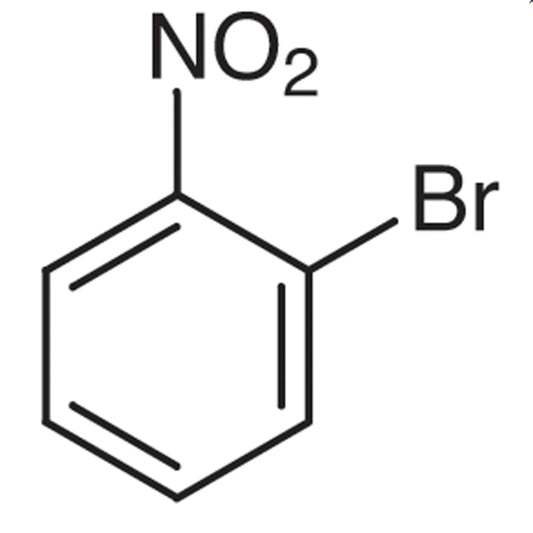
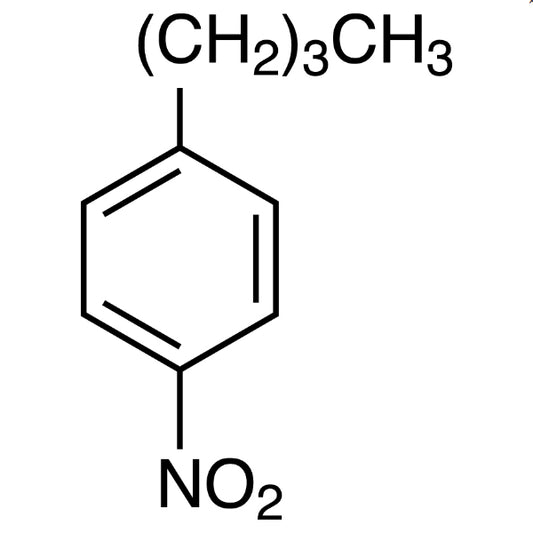
1-Bromo-3-nitrobenzene is an organic chemical compound widely used as a building block in synthetic chemistry reactions. It serves as a key intermediate in the development of complex molecular structures, particularly in the synthesis of heterocyclic compounds and pharmaceuticals. This compound is commonly found in chemical laboratories, where it plays a crucial role in research involving aromatic compounds and electrophilic substitution reactions. Its versatility makes it an essential tool for chemists working on a wide range of synthetic pathways.
The chemical properties of 1-Bromo-3-nitrobenzene, including its reactivity and solubility in organic solvents, make it a preferred choice for various synthetic applications. It exhibits good solubility in solvents such as ethyl acetate and chloroform, which facilitates purification and reaction processes. Its stability under controlled laboratory conditions ensures consistent performance in experiments, making it a reliable component in both academic and industrial research settings. The presence of both bromo and nitro groups enhances its utility in functional group transformations.
In Indonesian laboratories, 1-Bromo-3-nitrobenzene is frequently used in organic chemistry research, compound synthesis, and the development of new chemical products. It is a common material in academic and industrial settings, supporting both teaching and research activities. Researchers and students rely on this compound to explore molecular structures and reactivity, contributing to advancements in chemical science and technology.
Related TCI products
- Organic synthesis experiments benefit from 1-Bromo-3-nitrobenzene due to its reactivity and versatility in forming complex molecular structures.
- Pharmaceutical research utilizes this compound as a key intermediate in the synthesis of heterocyclic compounds and drug molecules.
- Chemical education in Indonesian universities incorporates this material for teaching synthetic methods and reaction mechanisms.
- Industrial chemical development projects use this compound to create new products with specific functional groups.
- Analytical chemistry applications leverage its solubility properties for purification and separation processes in laboratory settings.
| Brand | TCI |
|---|---|
| CAS number | 585-79-5 |
| Molecular formula | — |
| Purity | — |
| Category | Chemistry > Building Blocks > Non-Heterocyclic Building Blocks |
| Pack sizes | Available in various quantities as per supplier specifications |
| Physical form | Solid, typically in crystalline form |
| Storage | Store in a cool, dry place away from light and incompatible materials |
1-Bromo-3-nitrobenzene should be stored in a cool, dry environment, away from direct sunlight and sources of heat. It is recommended to keep the compound in a sealed container to prevent exposure to moisture and air. Due to its chemical reactivity, it should be stored separately from strong bases, reducing agents, and other reactive substances. In laboratory settings, it is important to use appropriate personal protective equipment, such as gloves and safety goggles, when handling this compound. Proper ventilation should be maintained to minimize inhalation of vapors. The compound is generally stable under normal storage conditions but should be handled with care to avoid any potential hazards.
—
Produk Terkait
-
1-Bromo-2-chloro-4-nitrobenzene TCI B5348
Regular price From Rp 1.298.850,00Regular priceRp 908.250,00Sale price From Rp 1.298.850,00 -
4-Bromo-1-chloro-2-nitrobenzene TCI B4374
Regular price From Rp 1.246.350,00Regular priceRp 871.500,00Sale price From Rp 1.246.350,00 -
1-Bromo-4-nitrobenzene TCI B0624
Regular price From Rp 1.908.900,00Regular priceRp 1.334.550,00Sale price From Rp 1.908.900,00 -
1-Bromo-2-nitrobenzene TCI B0622
Regular price From Rp 1.936.200,00Regular priceRp 1.353.450,00Sale price From Rp 1.936.200,00 -
4-Bromo-2-iodo-1-nitrobenzene TCI B6925
Regular price From Rp 1.803.900,00Regular priceRp 1.261.050,00Sale price From Rp 1.803.900,00 -
1-Bromo-4-chloro-2-nitrobenzene TCI B5696
Regular price From Rp 1.060.500,00Regular priceRp 741.300,00Sale price From Rp 1.060.500,00 -
1-Benzyloxy-4-nitrobenzene TCI B4706
Regular price Rp 5.300.400,00Regular priceRp 3.706.500,00Sale price Rp 5.300.400,00 -
1-Butyl-4-nitrobenzene TCI B3092
Regular price From Rp 5.380.200,00Regular priceRp 3.762.150,00Sale price From Rp 5.380.200,00